


 Shrimp
 Fish
Fish Crab &
 Plants
 Foods
Foods Snails
Breeding Red Cherry Shrimp
Red Cherry Shrimp Breeding
Red Cherry Shrimp are one of the simplest animals to breed in the aquarium. There are 3 main things to be concerned with when attempting to breed Red Cherry Shrimp, inducing breeding, breeding / carrying of eggs, and raising the young. If all 3 variables are taken care of Red Cherry Shrimp will breed in an aquarium and their population will grow rapidly.
Inducing Red Cherry Shrimp to breed only requires a sexed pair of shrimp, stable water parameters, and a food source. Male Red Cherry Shrimp are smaller and less colorful than the females. Females often have a yellow "saddle" that is the eggs developing in her ovaries. When Red Cherry Shrimp are juveniles it is nearly impossible to determine their sex. Another sexual difference that is less obvious is females have a rounder and longer tail section. This sexual difference can be used to determine the sex of less colorful females, such as wild colored.
|
|
|
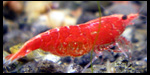
| Bright red female Red Cherry Shrimp carrying eggs. | Berried Adult Female. Noticed the green eggs. Egg color does not affect the color of the hatch. |

Water parameters should be kept extremely stable and with in acceptable ranges. The pH of the aquarium water should be with in 6.5-8.0. The temperature should be kept between 70-80°F. Water hardness is not important as long as it is not at either extreme, soft or hard.
When breeding, the shrimp need a consistent food source. If the shrimp population of an aquarium is small to moderate, often times the naturally occurring algae is an adequate food source. If supplemental feeding becomes necessary blanched vegetables and prepared fish foods are also good food sources.
Once a female and male are sexual mature (4-6 months old) and the above-mentioned requirements are met, they will breed. Breeding occurs right after a female molts. She will then hide and release pheromones and the male will find her and breed with her. After breeding the female will carry the fertilized eggs under her tail until they hatch.
Molting is the process of shedding the exoskeleton of a Shrimp (and other invertebrates). This allows the shrimp to grow in size and re-grow a new exoskeleton. During this period, the female shrimp is very vulnerable and she will hide in what ever space she can find that makes her feel safe.
While hiding, the female Shrimp will release pheromones (sexual hormones) into the water notifying the male she is ready to breed. This pheromone causes the male to search for the female and often times the male will be observed swimming threw the water column while searching. This behavior is in direct contrast to their normal lifestyle of living on the substrate or plants / decorations.

A female and male Red Cherry Shrimp.
Top: Female Bottom: Male
When the male finds the female they will breed. The male will deposit his sperm in the female. Once the sperm is deposited the female will pass her eggs threw the sperm on their way to the underside of her tail. The eggs are constantly fanned by the female's pleopods (swimming legs) to keep them oxygenated and clean. The fertilized eggs will remain under the females tail until they hatch.
Once the eggs hatch, the juvenile young are tiny replicas of their adult counterparts. They have no larval stages like most saltwater and many freshwater shrimp have. The young shrimp will eat the same foods that adults do. They will use their claws on their front legs to rip off small edible chunks of the foods.
When raising young shrimp it is important that there are no predators in the tank. Very few, if any, fish can resist taking a small shrimp as a midday snack. If breeding shrimp are in a tank with predators the only way to ensure young shrimp will grow is to provide plenty of hiding spaces, but even this will not guarantee success.
Including live Java Moss, Christmas Moss, or any other extremely slow growing aquatic plant in a shrimp tank will help increase the speed the young will grow. These slow growing plants harbor micofauna and other food sources for young shrimp. While not required for successful breeding, these slow growing plants will lead to faster growing, healthier shrimp.
As long as the 3 main variable in breeding shrimp are understood, inducing breeding, breeding / carrying of eggs, and raising the young, breeding Red Cherry Shrimp can be very easy and rewarding.


