


 Shrimp
 Fish
Fish Crab &
 Plants
 Foods
Foods Snails
Caring for Your Corydoras aeneus | Bronze, Gold Stripe, Green, Laser & Albino Cory
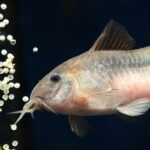
Looking for a peaceful bottom dweller for your (shrimp) aquarium? Cory catfish are a logical choice, and Corydoras aeneus may just be the most logical choice of all. This is THE standard-issue cory: peaceful, hardy, active, available in different color morphs, and just an all-around perfect community fish for beginners and veteran aquarists alike.
Why do aquarists across the world appreciate the humble Corydoras aeneus so much? Which varieties exist, and how do you make sure your cories thrive? Let's put this aquarium classic in the spotlight, starting with its surprisingly murky identity.
| Scientific name | Osteogaster aenea (?) |
| Common names | Bronze cory, gold stripe cory, green cory, laser cory, albino cory |
| Difficulty level | Easy |
| Natural range | Tropical South America |
Corydoras aeneus... or not?
It feels like we have to mention this every single time we describe an aquarium fish, but this is a particularly egregious example. Here we go again: C. aeneus is not actually C. aeneus. Or not anymore, anyway, but it will take a good while for the new name to be taken into use throughout the hobby. We'll explain the details below for the taxonomy nerds, but rest assured that care guidelines for this cory catfish haven't changed.
The genus Corydoras as a whole, as it existed until a 2024 reclassification, was in need of extensive review. All these catfish were grouped together back in the day based on appearance, but more recent DNA analysis has made it clear they're not closely related enough to justify placing them in the same genus. To solve this, Corydoras has been split into no less than seven separate genera.
Corydoras aeneus is no more (in fact, almost none of the group still carries the name "Corydoras"; we may have to come up with a different common name for these catfish). Today's subject is now called Osteogaster aenea, though its new name doesn't entirely resolve its identity. The reason is that this is a "wastebasket species" made up of similar-looking fish that may or may not actually be related at the species level.
Just as the catfish formerly known as Corydoras were lumped together at the genus level, if a cory was gold to greenish-bronze and had a stripe down its side, it was considered C. aeneus/O. aenea. The supposed natural range for this "species" stretches from Venezuela to southern Brazil and even some Caribbean islands, which would be highly improbable. We'll call it a species complex for now!
Several suspected species have already been identified — anyone wanna place their bets on when Osteogaster will be revised again?
Will the real Corydoras aeneus please stand up?
The likelihood that Corydoras aeneus/Osteogaster aenea is actually multiple species is reflected in the huge number of different names the complex is known under in the aquarium hobby. "Bronze" cories come in a bunch of different colors, each of which has multiple trade denominations. These common names are often recycled for different fish that may or may not be closely related, and scientific denominations don't always help either. So who's who?
The best aid we've got is the "CW" numbering system by Planet Catfish, used to label species found in the hobby whose identity is unclear. The fish sold under the following names are often labeled Osteogaster aenea:
- Green laser cory (CW009, likely not true O. aenea)
- Green cory (can also refer to O. melanotaenia)
- Gold laser cory (CW010, likely not true O. aenea)
- Gold cory (CW010)
- Gold stripe cory (CW010)
- Orange laser cory (CW010)
- Bronze cory (could be true O. aenea*)
- Albino cory
The good news in all this confusion? All these Cories, whether they're 100% the same or not, look and act almost the same. Their aquarium requirements and care are pretty much identical (and they're not very picky anyway). If you bought a fish listed as Corydoras aeneus or Osteogaster aenea, this care guide will apply to it.
*The O. aenea type specimen was found on the island of Trinidad and was bronze in color. Bronze cories are also found on the South American mainland, which could mean a single, wide-spread species — or multiple species wearing a similar jacket. It's not quite clear where commercially produced bronze cories originally came from, so that's no help.
Description
It's a little difficult to describe a species that's actually ten different catfish in a trench coat, but of course, there's a reason they were grouped together in the first place. All are armored catfish of the family Callichthyidae, meaning they are extra-sturdy thanks to the protective bony plates that cover their bodies. They sport pointed, down-turned faces and small mouths surrounded by sensitive whiskers (barbels), which allow them to locate food buried in the substrate.
You can tell the various "Corydoras aeneus" apart from the rest of the bunch by:
- The dark, horizontal racing stripe on their sides (except albinos)
- Flashy, metallic green or gold stripe above the racing stripe ("laser" cories)
- Gold, greenish-bronze, or white (albino) in color
- Medium-sized, around 3" for adult males (females are plumper)
- Stocky body shape and short snout
- True bronze corydoras shows a bronze-toned head patch when viewed from above
Origins
The fish collectively known as Corydoras aeneus are found throughout much of tropical South America. They're associated with shallow, slow-flowing streams and tributaries with soft substrates and plenty of marginal vegetation.
The waters that cory catfish naturally inhabit are warm and flow slowly, two factors that can cause a lack of dissolved oxygen. To deal with this, cories have evolved a second mode of breathing aside from their gills: they can dart to the surface and gulp air, using their intestines to absorb the oxygen.
Your Corydoras aeneus aquarium
Requirements
Corydoras aeneus are not known to be finicky fish, but they do come with some basic requirements. Most importantly, because these catfish live in groups and are active swimmers, a minimum tank size of 20 gallons (long) is recommended. The substrate should be sandy or rounded "caviar" to prevent damage to the cories' sensitive barbels.
Although it's a good idea to leave some open space for your cories to dig through (it's what they do!), there should also be plenty of cover in the form of rocks, driftwood and live plants around the margins. This is a great species complex for a biotope: their wide natural range means you can actually find items they would come across in their natural habitat in your local fish store.
The following are easy to find in aquarium stores and native to (some) of the same range as Corydoras aeneus:
- Plants: Amazon sword (Echinodorus), dwarf hairgrass (Eleocharis acicularis), dwarf sag (Sagittaria subulata), Brazilian pennywort (Hydrocotyle leucocephala), water lettuce (Pistia stratiotes)
- Leaf litter (leaves, pods, bark): Moriche palm (Mauritia flexuosa), inga (Inga sp.), guava leaves, banana leaves
Driftwood from South America is harder to source. You can try spider or liana wood to imitate tree roots reaching into the water.
Water quality
Corydoras aeneus is a hardy, beginner-proof fish that will do well in a range of water parameters. That doesn't mean you can slack off on maintenance, though. The tank should always be fully cycled and receive a weekly water change.
Temperature: 72–78°F
pH: 6.0–8.0
Hardness: 50–250 ppm
Tankmates
Corydoras catfish are highly social beings that have been observed in groups of over a hundred fish in the wild. There's safety in numbers, and a cory kept alone will feel unsafe and stressed. If you want to observe the happy wiggles and frenetic energy these little catfish are known for, you should buy a group of at least 6–8 so they can shoal together. Tank size permitting, the more, the merrier!
One of the reasons cories have been staple aquarium fish for years is the fact that they stay in their lane. They stick to the bottom water layer (except when darting for air), are considered 100% peaceful, and will not attack or bother even much smaller tankmates. The added bonus with cory cats is their own sturdiness. If someone else decides to cause trouble, they have their armored plates and a sharp spine on their pectoral fin to keep them safe*.
As for the elephant in the room: yes, Corydoras aeneus is shrimp-safe! Although a corydoras catfish can't quite be trusted not to eat a baby dwarf shrimp sitting right in front of it, newly hatched shrimp usually know better than to spend their first few weeks of life out in the open. In well-planted tanks, they'll be too big for the cories to eat by the time they show themselves.
We wouldn't keep bronze cories with expensive bee shrimp, but we can imagine few better fish to keep alongside a colony of Neocaridina (cherry shrimp).
*This is also why you shouldn't handle corydoras catfish, including Corydoras aeneus, with your bare hands. Although the spine's toxin is considered harmless, the sting is quite painful (plus, it's just silly. How do you explain you got attacked by a 3" fish?).
Corydoras aeneus diet
As we've mentioned, corydoras catfish use their downturned mouths and sensitive barbels to scour the substrate for edible morsels. They prefer small insects and larvae, but are omnivores that will happily gobble up anything from midge larvae (bloodworms) to plant matter. One delightful 2018 paper reveals that a single Corydoras aeneus can, depending on the type offered, eat up to 76,000 nematodes in a day!
Their generalist nature means that for a long time, cory catfish were the designated "trash cans" of the aquarium. They were expected to clean up after other fish and rarely offered nutritious foods. We know better now: like everyone else, corydoras need high-quality, varied meals to thrive.
You can feed a sinking insectivore food (corydoras-specific varieties exist) as a staple and supplement with a mix of frozen and live options. Live bloodworms, Tubifex and the like work especially well to condition your fish if you're looking to breed them.
Buying Corydoras aeneus
Given that this is the standard-issue corydoras, you'll be able to find it at almost every aquarium store. Look for active, plump fish — they're bred commercially on a massive scale, so quality can vary. If their heads look caved in, they might be malnourished or have parasites.
You can, of course, also buy your Corydoras aeneus online. We are pleased to offer you a whole bunch of different varieties, including the ever-beloved classic bronze cory.
Sources & further reading
Bertora, A., Fontanarrosa, M. S., Grosman, F., Sanzano, P., & Rosso, J. J. (2021). Trophic ecology of the Neotropical tolerant fish Corydoras paleatus under the influence of contrasting environmental conditions in a prairie stream. Anais da Academia Brasileira de Ciências, 93(suppl 3), e20200981.
Dias, A. C., Tencatt, L. F., Roxo, F. F., Silva, G. D. S. D. C., Santos, S. A., Britto, M. R., ... & Oliveira, C. (2025). Phylogenomic analyses in the complex Neotropical subfamily Corydoradinae (Siluriformes: Callichthyidae) with a new classification based on morphological and molecular data. Zoological Journal of the Linnean Society, 203(3), zlae053.
Majdi, N., Weber, S., & Traunspurger, W. (2018). The early catfish catches the worm: predation of Corydoras aeneus (Siluriformes, Callichthyidae) on freshwater nematodes. In Annales de Limnologie-International Journal of Limnology (Vol. 54, p. 29). EDP Sciences.