


 Shrimp
 Fish
Fish Crab &
 Plants
 Foods
Foods Snails
Shrimp Tankmates & Compatibility: Fish That Can Live With Shrimp
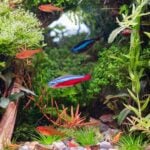
Looking for some fish to liven up your shrimp tank? We get it. A shrimp-only set-up is great — and a must for the more finicky species — but our favorite crustaceans can also do well in community aquariums. You just have to choose tankmates that won't eat your shrimp, which can be easier said than done.
We've kept fish and shrimp together for years. Now, we're sharing our knowledge with you in the form of the ultimate shrimp tankmate guide. Strap in, shrimpers, because the list of suitable fish is longer than you might think!
Table of Contents
Which shrimp can live with fish?
If you'd like to set up a mixed shrimp and fish aquarium, it's important to choose carefully. Not just the fish, but also the shrimp! The most fragile and highly specialized shrimp species, like Sulawesi shrimp and fancy bee shrimp, should almost always be kept on their own or with snails only because:
- They require specific water parameters that few fish match.
- They are easily outcompeted for food.
- They are sensitive to water quality fluctuations, which fish food and poop can cause.
- They breed slowly and cannot easily replenish any losses.
- They are expensive, so losing even the occasional baby shrimp is a problem.
Whisker (Macrobrachium) shrimp and larger crayfish (Procambarus, Cherax) should also be kept in single-species tanks. Not because they're vulnerable, but because they become a danger to fish as they grow!
If you're planning on keeping Neocaridina shrimp (like the popular cherries, blue dreams, rilis, snowballs, and similar), on the other hand, you can consider a variety of fish tankmates. The same goes for Amano shrimp, ghost shrimp, and various less common but fast-breeding hangers-on like Paracaridina.
A bunch of different considerations go into choosing the right fish species to live with your shrimp, but the main thing to remember is that if it can fit a shrimp into its mouth, it will do so. Every single aquarium fish will eat a shrimp if it manages to do so, meaning the trick is to find species that are physically unable to. You're looking for fish that are:
- Small. And more importantly, small-mouthed! The only fish that are 100%, fully shrimp-safe are those that can't even fit a newly hatched baby shrimp into their mouths. Those are few and far between*.
- Compatible. Even if a fish is too small to eat adult shrimp, it may come with water parameters or temperature requirements that make it incompatible with your crustacean colony.
- Suitable for your experience level. Yes, you can sometimes get away with keeping fragile fish despite being a beginner. But in most cases, you'll just be wasting your money and causing yourself heartache. There are loads of fantastically beautiful and interesting species that are also hardy and beginner-proof. If this is your first tank, focus on those for now.
*Which is why the label "shrimp-safe" is relative. Most "shrimp-safe" fish are safe for ADULT shrimp, but will still eat — though maybe not actively hunt — the tiny babies. This problem is mitigated by choosing a prolific shrimp species that can make up for the losses (hello, Neos!) and by densely planting the tank. Don't worry if you don't have a green thumb, because the best way to protect baby shrimp is actually to grow the super-easy Java moss. The babies instinctively know to stay among its maze-like and biofilm-rich strands for the first few weeks of their lives, bulking themselves out before they venture out into the open. By the time they show their faces, they'll be too big to serve as dinner for microfish.
To sum up the matter: If you don't want to lose ANY shrimp to predation, you should keep your colony on its own. Some of the fish on our shrimp tankmate list are very small, but we still can't swear on our lives they won't gobble up the occasional baby. The point is that the colony will grow despite the losses!
Shrimp tankmate guide
We've included the difficulty level for each species to help you choose:
- Beginner-proof: you can keep this even if you have never had an aquarium before. Comparable in difficulty to cherry shrimp.
- Easy: needs stable conditions, but is generally hardy. Comparable in difficulty to low-grade crystal red shrimp.
- Moderate: finicky or needs special conditions, like a biotope aquarium or unusual food. Comparable to fancy bee or tiger shrimp.
- Hard: do not buy this unless you are an experienced aquarist and willing to dedicate extra effort. Comparable to Sulawesi shrimp.
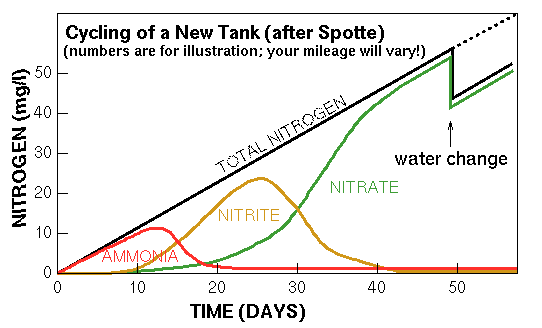
Keep in mind that results may vary. The same fish species can turn out indestructible or fragile depending on the conditions it was bred and shipped in. Even beginner-proof fish need care and clean water, as well as a stable nitrogen cycle.
The tank sizes listed are for long tanks. You'll have to add volume for square or tall aquariums, as fish don't tend to use vertical swimming space as efficiently. They are also the minimum. In most cases, going 5–10+ gallons higher than the listed volume leads to more comfortable, happy fish.
Small schooling fish
The fish listed should be kept in groups of at least six, though preferably 10+. Sounds like a lot, but fish believe in safety in numbers; they'll be more healthy and active when surrounded by a sizable shoal.
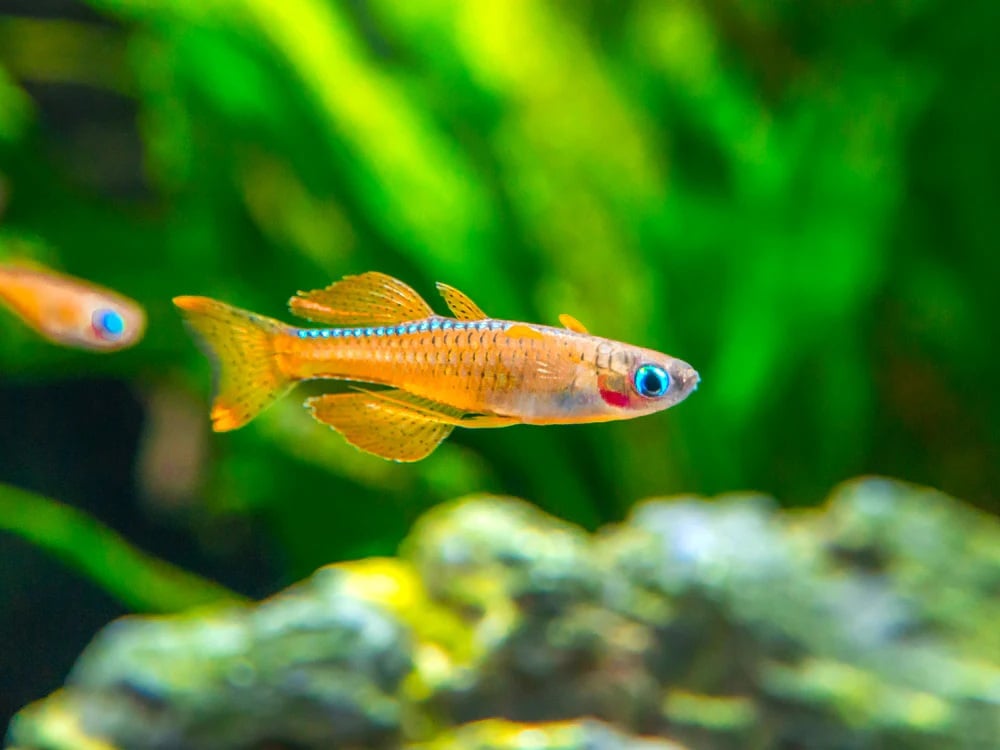
Red neon blue eye rainbowfish
- Scientific name: Pseudomugil luminatus
- Size: Up to 1.3"
- Tank size: 15+ gallons
- Difficulty level: Easy
- Shrimp safety level: Does not eat adult shrimp
If you've ever wanted to dive into keeping rainbowfish, the tiny swimming gems of the genus Pseudomugil are a great place to start. They're hardy, more flexible than larger rainbows when it comes to pH, and their jewel tones look fantastic against the green of a well-planted aquarium — especially with colorful shrimp thrown into the mix.
→ Read our care guide: Red neon blue eye rainbowfish
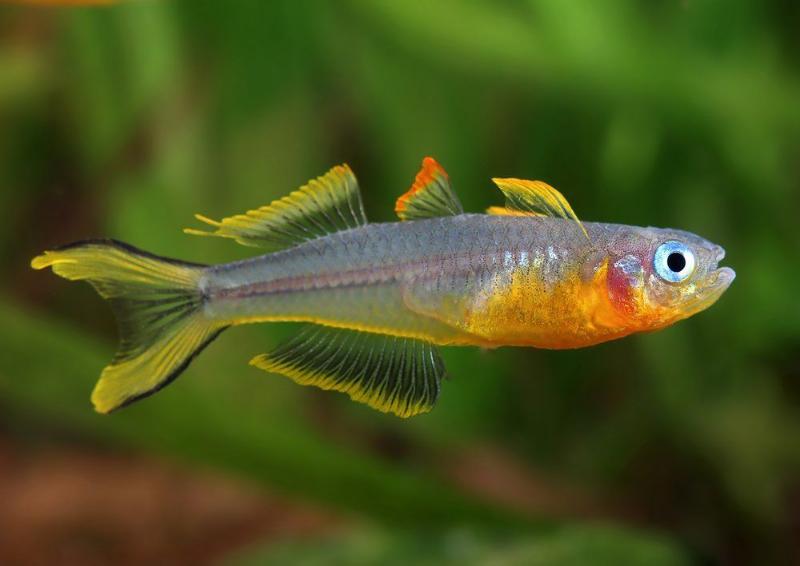
Forktail blue-eye rainbowfish
- Scientific name: Pseudomugil furcatus, formerly Popondetta furcata
- Size: Up to 2"
- Tank size: 15+ gallons
- Difficulty level: Easy
- Shrimp safety level: Does not eat adult shrimp
Like yellow more than orange? Pseudomugil delivers again. The forktail blue-eye is a little larger than its aforementioned red neon cousin, but its care requirements are very similar. In fact, you can mix them for an extra-dazzling effect — just keep in mind they do interbreed. Resulting offspring may be hybrids.
→ Read our care guide: Forktail blue-eye rainbowfish
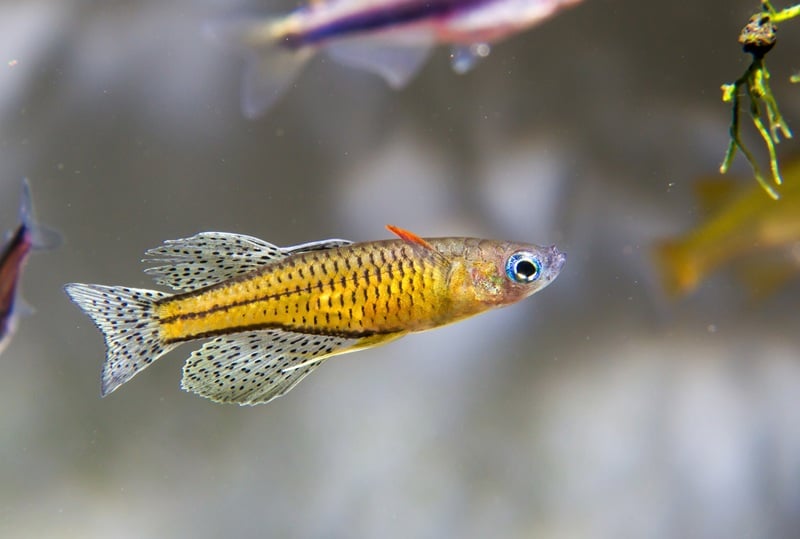
Spotted blue-eye rainbowfish
- Scientific name: Pseudomugil gertrudae
- Size: Up to 1.2"
- Tank size: 15+ gallons
- Difficulty level: Easy
- Shrimp safety level: Does not eat adult shrimp
One more Pseudomugil for the road... it's hard to resist wanting to catch 'em all. Spotted blue-eyes come in different colors; the yellow version pictured here appears the most popular, but you may also come across a powder blue variety. All are, of course, shrimp-safe.
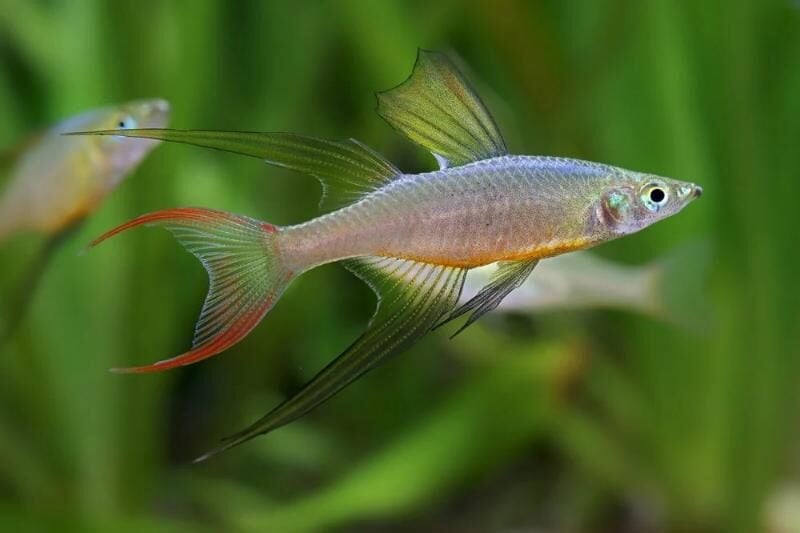
Threadfin rainbowfish
- Scientific name: Iriatherina werneri
- Size: Up to 2"
- Tank size: 15+ gallons
- Difficulty level: Moderate
- Shrimp safety level: Does not eat adult shrimp
Although it's a little more sensitive than the aforementioned Pseudomugil rainbowfish, the threadfin makes up for the extra effort with fantastic finnage and fascinating courtship behavior. Another wonderful candidate for a planted tank.
→ Read our care guide: Threadfin rainbowfish
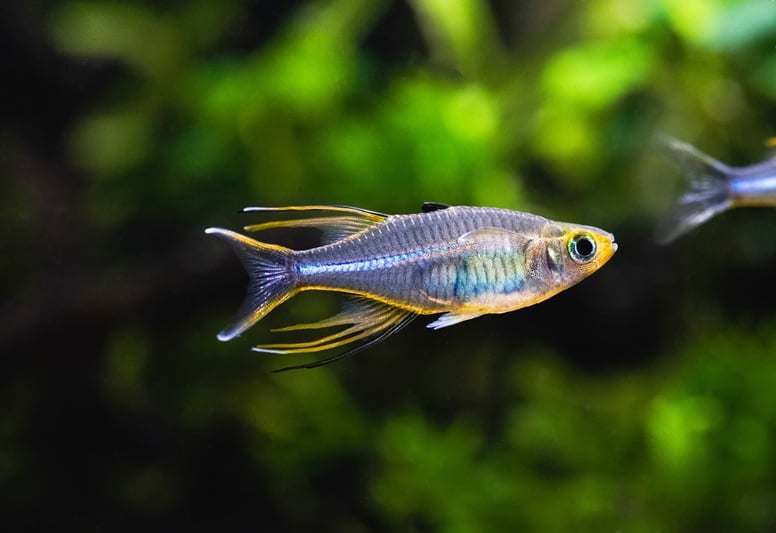
Celebes rainbowfish
- Scientific name: Marosatherina ladigesi, formerly Telmatherina ladigesi
- Size: Up to 3"
- Tank size: 20+ gallons
- Difficulty level: Easy
- Shrimp safety level: Does not eat adult shrimp
Although it's the largest of the small schooling rainbowfish we're discussing here, the Celebes rainbow is still significantly smaller than other members of its family. This means it's safe to keep with shrimp. As its name suggests, this one is naturally found on the island of Sulawesi, though not in the lakes that house the famously colorful and finicky Sulawesi shrimp.
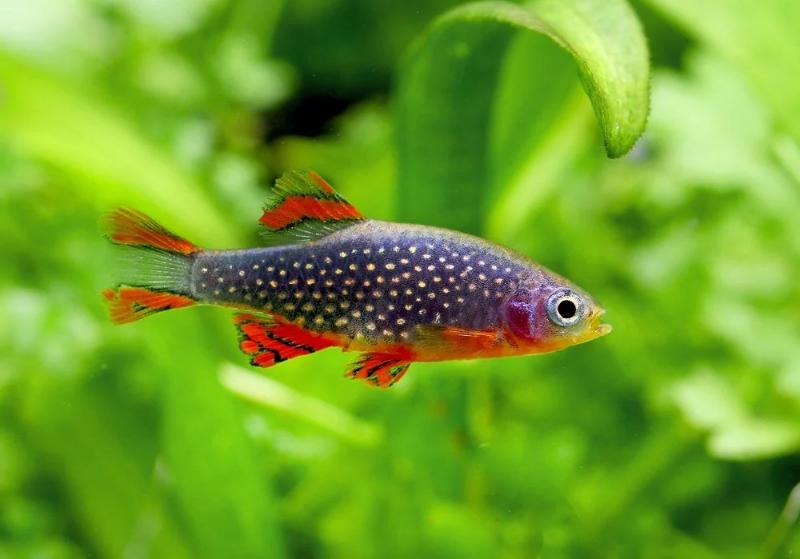
Galaxy rasbora
- Scientific name: Danio margaritatus
- Size: Up to 0.8"
- Tank size: 10+ gallons
- Difficulty level: Easy
- Shrimp safety level: Particularly safe due to its size 🦐
Like the emerald dwarf "rasbora" below, this isn't a true rasbora (a common name applied to species included or formerly included in the genus Rasbora). It's really a Danio, a tiny but hardy genus appreciated by aquarists around the world for its hardiness and lovely patterns. It's one of the smallest fish in the aquarium hobby, meaning all but newly hatched baby shrimp have nothing to fear from the galaxy "rasbora".
→ Read our care guide: Galaxy rasbora
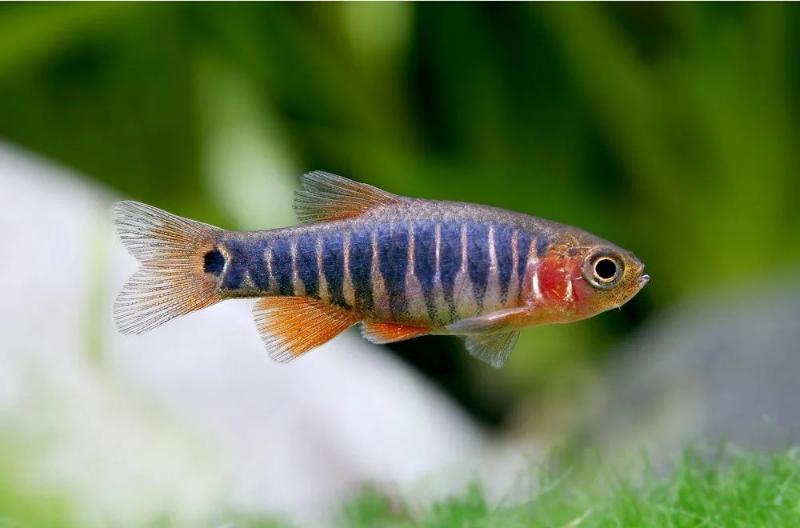
Emerald dwarf rasbora
- Scientific name: Danio erythromicron
- Size: Up to 0.8"
- Tank size: 15+ gallons
- Difficulty level: Easy
- Shrimp safety level: Particularly safe due to its size 🦐
We don't really think this little Danio has enough green on it to warrant calling it "emerald", but it's such a charming fish we're more than willing to let it slide. Those tiger stripes really pop in a beautiful planted tank, and thanks to its tiny adult size this species makes a particularly good shrimp tankmate.
→ Read our care guide: Emerald dwarf rasbora
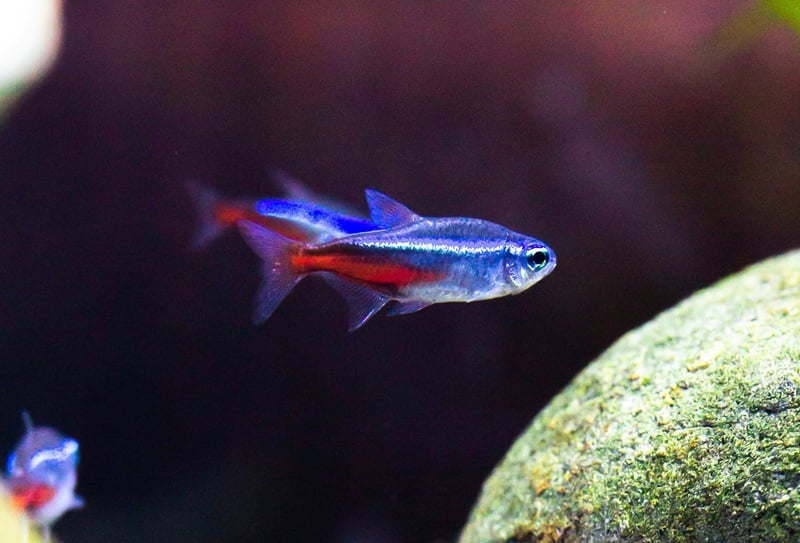
Neon tetra
- Scientific name: Paracheirodon innesi
- Size: Up to 1.2"
- Tank size: 15+ gallons
- Difficulty level: Beginner-proof
- Shrimp safety level: Does not eat adult shrimp
The shimmering neon tetra from the deep Amazon forest is one of the most widely kept aquarium fish in the world. Its popularity is explained at a glance, but this is not just a looker — it's also hardy, flexible, and a good-natured community species.
→ Read our care guide: Neon tetra
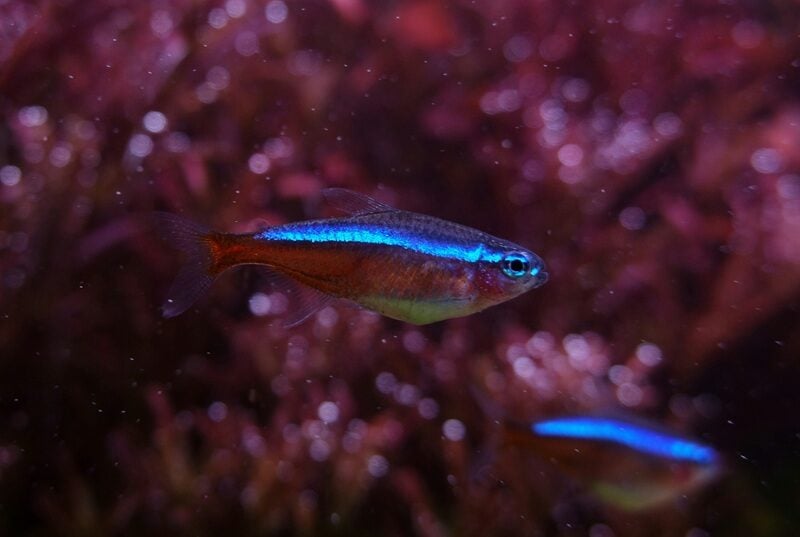
Cardinal tetra
- Scientific name: Paracheirodon axelrodi
- Size: Up to 1.5"
- Tank size: 20+ gallons
- Difficulty level: Easy
- Shrimp safety level: Does not eat adult shrimp
Unless they go straight down the shrimp road, an approach we support, the first thing new aquarists learn is how to tell the difference between a neon tetra and a cardinal tetra. Let us spoil the answer: it's their size, and more importantly, the red line on their side reaching all the way (rather than halfway) to the face.
→ Read our care guide: Cardinal tetra
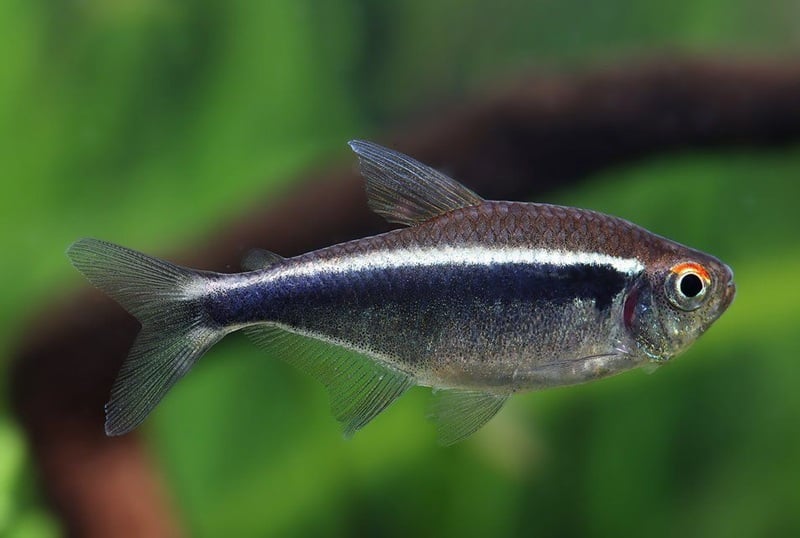
Black neon tetra
- Scientific name: Hyphessobrycon herbertaxelrodi
- Size: Up to 1.5"
- Tank size: 20+ gallons
- Difficulty level: Beginner-proof
- Shrimp safety level: Does not eat adult shrimp
Despite what its name (and color) suggests, this is not simply a goth neon tetra. The black neon actually belongs to a different genus than its neon and cardinal cousins — it's just that lateral stripes help to confuse predators and keep the tetras coordinated with the rest of their school, so many species sport a similar pattern. The black neon is as hardy and friendly as "true" neons and cardinal tetras, though!
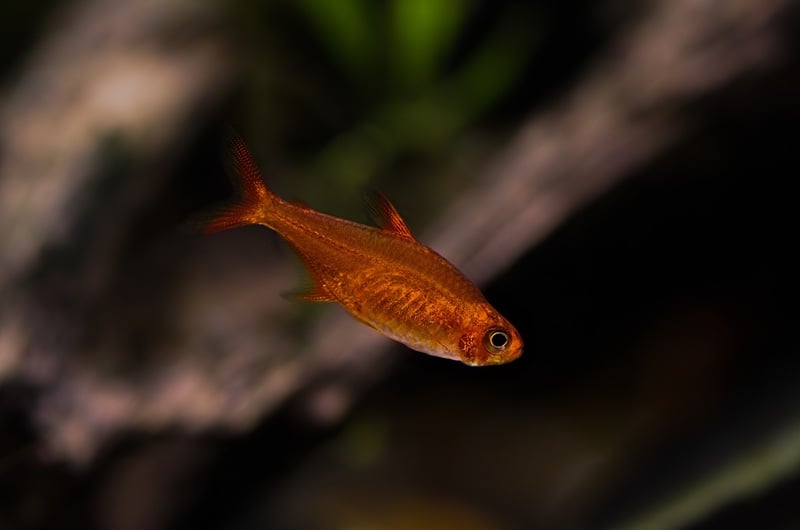
Ember tetra
- Scientific name: Hyphessobrycon amandae
- Size: Up to 0.8"
- Tank size: 10+ gallons
- Difficulty level: Easy
- Shrimp safety level: Particularly safe due to its size 🦐
Ember tetra or amber tetra? Both names would work for this slightly translucent and wonderfully orange-brown fish. Native to Brazil, it makes a great choice if you want something even smaller than a neon. Along with shrimp, it's one of the most popular species for plant-forward aquascapes.
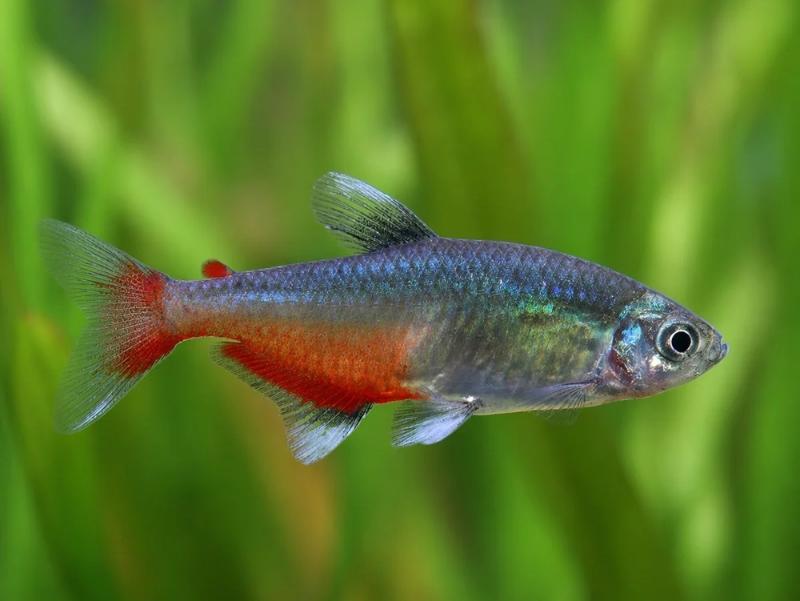
Green fire tetra
- Scientific name: Aphyocharax rathbuni
- Size: Up to 1.8"
- Tank size: 20+ gallons
- Difficulty level: Easy
- Shrimp safety level: Does not eat adult shrimp
Another wonderful option for planted Neocaridina tanks, green fire tetras are widely appreciated for their dramatic colors. They are native to South America and closely related to the slightly larger and more well-known bloodfin tetra (A. anisitsi).
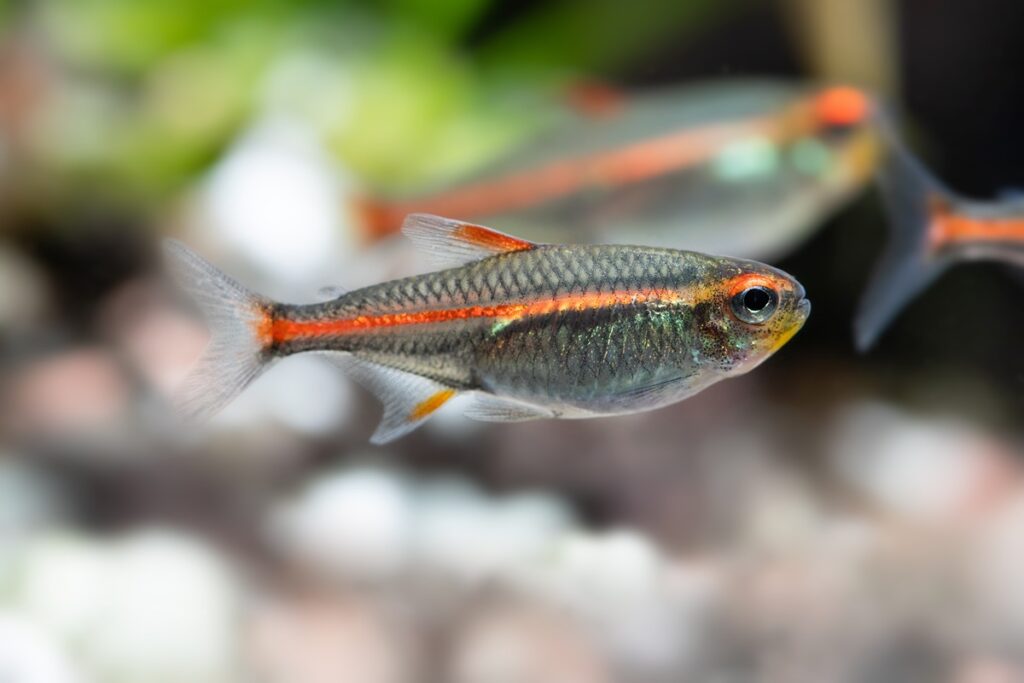
Glowlight tetra
- Scientific name: Hemigrammus erythrozonus
- Size: Up to 1.6"
- Tank size: 20+ gallons
- Difficulty level: Easy
- Shrimp safety level: Does not eat adult shrimp
Told you horizontal stripes are common! Glowlight tetras sport a lateral line in bright orange, sometimes almost red, that seems to glow in the right lighting.
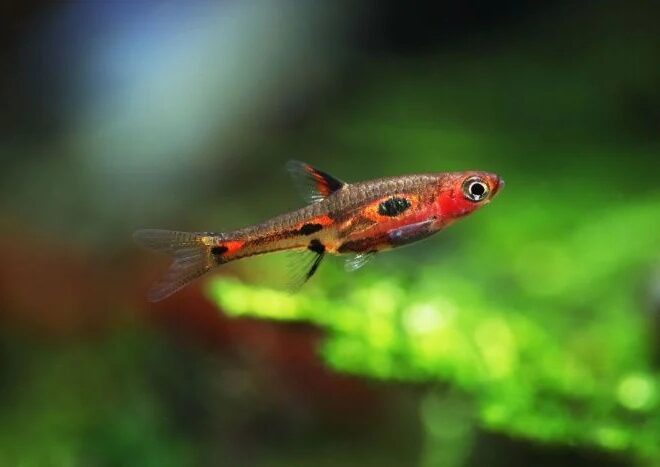
Phoenix rasbora
- Scientific name: Boraras merah
- Size: Up to 0.8"
- Tank size: 10+ gallons
- Difficulty level: Easy
- Shrimp safety level: Particularly safe due to its size 🦐
It's a good thing the diminutive members of the genus Boraras, including the phoenix rasbora, are so colorful — we'd have to really squint to be able to see them otherwise! Your shrimp will barely notice these tiny schooling fish are even there.
→ Read our care guide: Phoenix rasbora
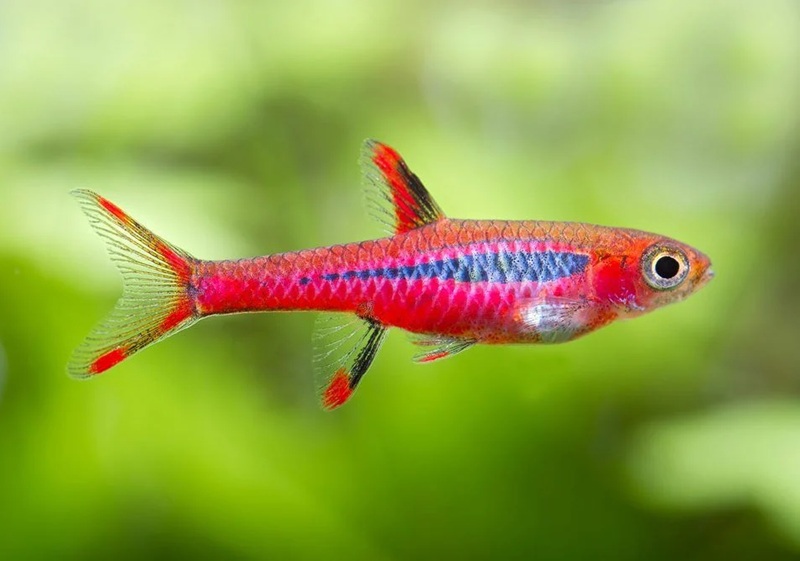
Chili rasbora
- Scientific name: Boraras brigittae
- Size: Up to 0.8"
- Tank size: 10+ gallons
- Difficulty level: Easy
- Shrimp safety level: Particularly safe due to its size 🦐
You're not seeing double: the phoenix and chili rasbora do look very similar. The difference is in their lateral markings, which are splotchy in phoenixes and form a straight line in chilis. No matter if you mix them up, though, because care for both species is the same — and both make excellent shrimp tankmates.
→ Read our care guide: Chili rasbora
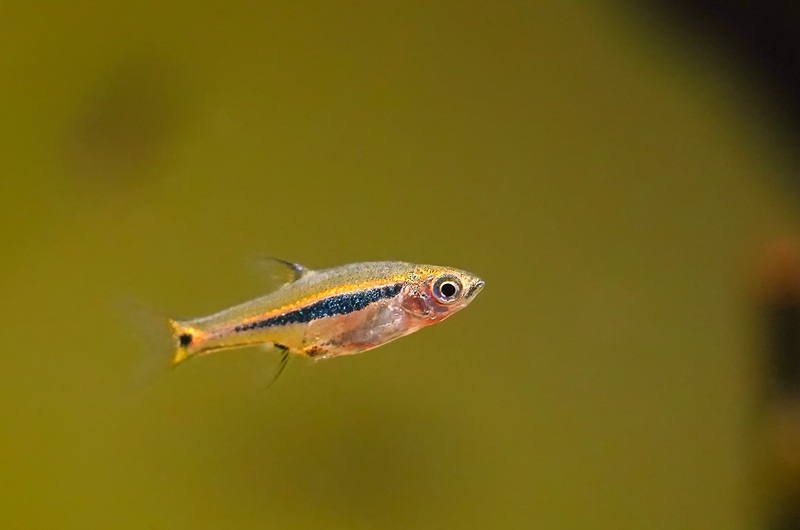
Exclamation point rasbora
- Scientific name: Boraras urophthalmoides
- Size: Up to 0.7"
- Tank size: 10+ gallons
- Difficulty level: Easy
- Shrimp safety level: Particularly safe due to its size 🦐
One more Boraras for — they're just so small and well-suited to shrimp tanks! This one is the tiniest fish on our entire list, and possibly in the entire aquarium hobby (we've checked). Even baby shrimp would be too big a snack for an exclamation point rasbora, and they're pretty to boot.
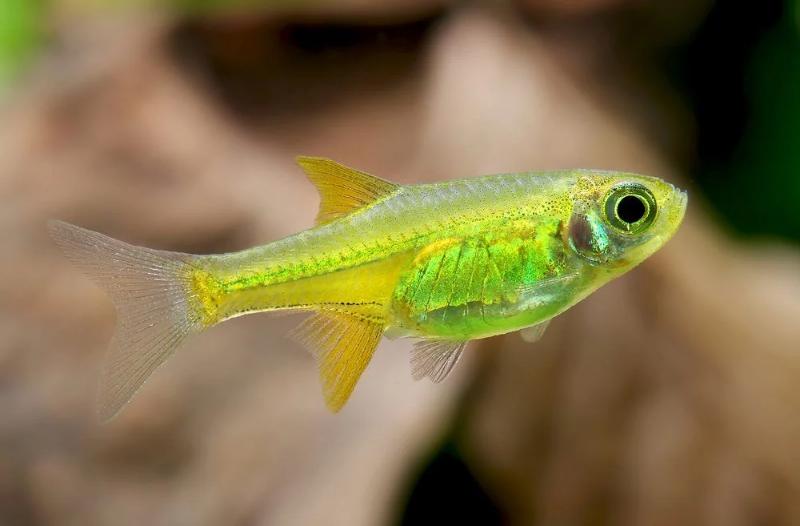
Kubotai rasbora
- Scientific name: Microdevario kubotai
- Size: Up to 0.8"
- Tank size: 10+ gallons
- Difficulty level: Easy
- Shrimp safety level: Particularly safe due to its size 🦐
We've really reached the microfish department here! Kubotai rasboras are another aquascaper favorite, their color and tiny size ensuring they almost blend in with the plants. Even baby shrimp have little to fear from this little Southeast Asian native.
→ Read our care guide: Kubotai rasbora
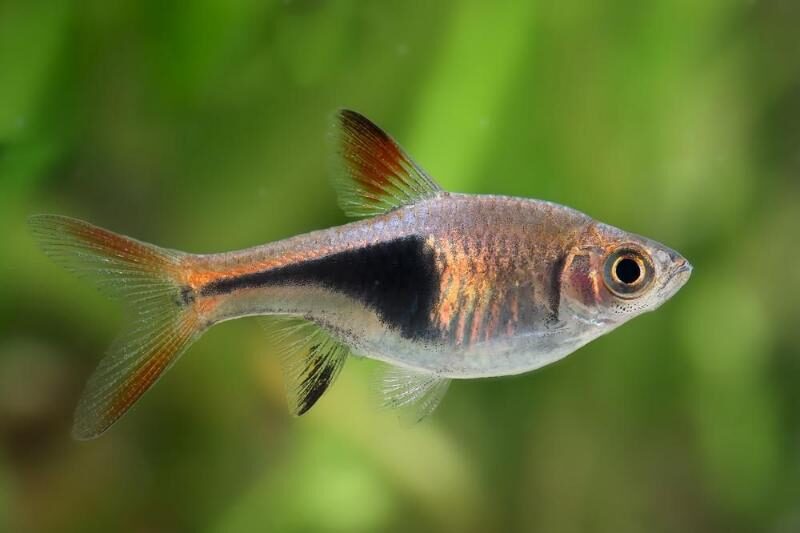
Harlequin rasbora
- Scientific name: Trigonostigma heteromorpha
- Size: Up to 1.8"
- Tank size: 20+ gallons
- Difficulty level: Beginner-proof
- Shrimp safety level: Does not eat adult shrimp
Talk about a classic aquarium fish: harlequin rasboras are peaceful, hardy, and lovely to look at. They get along well with shrimp and friendly fish alike. You can also try the lambchop rasbora, T. espei, if you want an even smaller version.
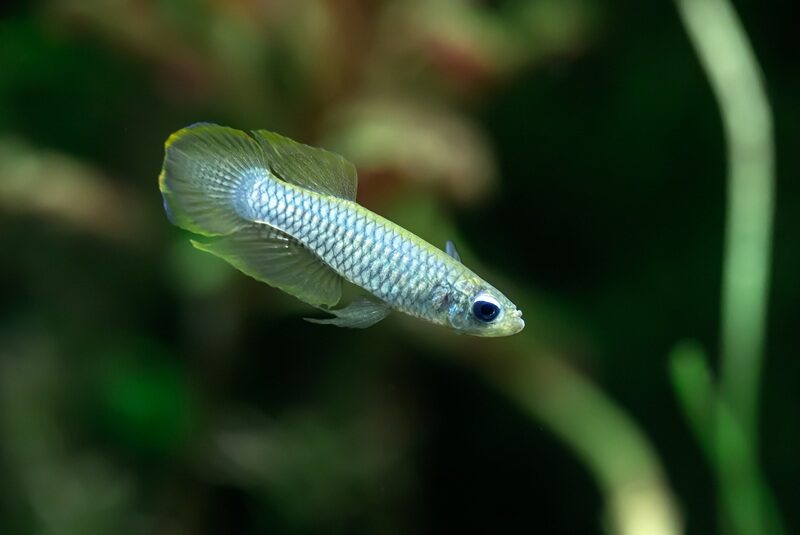
Norman’s lampeye killifish
- Scientific name: Poropanchax normani
- Size: Up to 1.8"
- Tank size: 20+ gallons
- Difficulty level: Moderate
- Shrimp safety level: Does not eat adult shrimp
"Lampeye" is not an exaggeration. The eyes of this killifish really do seem to have a bright blue inner glow! This one's not just one of the smallest of its kind, but it's also one of the few schooling killifish. It makes a lovely unusual choice for planted shrimp tanks.
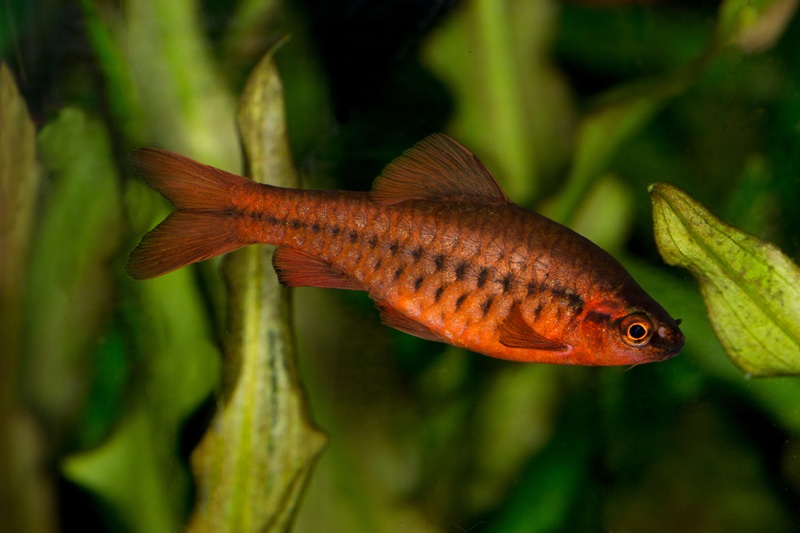
Cherry barb
- Scientific name: Rohanella titteya (formerly Puntius titteya)
- Size: Up to 2"
- Tank size: 20+ gallons
- Difficulty level: Beginner-proof
- Shrimp safety level: Does not eat adult shrimp
Another aquarium classic, the cherry barb is as far from its nippy tiger cousin it can be. It's friendly, hardy, and a great choice for peaceful community systems with and without shrimp. It's the males that sport the pretty cherry-red color; the females are a mottled light brown.
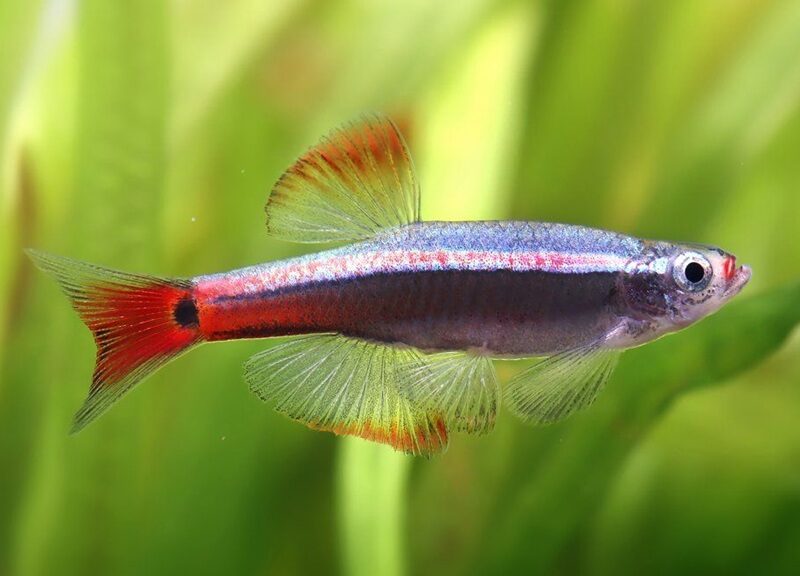
White cloud mountain minnow
- Scientific name: Tanichthys albonubes
- Size: Up to 1.5"
- Tank size: 15+ gallons
- Difficulty level: Beginner-proof
- Shrimp safety level: Does not eat adult shrimp
What about a fish that your Neocaridina shrimp's wild cousins could feasibly come across in the wild? Both Neos and white cloud mountain minnows hail from East Asia, their natural ranges overlapping in Southern China and northern Vietnam. They like the same subtropical temperatures and slow-flowing, densely vegetated water. Talk about compatibility!
Social fish
These species don't do well alone, but you can get away with keeping 2–3 specimens instead of an entire shoal.
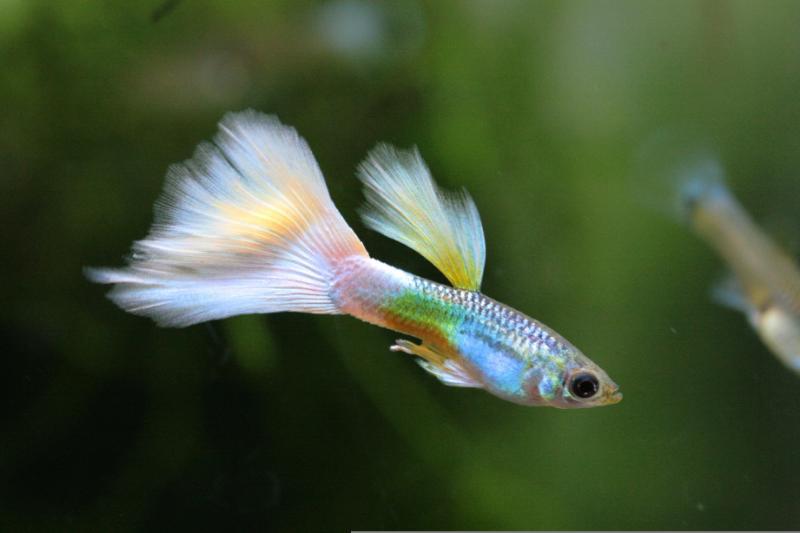
Guppy
- Scientific name: Poecilia reticulata
- Size: Up to 2.5"
- Tank size: 10+ gallons
- Difficulty level: Beginner-proof for feeder guppies, Moderate for fancy guppies
- Shrimp safety level: Does not eat adult shrimp
When we say aquarium, you say... guppy, of course! While these natural insect eaters won't pass up on a tasty baby shrimp, they leave adults alone and should work alongside Neocaridina shrimp. Just make sure you have an idea of what to do with all the baby guppies — or buy only males.
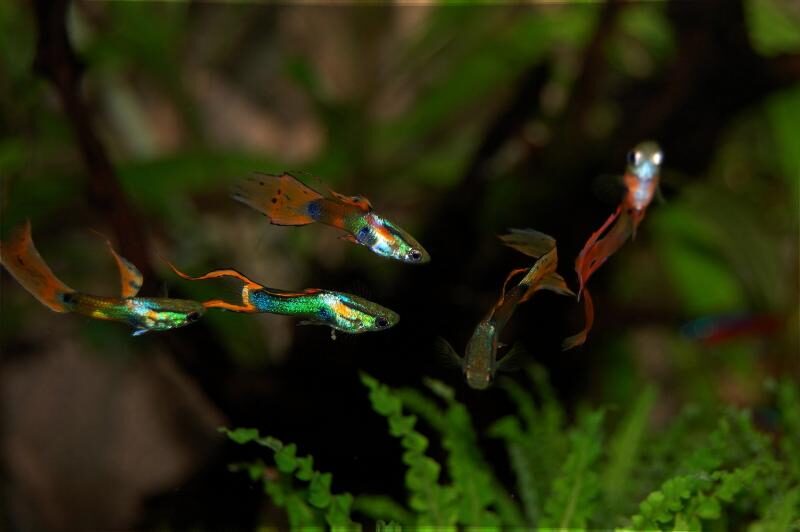
Endler guppy
- Scientific name: Poecilia wingei
- Size: Up to 1.8"
- Tank size: 10+ gallons
- Difficulty level: Beginner-proof
- Shrimp safety level: Does not eat adult shrimp
It's a guppy, but in miniature! The little variegated endler guppy is just as easy to breed as its fancy cousin, but tends to be even easier to keep. Its smaller size also means it'll have more trouble swallowing any baby shrimp it may come across.
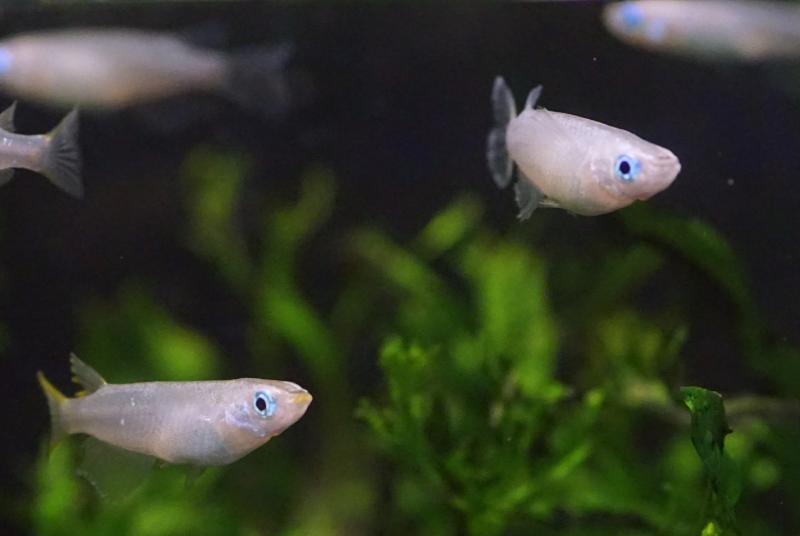
Japanese ricefish (Medaka)
- Scientific name: Oryzias latipes
- Size: Up to 1.5"
- Tank size: 10+ gallons
- Difficulty level: Easy
- Shrimp safety level: Does not eat adult shrimp
Very popular for small ponds and aquariums in its native Japan, this incredibly likeable surface dweller comes in a range of different colors and gets along with community fish and invertebrates alike. As with guppies, rare strains can fetch high prices.
→ Read our care guide: Medaka ricefish
Bottom dwellers
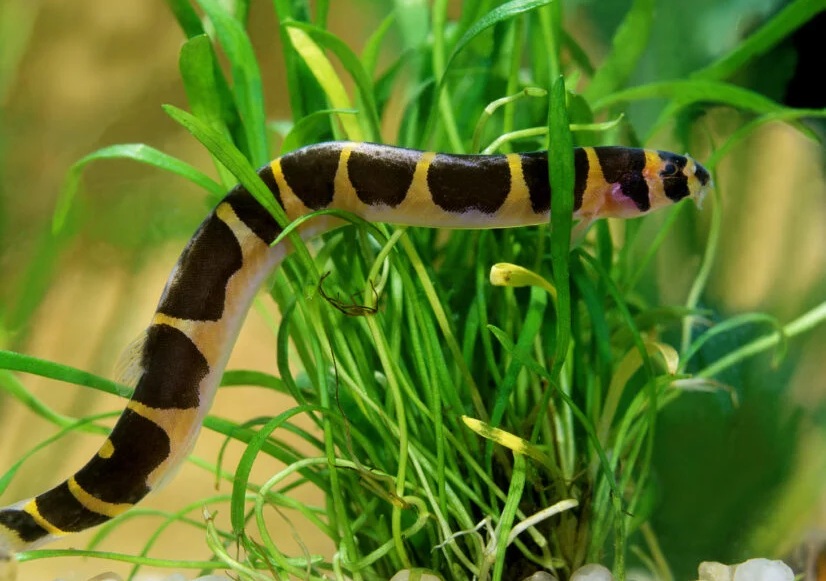
Kuhli loach
- Scientific name: Pangio sp.
- Size: Up to 4"
- Tank size: 15+ gallons
- Difficulty level: Beginner-proof
- Shrimp safety level: Does not eat adult shrimp
These small, elongated loaches are not the kind of fish you'll see a lot, but they're fun to watch when they do show their faces. Some aquarists report thinking theirs dead for years, only for them to reappear as if nothing happened when the tank is dismantled!
→ Read our care guide: Kuhli loach
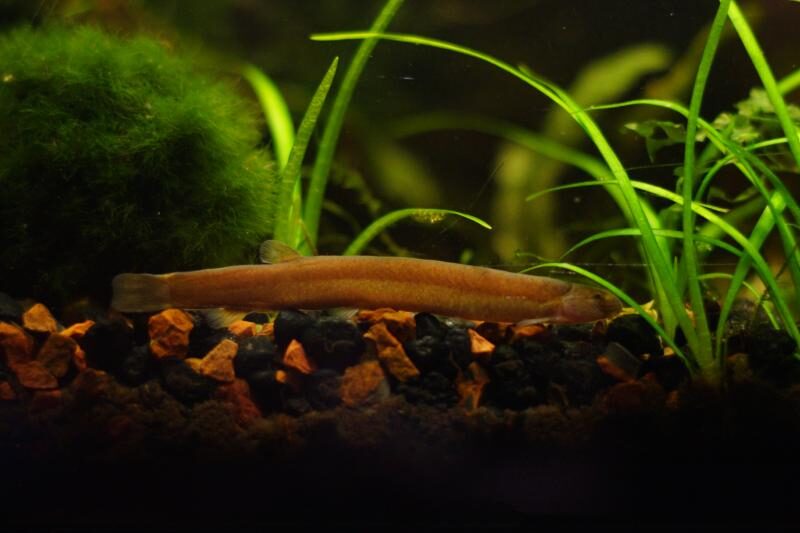
Black kuhli loach
- Scientific name: Pangio oblonga
- Size: Up to 3"
- Tank size: 15+ gallons
- Difficulty level: Beginner-proof
- Shrimp safety level: Does not eat adult shrimp
Like a kuhli loach, but with better camouflage. You may not see it for months at a time, but that just makes it more delightful when it decides to make an appearance. Will leave all but the smallest shrimp alone and helps keep sandy substrates healthy by sifting through them. Do not keep on sharp gravel.
→ Read our care guide: Black kuhli loach
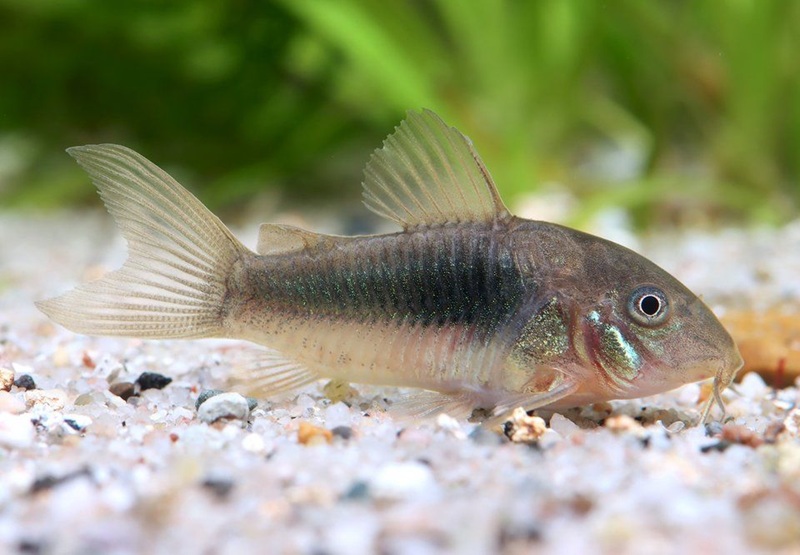
Bronze cory
- Scientific name: Osteogaster aenea
- Size: Up to 3"
- Tank size: 20+ gallons
- Difficulty level: Beginner-proof
- Shrimp safety level: Does not eat adult shrimp
Corydoras — the armored catfish formerly belonging to the genus of the same name — are pretty much the standard-issue bottom dweller for community aquariums. And bronze cories are the standard-issue corydoras, meaning they're immensely popular! There are many reasons for this appreciation in the hobby, one of them being their compatibility with small critters like shrimp.
→ Read our care guide: Bronze cory catfish
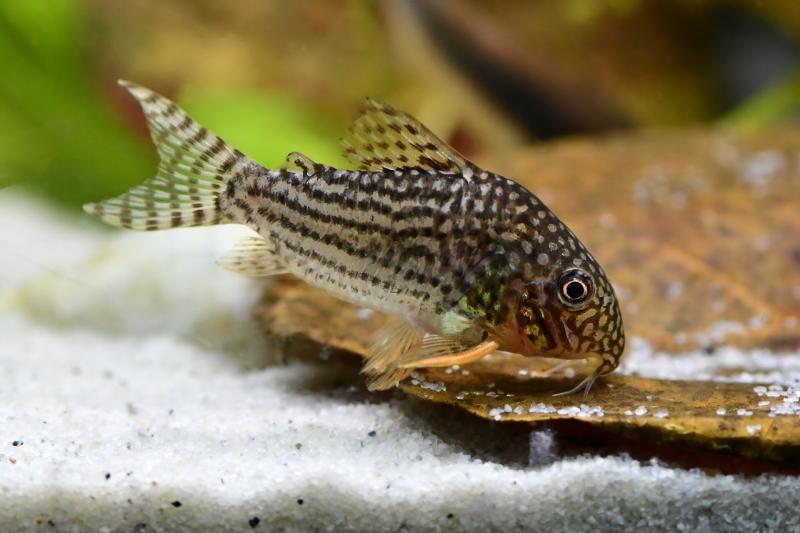
Sterbai cory
- Scientific name: Hoplisoma sterbai (formerly Corydoras sterbai)
- Size: Up to 2.5"
- Tank size: 20+ gallons
- Difficulty level: Beginner-proof
- Shrimp safety level: Does not eat adult shrimp
Same fish, different jacket: all cory catfish are wiggling little bottom feeders with downturned mouths and sensitive barbels, the perfect tools for digging for tasty worms in the substrate. The sterbai cory is appreciated for its dazzling reticulated pattern.
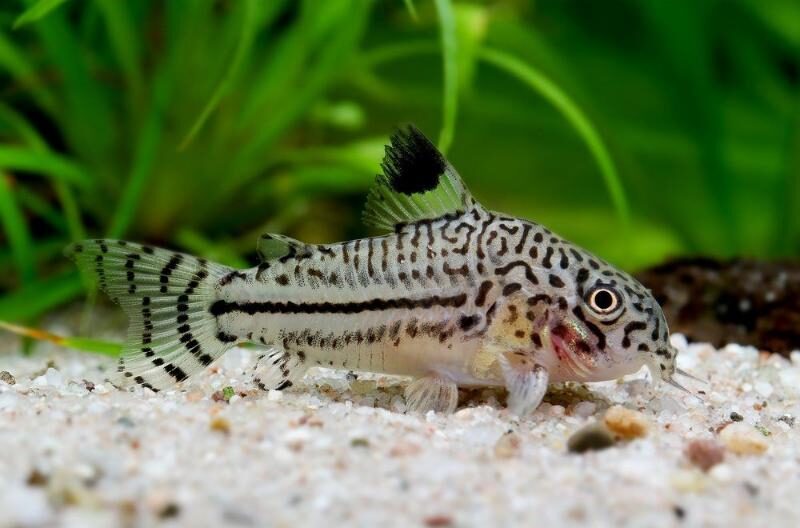
Julii cory
- Scientific name: Hoplisoma julii (formerly Corydoras julii)
- Size: Up to 2.2"
- Tank size: 20+ gallons
- Difficulty level: Beginner-proof
- Shrimp safety level: Does not eat adult shrimp
Hoplisoma julii is also known as the leopard cory — not because it's a vicious predator, but because it really does look like it's wearing leopard print. As with other cory catfish, this species' small mouth prevents it from eating anything larger than newly hatched shrimp. And even those would have to be right in front of the cory for them to be any danger!
→ Read our care guide: Julii cory catfish
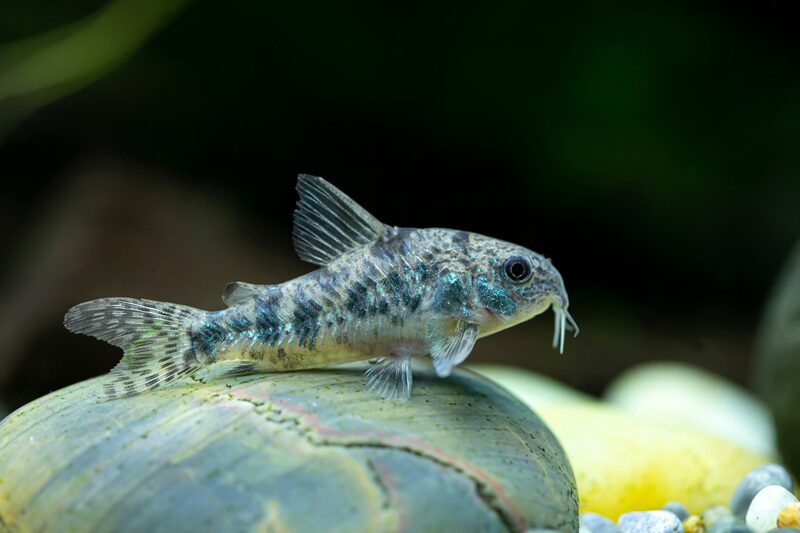
Peppered cory
- Scientific name: Hoplisoma paleatum, formerly Corydoras paleatus
- Size: 2.8"
- Tank size: 20+ gallons
- Difficulty level: Beginner-proof
- Shrimp safety level: Does not eat adult shrimp
One of the prettier corydoras catfish, the peppered cory sports an extra-long dorsal fin and flashes a lovely metallic green when the light catches it just right. Like many other cories, it comes in different color morphs, including an albino variety.
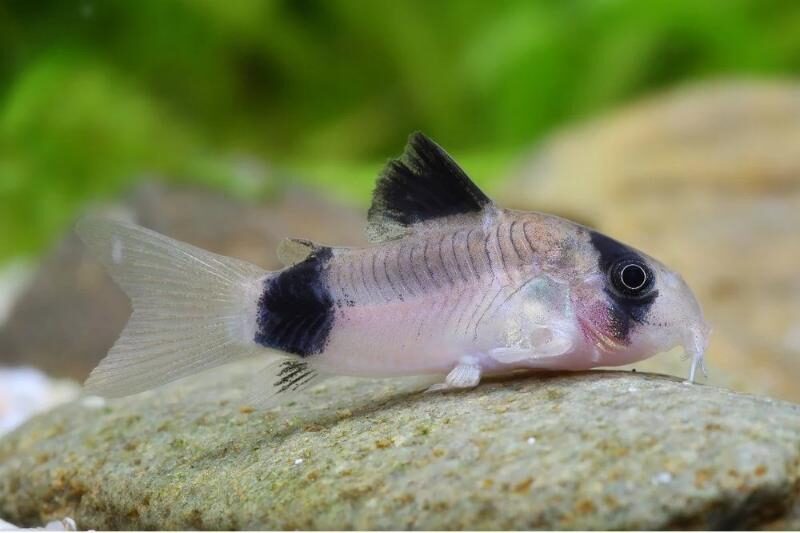
Panda cory
- Scientific name: Hoplisoma panda, formerly Corydoras panda
- Size: Up to 2"
- Tank size: 15+ gallons
- Difficulty level: Moderate
- Shrimp safety level: Does not eat adult shrimp
Possibly the cutest of the cories, this one was literally named after its panda pattern. Unfortunately it's also one of the less hardy varieties, although it's still safe to keep with shrimp and an excellent community fish in general.
→ Read our care guide: Panda cory catfish
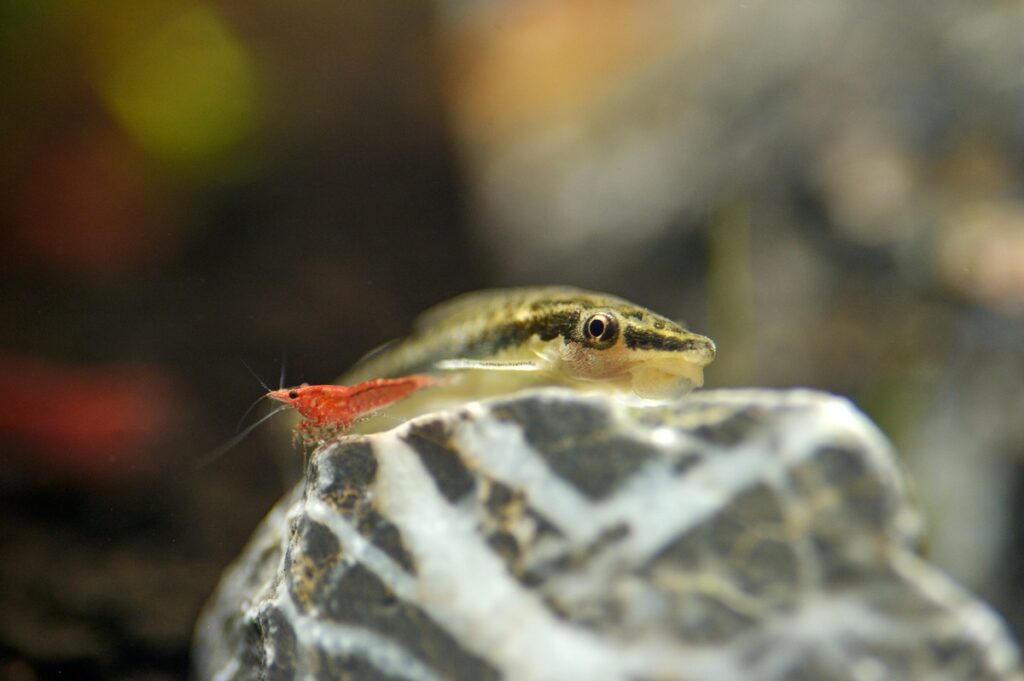
- Scientific name: Otocinclus sp.
- Size: Up to 1.4"
- Tank size: 15+ gallons
- Difficulty level: Moderate–Hard
- Shrimp safety level: Top-tier
Otocinclus catfish
🏆 #1 Best Shrimp Tankmates! We can't imagine any aquarium fish safer for shrimp than Otocinclus. These catfish are too small, and their mouths the wrong shape, to be able to eat even baby shrimp. They need excellent water quality to thrive and are voracious algae eaters, making them big favorites among aquascapers.
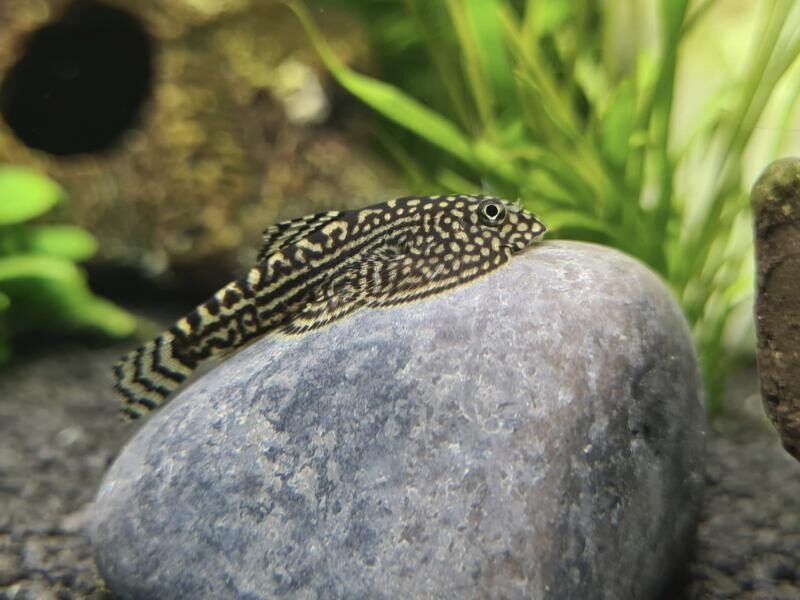
Hillstream loach
- Scientific name: Sewellia lineolata
- Size: Up to 3"
- Tank size: 20+ gallons
- Difficulty level: Moderate–Hard
- Shrimp safety level: Does not eat adult shrimp
Hillstream loaches need special hillstream biotope aquariums, making them a challenging species to keep. The good news? Neo shrimp like the same cooler, well-oxygenated waters that Sewellia does, and they don't mind the high flow level. It's a match!
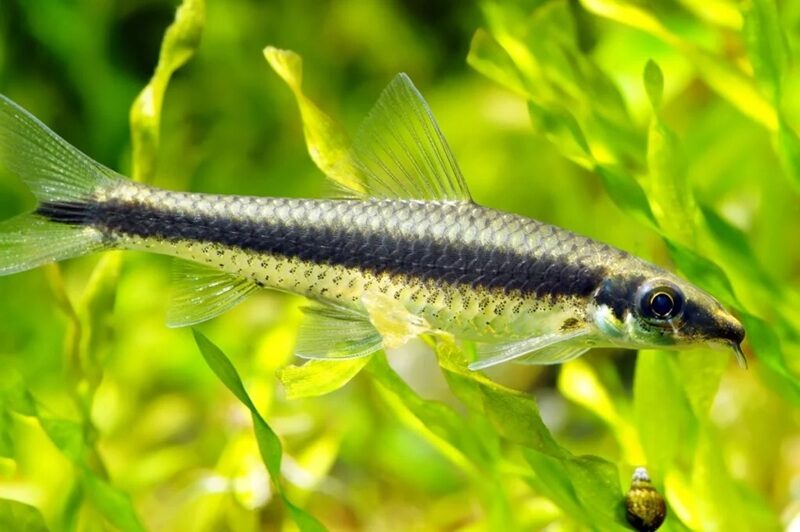
Siamese algae eater
- Scientific name: Crossocheilus oblongus, can also be C. langei
- Size: Up to 6"
- Tank size: 55+ gallons
- Difficulty level: Easy
- Shrimp safety level: Does not eat adult shrimp
Not to be confused with the more aggressive Chinese algae eater (Gyrinocheilus aymonieri), this Southeast Asian native is one of the best algae eaters for the aquarium. It will get along swimmingly with shrimp in a well-planted tank. Do keep in mind this is not a nano fish!
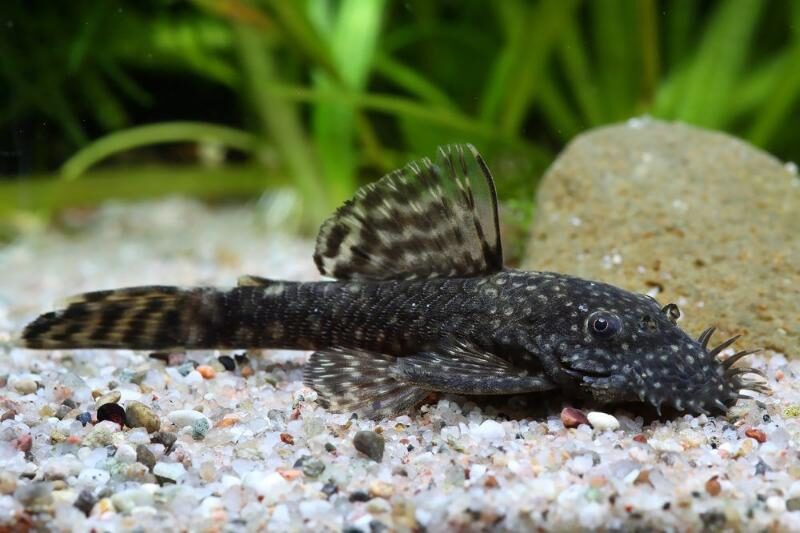
Bristlenose pleco
- Scientific name: Ancistrus cf. cirrhosus
- Size: Up to 5"
- Tank size: 30+ gallons
- Difficulty level: Beginner-proof
- Shrimp safety level: Does not eat adult shrimp
Also known as the bushymouth catfish, the classic bristlenose pleco is likely a hybrid species of unknown origin. It must have taken on all the best aspects of its parent species, because it's friendly, sturdy, and just an all-around ideal community fish.
Surface dwellers
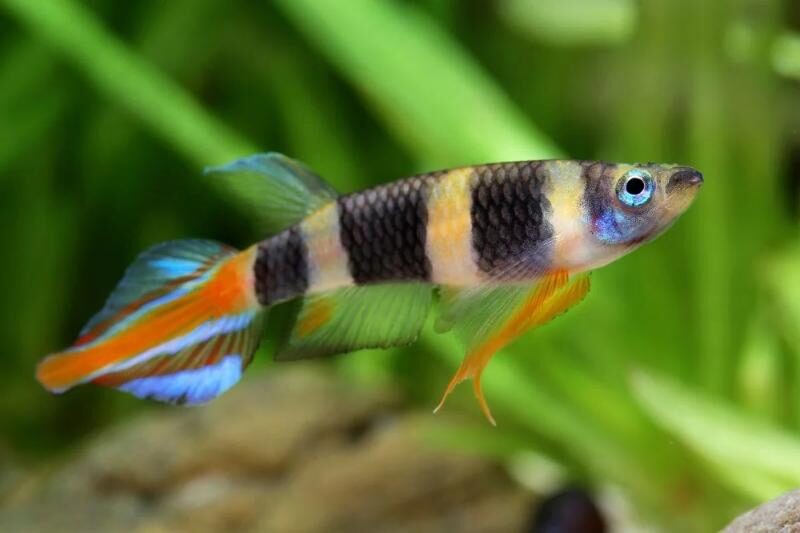
Clown killifish
- Scientific name: Epiplatys annulatus
- Size: Up to 1.6"
- Tank size: 10+ gallons
- Difficulty level: Moderate
- Shrimp safety level: Does not eat adult shrimp
Between its banded body and colorful fins, the clown killifish has a lot going on — especially for a fish that barely grows to an inch and a half in length! Although clown killies are natural insect eaters, they mostly search for their meals at the water surface and are too small to eat anything but baby shrimp.
→ Read our care guide: Clown killifish
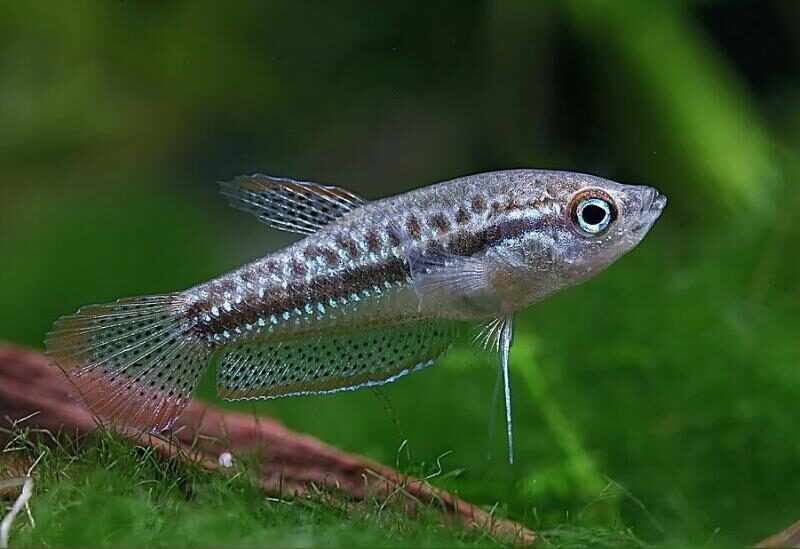
Sparkling gourami
- Scientific name: Trichopsis pumila
- Size: Up to 1.6"
- Tank size: 10+ gallons
- Difficulty level: Easy
- Shrimp safety level: Does not eat adult shrimp
Labyrinth fish like gourami and Bettas eat bugs for breakfast, lunch, and dinner, meaning you should steer clear of most species for your shrimp tank. But there are exceptions: fish so tiny a large shrimp will outgrow them. One of these is the sparkling gourami, which makes up for what it lacks in size with beautiful colors.
Solo fish
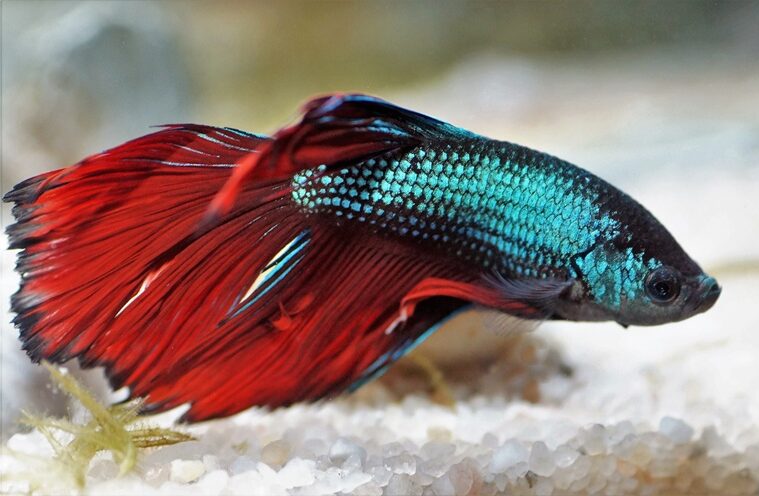
Siamese fighting fish (Betta)
- Scientific name: Betta splendens
- Size:
- Tank size: 5+ gallons
- Difficulty level: Easy
- Shrimp safety level: May eat adult shrimp
Betta fish are wildcards; we're including them due to their popularity. A well-fed Betta in a densely planted tank, especially long-finned varieties that aren't as mobile, can coexist peacefully with larger shrimp like Amanos and ghosts. Some aquarists have also had success with cherry shrimp. There are no guarantees, however; these are natural bug eaters, so it really depends on the individual fish. If you're setting up your first aquarium, we recommend picking different shrimp tankmates from this list!
→ Read our care guide: Siamese fighting fish