


 Shrimp
 Fish
Fish Crab &
 Plants
 Foods
Foods Snails
Ember Tetra Care | A Smoldering Jewel for Your (Shrimp) Aquarium
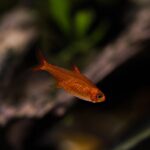
Looking for a centerpiece for your nano aquarium or planted aquascape? The shimmering, smoldering ember tetra might be just the thing. Tiny, friendly, suitable for beginning aquarists and — most importantly, we think — shrimp-proof, this tetra makes a great choice for plant-forward tanks and aquarists looking for something pretty but uncomplicated.
Let's learn more about these teeny tiny schooling fish for small aquariums below.
| Scientific name | Hyphessobrycon amandae |
| Common names | Ember tetra |
| Difficulty level | Easy |
| Origin | Southern China |
Table of Contents
What’s an ember tetra?
Description
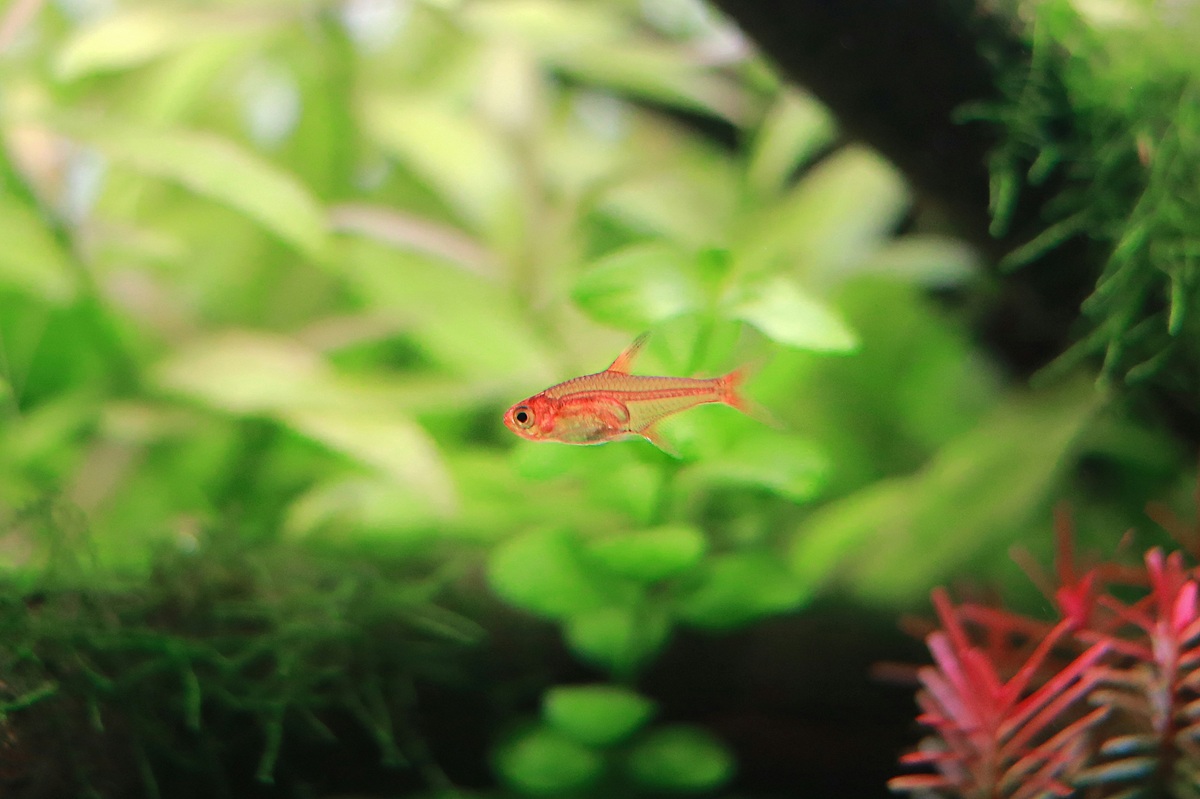
Honey, I shrunk the tetras! Although the ember tetra's body shape and behavior are pretty much identical to that of the many other small tetra species, it's among the tiniest available in the hobby. It makes up for its diminutive size (no more than 1.2" or so, usually smaller) with a beautiful bronze color that seems to make the fish glow from the inside. Even the eyes are orange.
Thanks to their winning combo of tiny size and big color, ember tetras are huge favorites among aquascapers. Although these underwater gardeners usually care more about their plants and the overall appearance of their tanks than about collecting fish, a school of ember tetras looks fantastic against the greenery and makes the scape feel more dynamic.
Did you know? The ember tetra was described by legendary fish explorer Heiko Bleher. He named it after his mother, Amanda: Hyphessobrycon amandae. How many moms can say they have a fish named after them?
Natural habitat
Ember tetras are naturally found in Brazil, specifically in the Araguaia River Basin and offshoots like the Das Mortes river. They don't inhabit the main watershed, however. Many of Brazil's river basins, including this one, are subject to extreme seasonal differences, with forests flooding in the rainy season to form temporary habitats known as igapós. The floodplains are full of marshy ponds, oxbow lakes and seasonally flooded pools that are mostly connected during the wet months but become separated in the dry season. These are the places ember tetras, and many other iconic aquarium species, call home.
These unique habitats are usually full of dense (floating) aquatic plants, marginal vegetation, and tree roots. Fallen branches and a layer of leaves bring down the pH and keep the water moderately soft, though usually not enough to turn it into blackwater.
Your ember tetra aquarium
Requirements
Ember tetras don't need a lot of space to thrive: a 10-gallon (long) aquarium should be enough for a small school. This being said, bigger is better because it allows you to keep more tetras — a school of ten embers looks great, but a group of twenty-five will stop visitors in their tracks! Use live (floating) plants and plenty of natural decor to dim the light and help the fish feel at ease.
If you're interested in keeping ember tetras and want to do something really cool with your tank, consider an Araguaia Basin biotope. All you need is a sandy substrate, some branches and rocks, a layer of leaf litter and seed pods, and most importantly: lots and lots of plants. Native plants in the Araguaia Basin floodplains include many aquarium favorites, including good ol' Vallisneria, Cabomba, Hygrophila, Ludwigia and various Nymphaea species, plus Salvinia and Pistia floaters.
If you need some biotope inspiration, this video by Biotopia shows the kind of densely vegetated, seasonally flooded ponds and ditches ember tetras can be found in. Skip to the 20-minute mark to see the embers in action.
Water parameters
Although stability is always more important than chasing exact numbers, ember tetras won't do well in hard or alkaline water. The marshes and lakes they inhabit in the wild are characterized by their softness and low pH, after all. Tank-bred fish like the ones you find in your LFS are a bit more flexible than their wild counterparts, but if your tap water has a pH above 7.5 or a TDS > 250, you may need to consider working with remineralized reverse osmosis water instead.
Don't start fiddling with harsh products like pH Down, though! Any changes or improvements should be made over the course of weeks or months, not hours or days. This applies to all fish, but embers in particular can react badly to sudden water parameter swings. They should always be kept in a fully cycled aquarium, and you should take care to match parameters and temperature when doing a water change.
pH: 5.0–7.0
Temperature: 68–82°F
TDS: 20–200
Tankmates
Ember tetras are peaceful and not known to be nippy. Aside from their own kind — you should get a group of at least 6–8 tetras, preferably more — they get along swimmingly with most other calm, peaceful community fish that require similar water parameters. Small cichlids like Apistogramma also make good ember tetra tankmates, though avoid bigger species (like angelfish) that will try to make a meal out of them. It's also best to steer clear of overly boisterous fish, such as tiger barbs, that might stress out the embers and outcompete them for food.
You can keep your embers with mellow numbers like:
- Other small tetras
- Rasboras
- Small rainbowfish
- Peaceful barbs
- Cory catfish
- Kuhli loaches
- Small plecos
- Hatchetfish
- Small gouramis
- Dwarf cichlids
Given that Brazil is home to so many of our favorite freshwater aquarium fish, it's no surprise you've got plenty of tankmate options for an ember tetra biotope aquarium. If you want to combine your ember tetra with species it might come across in the wild, why not try:
- Penguin tetra (Thayeria boehlkei)
- Head-and-taillight tetra (Holopristis ocellifera)
- Araguaian cory (Hoplisoma araguaiaense)
- Emerald catfish (Brochis splendens)
- Otocinclus vittatus
- L-numbers: Peckoltia vittata & oligospila
- Chocolate whiptail catfish (Rineloricaria lanceolata)
What about shrimp? All fish will try to make a meal out of our favorite invertebrates, but given their size, ember tetras would struggle to eat anything but newly hatched shrimp. These babies know they're vulnerable and will spend the first few weeks of their lives hiding in dense plants, meaning losses should be minimal as long as you provide enough cover. All that is to say: yes, ember tetras make excellent tankmates for both Neocaridina and Caridina dwarf shrimp!
Ember tetra diet
Studies of the stomach contents of small tetras and tetra-like fish from the Amazon biome leave little doubt about what they eat: bugs. Whether it's terrestrial bugs that have fallen into the water or their larvae, aquatic insects or microcrustaceans, they'll happily gobble it up, along with the occasional serving of algae. Ember tetras are no exception.
In the aquarium, you can feed your embers a high-quality daily microcarnivore staple. Be sure to also regularly supplement with frozen foods like bloodworms and live foods like Daphnia — the variety helps keep your fish happy and healthy in the long run.
Breeding ember tetras
Like most small aquarium fish, ember tetras are egg scatterers and make for an easy breeding project. They lay their sticky eggs on fine-leaved plants and don't provide any parental care — in fact, they're known to eat their own newly hatched fry if they come across them. Still, in densely planted tanks, you might find your ember tetra colony slowly increasing in numbers without any intervention on your part.
If you want to maximize the survival rate so you can sell the baby embers or use them in your other tanks, setting up a simple spawning and rearing container can be very helpful. It doesn't have to be large, nor does it need substrate; just add plenty of Java moss and a sponge filter. Use filter material and water from the display aquarium to insta-cycle the rearing tank or tub and ensure it matches the water parameters embers like.
Condition the adults with lots of nutritious live food and don't forget to procure some microfoods for the future babies. They'll be too small to even eat baby brine shrimp, so infusoria and a very fine powdered fry food are the way to go. Once your female ember tetras look nice and round, move everyone to the separate tank you set up to spawn. Remove them after two or three days to prevent them from making a meal out of their own eggs. The babies should hatch one or two days after; you can start them on the infusoria once they finish their yolk sacs, switching them to baby brine shrimp once they've grown a little. Voilà: you're an ember tetra breeder!
Buying ember tetras
Given they're such a popular choice for nano tanks and delicate aquascapes, you'll find ember tetras for sale in most aquarium stores. Look for vibrant, active tetras with slightly rounded bellies. Don't stare yourself blind when it comes to color, though — pet stores are stressful places that can dull a fish considerably. They'll likely brighten up once they've settled into a more appropriate environment.
If you don't feel like going out, you can also easily order your aquarium fish online. We're proud to offer you our excellent tank-bred ember tetras, shipped straight from The Shrimp Farm to your doorstep with live arrival guarantee!
Sources & further reading
Chamon, C. C., Serra, J. P., Camelier, P., Zanata, A. M., Fichberg, I., & Marinho, M. M. F. (2022). Building knowledge to save species: 20 years of ichthyological studies in the Tocantins-Araguaia River basin. Biota Neotropica, 22(2), e20211296.
Crippa, V. E. L., Hahn, N. S., & Fugi, R. (2009). Food resource used by small-sized fish in macrophyte patches in ponds of the upper Paraná river floodplain. Acta Scientiarum. Biological Sciences, 31(2), 119-125.