


 Shrimp
 Fish
Fish Crab &
 Plants
 Foods
Foods Snails
The Ultimate Sulawesi Shrimp Care Guide (Origin, Setup & Water Parameters)
There are shrimp. There are difficult shrimp. And then there are Sulawesi shrimp. After years of keeping and breeding these spectacular (and spectacularly finicky) invertebrates, here’s the guide we wish we’d had when we started: what works, what doesn’t, and whether Sulawesi shrimp are right for you in the first place.
Table of Contents
What are Sulawesi shrimp?
- Naturally found in Sulawesi, Indonesia
- The result of adaptive radiation
- Famous for their colors and patterns
Sulawesi shrimp are a group of small, colorful tropical shrimp found only on the Indonesian island of—you guessed it—Sulawesi. Located in the Indonesian archipelago, just to the east of the more well-known island of Borneo, Sulawesi (formerly known as Celebes) is the 11th largest island in the world and contains a unique system of ancient lakes in its highlands.
Thanks to their age and isolation, Sulawesi’s lakes are home to all sorts of animals that can’t be found anywhere else (known as "endemic" species). This is due to a little thing called adaptive radiation, which you may recognize from those other aquarium favorites, the rift lake cichlids: species become isolated and start to produce huge lineages of unique creatures. The shrimp are no exception, and have had several million years to evolve into all the fantastic forms that exist today. They’re not alone, either, because the lakes are also home to all sorts of unusual fish, crabs, and snails.
As you can imagine, adaptive radiation is the ultimate gift to aquarists. The most important lakes for us shrimp enthusiasts, the Malili system and Lake Poso, were first explored by westerners in the late 1800s. Ever since then, more than two dozen different Sulawesi shrimp have been described (and new discoveries pop up regularly)! There’s not a single one among that couldn’t be called a stunner, so it’s no surprise fishkeepers are so crazy about them despite their tiny size—most grow to no more than an inch.
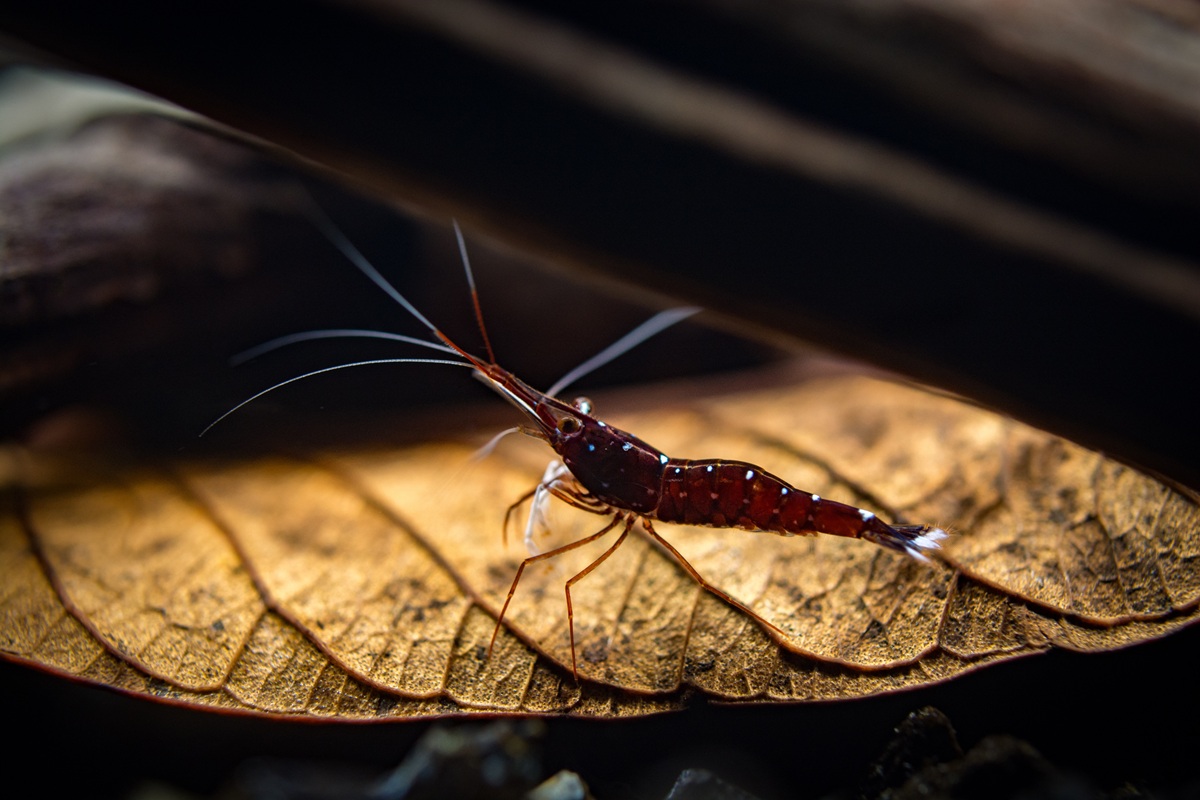
Sulawesi shrimp come in red, blue, black, brown, striped, speckled, dotted, and even with gilded accents. All belong to the genus Caridina, but because each occupies its own little niche within the lakes, every single species is unique.
Types of Sulawesi shrimp
Depending on who you ask, there are around two dozen different types of Sulawesi shrimp to be found on the island. The classic lake endemics are what we consider "true" Sulawesis, while the more versatile stream dwellers often have a more wider natural range (and are, coincidentally, much easier to care for).
The most popular lake species is the cardinal shrimp, Caridina dennerli, from Lake Matano. This ruby-red number put Sulawesi shrimp as a whole on the map. The hardiest—compared to other Sulawesis, anyway—is the blue leg poso, Caridina caerulea. Most species from Lake Towuti require expert-level care and are best left until after you've gained plenty of Sulawesi experience.
→ Meet the types of Sulawesi shrimp
Are Sulawesi shrimp for me?
- Sulawesi shrimp are highly specialized
- They are not for everyone
Why doesn’t every single aquarist have a special Sulawesi shrimp tank, if they’re so amazing? Well, all you have to do is remember rule #1 of fishkeeping: the prettier it is, the harder it is to keep. Whether you think a species is worth the hassle is for you to decide.
“Rule #1” applies to these shrimp specifically because they’ve spent hundreds of thousands of years adapting themselves to the conditions in Sulawesi. They still look like any other shrimp and have all the same moving parts, but they’re hyper-adapted to the lake they naturally inhabit. If you plop a Sulawesi shrimp into random USA tap water—even dechlorinated—it will die. That’s a big difference compared to something like the cherry shrimp, which is a hardy generalist that doesn’t mind the tap water in most places.
Sulawesi’s lake systems contain a variety of habitats, so species' difficulty levels vary as well. Still, we don’t think any Sulawesi shrimp could be considered beginner-proof!
So how hard are Sulawesi shrimp, really?
- Specialization makes Sulawesi shrimp a challenge
- Difficulties include alkalinity and an extreme need for stability
Sulawesi shrimp are spectacular. That’s usually your first warning sign. Rule #1 of fishkeeping applies in full here: the prettier it is, the harder it tends to be to keep alive. That doesn't mean Sulawesi shrimp were poorly designed or anything like that—they're just highly specialized.
Over hundreds of thousands of years, Sulawesi shrimp have adapted to very specific lake conditions. They still look like “normal” shrimp, with the same moving parts, but they're much more specific about their environment. Difficulty does vary between species, since Sulawesi’s lake systems contain different habitats, but we wouldn’t call any of these shrimp beginner-proof. They break almost every shrimp-keeping "rule" and are massive sticklers for stability!
Sulawesi shrimp prefer soft water with a high pH, because their native lakes receive very little mineral run-off (keeping the water soft) and very little organic input (keeping the pH high). They're also very warm. Most other popular shrimp prefer slightly acidic and cooler water, so keeping Sulawesis means shifting your shrimper brain into a whole different gear. And woe is you if you allow the parameters and temperature to fluctuate in any way, shape, or form!
Lastly, there’s food. The Sulawesi lakes are extremely nutrient-poor, which is why Sulawesi shrimp have adapted to survive almost entirely on biofilm. The fancy shrimp foods we buy for our bees and Neos are wasted on them: without a mature, stable biofilm layer, they simply die.
In summary, Sulawesi shrimp are difficult because they’re specific. They need things to be "just right", but those things can be challenging to achieve and maintain in our tanks. It takes and effort, with a real possibility of losing entire colonies (easily worth hundreds of dollars) even if you’re a skilled aquarist. Not everyone can be bothered to put in the work or wants to risk the disappointment, and that’s OK!
Should I give them a try?
Well, they really are lovely, aren’t they? Based on our extensive experience keeping and breeding everything from hardy cherry shrimp to fragile TaiTiBees and, indeed, oddballs like Sulawesi shrimp, we think Sulawesis are right for aquarists who:
✅ Have kept shrimp (or fussy fish) before
✅ Don’t mind a little experimentation and lots of research
✅ Are patient and can handle setbacks
✅ Have a solid budget
✅ Are interested in biotope aquariums
You should probably opt for something less demanding if you:
❌ Haven’t kept shrimp before*
❌ Travel often
❌ Have a limited budget
❌ Want a hands-off type tank
❌ Like your aquariums squeaky clean
*Scroll down to the bottom of this guide to meet a Sulawesi stream (rather than lake) species that’s actually suitable for first-time shrimpers.
How to set up a Sulawesi shrimp tank
Overview
- Difficulty level: Hard
- Behavior: Peaceful, slow-moving, constant forager
- Diet: Mostly biofilm
- Typical lifespan: 2-3 years
- Breeding: Hard
- Minimum tank size: 10 gallons, ideally 15+
- Flow level: Low
- Community-proof? No
If you’d like to bring a colony of Sulawesi shrimp into your home, you’d do well to first bring Sulawesi itself. As we’ve seen, these rare shrimp are highly adapted to their natural habitat. They’ll turn up their noses at your average community aquarium (and by that we mean they’ll die). If you’d like to keep them, you’re always going to have to set up a Sulawesi biotope tank.
No worries! A slice of Sulawesi lake floor is pretty nice to look at. Because other aquarists have already figured out how to fine-tune everything to these demanding shrimp, you won’t have to reinvent the wheel.
Equipment list
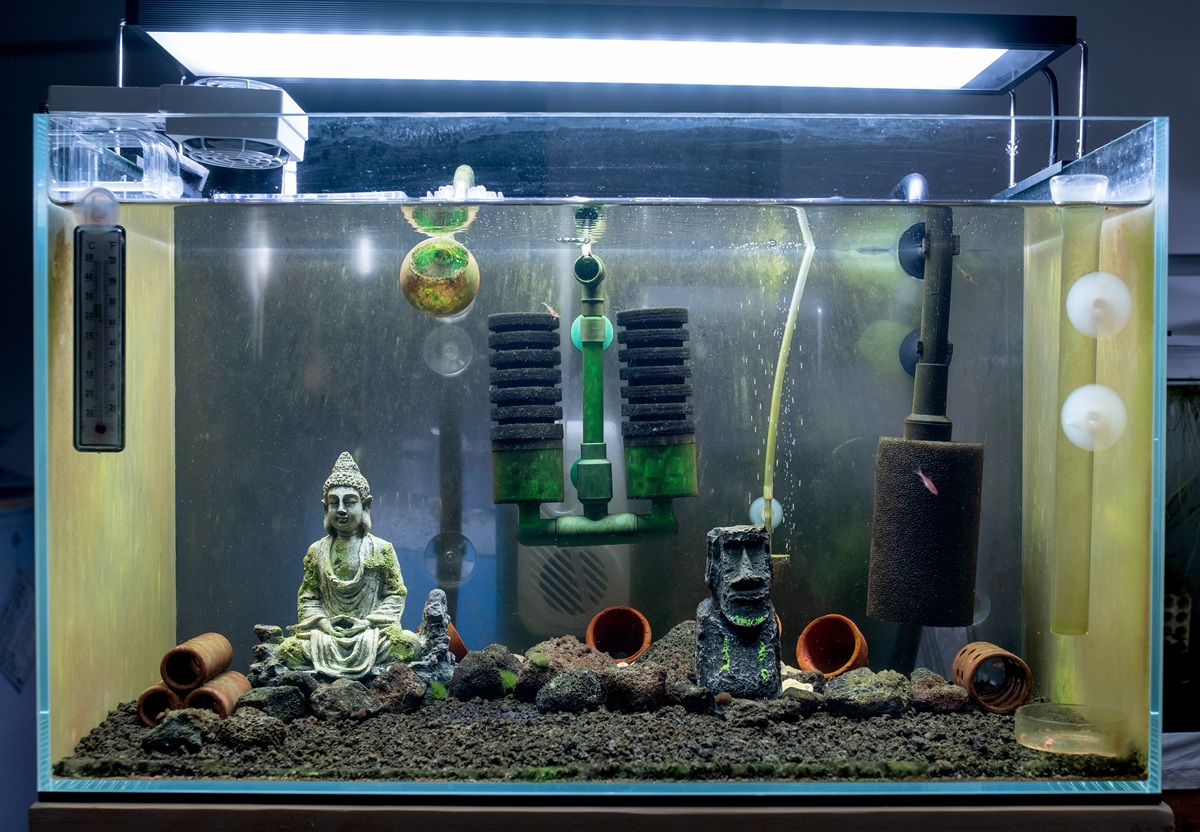
Everyone’s got their own preferences, and so will you once your Sulawesi tank has been running for a while. In the meantime, here’s what we’ve found works well:
- Aquarium: 15 gallon long
- Filter: Dual sponge for foraging + internal or HOB for biomaterial
- Substrate: Porous coarse sand or gravel (inert)
- Lighting: Basic is fine, with timer
- Heater: Must be reliable! (~100W)
- Thermostat: External controller (recommended)
- Thermometer: Preferably two for better accuracy
- Decor: Plenty of rocks is key, plants and wood optional
- Water: 15-20 gallons of RO water + Sulawesi shrimp remineralizer
- Leaf litter: Indian almond, guava, oak, banana, mulberry…
We also recommend selecting a few suitable shelters, like shrimp cubes. Sulawesi shrimp are shy compared to Neos and bee shrimp!
RO water for Sulawesi shrimp
- Water type: Remineralized RO recommended
- Temperature: 82-86 °F
- pH: 7.8-8.5
- gH: 6-8°
- kH: 3-5°
- Nitrate: <10
- Phosphate: <0.5
- Note: Stability is key
If you’ve kept finicky bee shrimp before, you’ll know the drill. Unpredictable tap water is out, remineralized reverse osmosis water is in. Unless your tap water is of fantastic quality, you’d just be making life difficult for yourself by trying to make it consistently soft and alkaline, on top of ensuring it’s free of nitrates and phosphates and hyper-stable. RO can sound daunting, but many bee shrimp breeders and all saltwater aquarists always mix their water from scratch. You won’t want it any differently once you start.
RO water contains pretty much nothing of anything, just pure H₂O and an unstable pH. You'll have to add the minerals back in at exactly the right proportions to create perfect Sulawesi shrimp water. Sounds complicated, but it’s not: you just use a premade mineral mix for Sulawesi shrimp, like Salty Shrimp Sulawesi Mineral 8.5*.
Follow the manufacturer’s dosage instructions and then test the result with your water test kit (every single time!) to confirm it matches the desired parameters. We know you just want to pour it into the tank and be done with it, but parameter drift is one of the leading causes of Sulawesi shrimp death. You may have heard the saying “cooking is art, but baking is science”, and keeping these particular shrimp falls squarely into baking territory.
*There are also mixes for lower pH, meant to imitate the conditions in different Sulawesi lakes. We’ve found the 8.5 to work best for us, and most Sulawesi keepers seem to agree.
Tip: Don’t forget to always top up the tank with RO, not tap water! Minerals will accumulate over time otherwise. That’s the kind of sloppiness we can’t afford with Sulawesi shrimp.
Tankmates
When it comes to tankmates for Sulawesi shrimp, it’s best to keep things extremely simple. No fish, please! Some aquarists refuse to even keep multiple Sulawesi species together, fearing one will end up outperforming the other (plus, they do interbreed, which isn't ideal given most species are highly endangered). We wouldn’t go that far, though we wouldn’t combine our Sulawesi shrimp with anything other than Sulawesi snails ourselves.
Sulawesi shrimp are easily stressed, easily outcompeted for food, and end up in other critters’ mouths easily. Their need for specific water parameters and a highly specialized set-up mean they just don’t make good choices for the general community aquarium.
Aquarium set-up
Once you’ve chosen a spot for your aquarium, you can start by creating the “dryscape”: place the substrate and decor in the tank, moving it around until you like the way it looks. After this, gently fill ‘er up with your carefully mixed water and turn on all the equipment. Live plants can be added at this time as well.
After that, it’s time to do, well, not much for the next two to four months. Your aquarium should cycle—if you’re not sure what that is, you’re probably not ready to keep Sulawesi shrimp—not to mention build up a solid layer of biofilm. Consider: at the high pH and temperatures these shrimp need, even small traces of ammonia become highly toxic, existing mostly as NH₃ (rather than NH₄⁺). A nicely aged and therefore stable tank is thus the key to Sulawesi success! We all want to get the ball rolling as soon as possible, but patience is truly a virtue here.
Tip: Although flow should be gentle, Sulawesi shrimp still want well-oxygenated water. Oxygen levels drop quickly in warm tanks, so point the filter outflow right at the surface to create light agitation. This helps oxygen dissolve into the water without your shrimp feeling like they live in a washing machine!
What do Sulawesi shrimp eat?
- Get ready to grow some gunk
Getting bored looking at a shrimpless tank? Don’t be. You should use this interval to get your future Sulawesi tank as dirty as possible! Veteran (bee) shrimp keepers will know that a clean aquarium is a recipe for a hungry colony. This is taken to the extreme in Sulawesi shrimp, which we’ve seen live in nutrient-poor environments. All they really know how to eat is biofilm, the slimy layer that eventually grows on anything submerged in their lakes (and our tanks).
The slime, also known as aufwuchs (OWF-vooks, from German), is often thought to consist mostly of algae. You’d be doing your Sulawesi shrimp a disservice by assuming they’re algae eaters, however. Biofilm actually consists of a yummy mixture of bacteria, fungi, protozoa, microscopic fauna, diatoms, and whatever floating particles might end up sticking to the slime layer. Our shrimp might look like vegetarians, but that’s just because their prey are so small we can’t see them.
How to grow biofilm
As far as we’re aware, you can’t buy biofilm, only grow it yourself—but there are some handy “cheat” products that will help a great deal. Thick biofilm layers normally only develop quickly in mature tanks with plenty of life because they require nutrients to grow. There are two main ways to supply these. The first option comes in a bottle: biofilm foods like GlasGarten ShrimpFit or small doses of plant fertilizer feed the microorganisms directly.
The second option comes from trees: dried leaves and other decomposing plant matter act as slow microbial reactors, growing the bacteria and fungi that shrimp love to graze on. Most successful Sulawesi tanks use a mix of both approaches. Leave the lights on for 12+ hours daily on top of everything else, and the tank will be gunkified in a jiffy!
You’re looking for a nice, even layer that feels smooth and jelly-like when you touch it with your finger. It’s fine if it’s green and hairy, but an explosion of long algae strings means you're overdoing the nutrients or the light. It can take a while to strike a balance, as some algae will always pop up along with the microcritters that shrimp love to munch on. The important thing is to get the hang of it before introducing the shrimp.
Once you feel proud of your biofilm layer (we aquarists are often proud of strange things, aren’t we?), you’ll likely have to perform multiple water changes over the course of a few days to get the nutrient levels back down. Nitrates and phosphates should barely produce a reading on your test kit, while ammonia and nitrite levels should remain at 0 at all times.
If all is well, congratulations! You may now finally go forth and purchase Sulawesi shrimp.
Tip: We like to use (faux) rock backgrounds in our Sulawesi shrimp tanks. Black film makes shrimp colors pop better, but the textured rocks are biofilm goldmines.
What about prepared foods?
If you buy tank-raised shrimp, you may get lucky and receive a colony that’s used to prepared shrimp foods like Spirulina powder. This is, and we cannot emphasize this enough, NOT something you should bet on, nor does it mean you can let your biofilm farming operations slip. It’s absolutely a bonus, though.
You can offer your Sulawesi shrimp regular doses of high-quality powdered shrimp foods; they may just grow used to them. Even if biofilm is king, knowing you’ve got options does bring peace of mind.
Tip: Many Sulawesi keepers like to keep a separate “gunk bucket” with some rocks and a light around to grow biofilm. Cycle rocks between the gunk bucket and the display tank to ensure your shrimp never go hungry.
Food hygiene
Did you know that uneaten foods fouling the water is one of the most common causes of Sulawesi shrimp death? The reason is in the relationship between ammonia and pH we discussed earlier. No wiggle room includes feeding time, with leaf litter (which doesn't affect water parameters as it decomposes) being the only exception.
Aside from preventing overfeeding and removing any uneaten foods within minutes, your best bet is to use a shrimp feeding dish and tube. It goes an incredibly long way in preventing food from being scattered all over the tank. Who would've thought tiny shrimp could be so messy?
Introducing & maintaining your Sulawesi shrimp
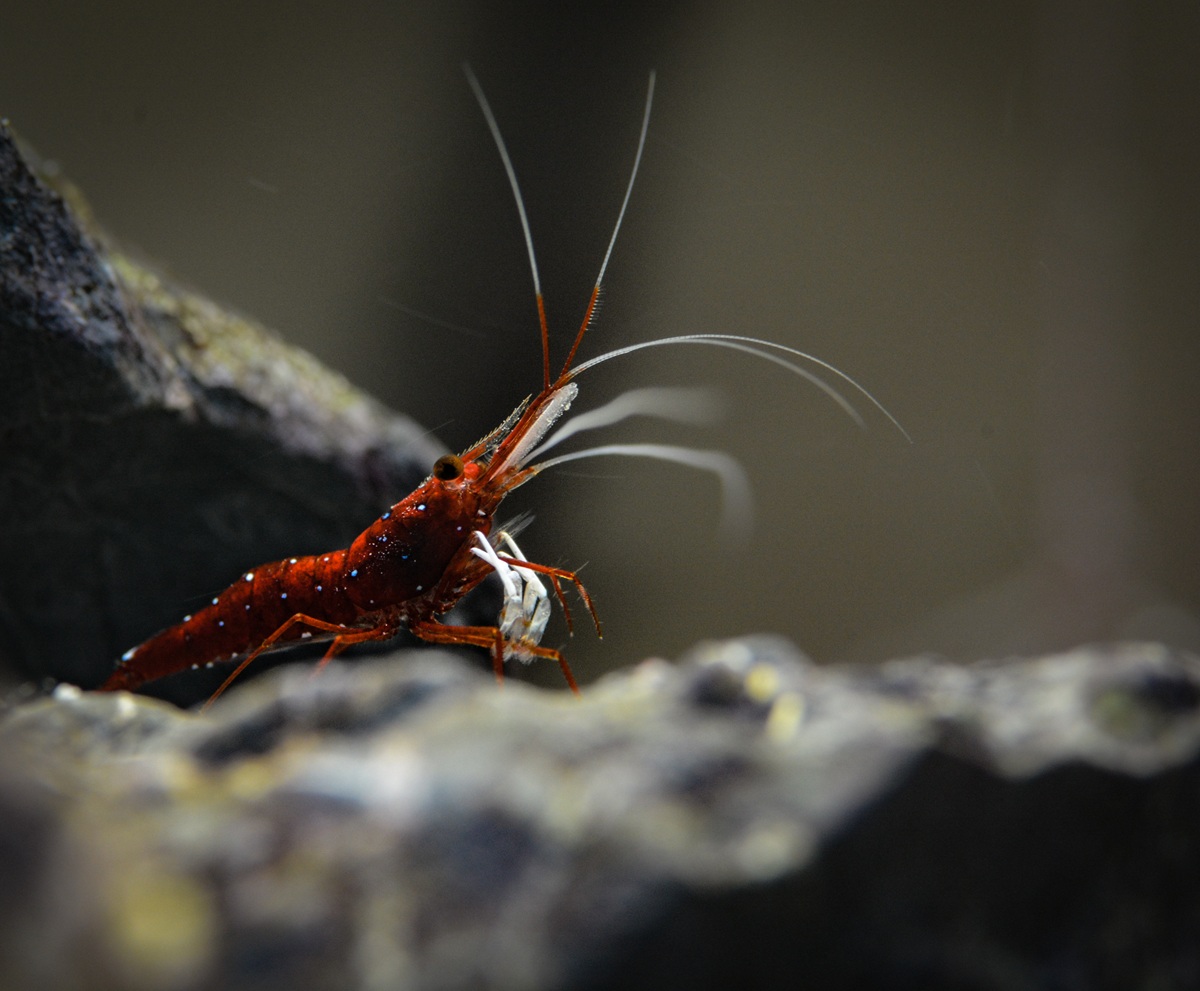
Shrimp finally here? This is the absolute most crucial moment in your Sulawesi shrimp keeping journey, because you’ll find out immediately whether you did a good job with your tank. If you didn’t, all the shrimp will generally be dead within days; even if you did, some mortality is still expected (sorry).
To prevent disappointment, we consider ourselves to be in the clear only once fifteen days have passed.
Acclimation
Fragile creatures need careful acclimation—a concept you should be familiar with before you attempt to keep Sulawesi shrimp. A drip acclimation kit set to 1-2 drops a second is a must here, and you should keep an eye on the temperature at all times while the shrimp get used to their new water. It’ll take a few hours before they’re ready to go into the tank!
Tip: Because Sulawesi shrimp are so fragile, most aquarists don’t quarantine theirs if they’re the first inhabitants. It’d just add more factors that might kill the shrimp! If you’re adding to an existing colony, then very careful quarantine will be necessary.
First 15 days
Once you’ve released the shrimp into their new home, your best bet is to leave them alone. It’s tempting to turn on the big lights so you can observe, maybe add a bit of food to draw them out—but you can do that later. It’s best to let the shrimp settle in for at least 24 hours before feeding, and leave them alone as much as possible for the first two weeks. No decor changes, cleaning (beyond very gentle water changes), or bright lights, please.
Remove any dead shrimp promptly to avoid ammonia spikes, and remember that it’s not unusual for the shrimp to initially refuse to come out of their hides. You’d do the same if someone just shipped you halfway across the country. If you’re bored, we recommend a water test: that’s always a good idea.
Daily routine
Daily care for Sulawesi shrimp isn’t that different from normal aquarium routines, except that it happens in slow motion. Everything (water changes, cleaning duty) should be smaller, slower, and more careful. Saying that “a stable pH is better than a perfect pH” has become a bit of a trope in the aquarium world, but that’s because it’s true—and not just for the pH reading.
You can change 20% or so of the water weekly, preferably using the drip kit you also acclimated the shrimp with to ensure all goes smoothly. The filter and its contents should always be cleaned very carefully, and never all at once.
Breeding Sulawesi shrimp: Can it be done?
It can be done. Tank bred Sulawesi shrimp are available, after all. Just don’t bet on it being easy or fast, or on commercial breeders sharing secrets about their fancy closed systems with us lowly hobbyists. We have to write our own how-to guide, and right now that’s still a work in progress.
Sulawesi shrimp belong to the category of higher order shrimp, just like your standard cherry shrimp. They hatch as perfect miniatures of their parents rather than passing through a larval stage. In the aquarium, females regularly carry eggs, juveniles somtimes appear, and some colonies of Caridina dennerli (the cardinal shrimp) in particular do seem to grow over time.
But there’s a real bottleneck in post-hatch mortality. Hobby keepers usually see “pregnant” females… and then nothing. The babies die before reaching adulthood. Why? We think the problem is mostly down to the fragility of the baby shrimp:
- Small fluctuations (temperature, minerals, cycle bumps) that wouldn’t trouble adult shrimp may kill juveniles. The high toxicity of ammonia in warm, alkaline Sulawesi shrimp tanks definitely doesn’t help here.
- Baby Sulawesi shrimp don’t show their faces during feeding time. They don’t seem interested in prepared shrimp foods, only biofilm. If the density isn’t high enough, they don’t stand a chance.
On top of this, we think species ecology matters a lot. Some Sulawesi shrimp, especially the species from rocky Lake Towuti, don’t seem to adapt as well to aquarium life as the Matano and Poso natives. We haven’t quite figured out their captive care yet, which is why breeding these species is also more of a challenge. It usually ends up being a matter of some babies appearing, but not enough to keep up with the slow decay of the colony.
YOU can make Sulawesi shrimp breeding easier
Even when it comes to the more forgiving C. dennerli, we just don’t have much of a framework to rely on yet. A lot of people have shared a lot of information about their limited successes, but it’s mostly anecdotal. No solid aquaculture studies have been published yet. Heck, sources go on and on about the “large eggs”, but no one seems to even agree on how long they take to hatch! That’s pretty basic information, and we’ll need more solid data on factors like these if we want baby Sulawesi shrimp.
For now, it’s best to provide the best possible shrimp care and to view breeding as more of a bonus. If your Sulawesi shrimp breed, consider it confirmation that you're doing an unusually good job. If you would be so kind as to maintain detailed breeding logs, the hobby would appreciate it! Notes that document tank age, disturbance, decor details, water parameters, oxygen, temperature, and whether the babies survive (and if so, how long) have real value. Get testin’, shrimpers.
Tip: Taxonomic work has found that we still don’t know everything about the difference between the Sulawesi shrimp and how to tell them apart. Shrimp sold as being the same species sometimes don’t even come from the same lake! That means some of us are currently trying to breed shrimp that aren’t even biologically compatible—no wonder we’re not getting anywhere.
Troubleshooting
So you added your brand-new colony to your carefully curated Sulawesi shrimp tank, and they all kicked the bucket within a week? Or maybe it’s been a while, but your prized shrimp are just not quite thriving the way you’d like them to? Yeah, join the club.
Even aquarium experts sometimes experience 100% losses. Gabor Horvath discusses his first experience in his 2022 article “The jewels of Sulawesi” in Practical Fishkeeping Magazine: “Having kept and bred ‘ordinary’ shrimp species for over a decade I decided to take the plunge and dive into the world of Sulawesi. I set up a tank for a small group of Cardinal shrimp, Caridina dennerli, and then — despite of my best efforts — all but one of them died within a week.”
Horvath lists ordering the shrimp in winter and an improperly aged tank as his primary mistakes, which hits the nail on the head. Almost all Sulawesi shrimp deaths happen as a result of imbalance and impatience. Both of these can be reduced with good planning, although we’ll be the first to admit that sometimes you just get unlucky.
Let’s triage those shrimp. With some luck, you can still turn the tide before it’s too late for this batch! Your first step should always be a full water test panel: do all parameter match what a Sulawesi shrimp would expect from its tank? If something is off, then very slow, drip-based water changes with perfect Sulawesi water should be initiated immediately.
Triage: What happened?
Think about what happened to your shrimp. Which of the four fits their situation best?
- Mass death within 24-72hrs of arrival: 50% or more of the colony passes away shortly after introduction (lower losses around the 20% mark are more or less “normal”, unfortunately)
- Random mass death: sudden death of multiple or all shrimp, 15 or more days after their introduction to the tank.
- Slow losses over weeks: colony numbers slowly dwindling with no clear cause, possibly during molting time.
- Alive but not thriving: shrimp spend most of their day hiding, look faded, don’t reproduce.
Mass death after introduction
Causes: improper acclimation (parameter mismatch), aquarium wasn’t ready
As you can imagine, Sulawesi shrimp are at their most vulnerable during the initial 24 to 72 hours after introducing them into their new homes. Transport is a stressful time for any critter, let alone highly specialized ones like these! As always, start with a water test.
- If you rushed acclimation: do nothing at all that might disturb your shrimp. Any “bad” parameters should be fixed with very slow drip water changes, but other than that, the shrimp should be left alone to try to recover from the osmotic shock by themselves.
- If the tank wasn’t ready: don’t do anything harsh. If a cycle bump occurred, consider asking friends, family, neighbors, or the aquarium store for filter media from an established aquarium to “seed” your own system; keep the tank clean to prevent toxic ammonia spikes. In cases where biofilm is lacking, decor from an established aquarium can help. Wait at least a two months before trying again with new shrimp.
Random mass death
Causes: parameter swings (cycle crash, pH crash), heater/thermostat failure, toxins
The causes for mass death in Sulawesi shrimp are mostly the same as in any other aquarium critter, but it happens much quicker due to their fragility. You should test all water parameters immediately and initiate a drip water change if you find anything amiss. Check the temperature, and then check it again with a second thermometer—temperature control going on the fritz is one of the most common causes of aquarium disaster.
Next, think about what may have destabilized the tank in the first place. Common triggers include:
- Overly large or fast water change
- Aggressive filter cleaning
- Overfeeding or not removing uneaten foods
- Heavy substrate disturbance
- Filter ran dry for extended period
- Forgot to add or check buffering minerals
- Dead critter (snail?) decomposing somewhere
Even if all parameters look normal now, one of these events may have caused a temporary ammonia/nitrite spike that has harmed the shrimp. In cases of serious cycle crash (mass death of beneficial bacteria), the problem won’t go away instantly and your shrimp are still at risk. Introducing filter media from an established tank can help; if there are any survivors, you’ve got your work cut out for you with days or weeks of water tests and water changes to try and keep them alive. Sorry!
If the temperature is off:
- Too low: Increase by 1-2°F per hour.
- Too high: Decrease as quickly as you can; heat is deadlier than cold. Running a fan over the water surface works wonders.
Parameters fine? No recent disturbance? Temperature fine? Try to think if anything may have entered the tank that shouldn’t have. Copper-based fish medications or plant fertilizers will kill shrimp, as will household chemicals or personal care products like cleaning sprays, perfumes, and air fresheners. Activated carbon in the filter, followed by multiple drip water changes over the course of a few days, are your best bets.
Slow losses
Causes: parameters are off, lack of biofilm, chronic low-level instability
Regular Sulawesi shrimp deaths indicate a lack of food or something being off with their water. The water parameters were wrong to start with, crept into “wrong” territory over time, or aren’t stable enough. You should be especially suspicious about the water consistency if your shrimp are dying while trying to molt (white ring of death, etc.); a low GH can cause molts to fail.
Are you being consistent with mineral dosing? Could you be disturbing the tank too much during regular maintenance? Not removing uneaten foods quickly enough? We know we sound like a broken record here, but if there’s one thing we learned about Sulawesi shrimp, it’s that small parameter swings that other shrimp would simply ignore can cause them to kick the bucket.
If the water parameters are in order, how are those rocks looking? Are the shrimp actively picking at biofilm, or do they not appear to be foraging much? Are you relying too much on prepared foods? Or maybe you’ve scrubbed the tank walls a little too enthusiastically lately, leaving your critters without food?
Tip: If you’re dealing with slow losses, you can add TDS checks to your regular testing schedule. Because the TDS value represents all dissolved minerals in a water sample, it doesn’t tell you anything about what’s in there specifically but can come in handy to monitor mineral creep.
Failure to thrive
Causes: parameters are off, lack of biofilm, chronic low-level instability
If your Sulawesi shrimp just appear “blah” but you’re not seeing regular deaths, you’re close—but something’s still not quite right. Your first step would, again, be to check all water parameters and tank design elements against those considered acceptable for Sulawesi shrimp.
Small issues like the temperature being slightly too low, the mineral balance drifting, or low-level parameter swings caused by irregular maintenance often cause chronic stress but not immediate death. Neglecting to stay on top of your gunk farming game can cause shrimp health to decline, too.
Consider whether:
- The biofilm layer is insufficient
- The tank feels too exposed or bright
- Tankmates could be causing stress
- Maintenance or water changes have become irregular (we’ve all been there)
- The tank is being cleaned too aggressively
Dealing with Sulawesi shrimp failing to thrive is often a bit of a guessing game. Re-reading this guide from the start can help, though remember to make any changes very slowly to prevent the situation from escalating in the wrong direction.
FAQ
Do I really need RO water for Sulawesi shrimp?
Unless your tap produces very soft and high-quality water, which does happen in some places, yes. Be realistic, though! Don't waste your time and money trying to cut corners, because Sulawesi shrimp will not have it.
Why are my Sulawesi shrimp dying?
Ah, the quintessential question! Either your shrimp are hungry (in which case the tank will usually look suspiciously clean), or the balance is off. Where could the imbalance have crept in? How consistent are you (mineral brands, quantities) while remineralizing RO water? Are you topping up with tap water? Are there organics breaking down anywhere?
Small KH and GH swings resulting from human errors like these—and from frankly annoying other factors, like plants absorbing minerals—can in turn affect the pH. That’s bad in all tanks, but especially a Sulawesi one.
Tip: Don't just test, but also write it down. Past test results can help you identify mineral creep and other potential issues as they develop over time.
Do I need an undergravel filter for Sulawesi shrimp?
No. Some folks recommend it for biofilm growth, but you don’t have to use one. We’ve found the double sponge filter + internal filter combo to work well; the two sponges provide an impressive amount of foraging space
How often should I feed my Sulawesi shrimp?
This depends largely on whether you’re happy with your biofilm layer. If it looks thick and fuzzy, a pinch of powdered shrimp food every few days should do it. If the biofilm is looking a little scrappy, daily feeding may be in order—if there are any leftovers after five minutes, remove them and feed less next time. Leaf litter can be left until it’s picked clean.
Conclusion
There's a lot more to these pretty shrimp than meets the eye. If you're ready to give them a try, we'd love an update in the comments! And if you've decided to opt for something else after reading this guide, we salute you: you're saving yourself a lot of hassle.