


 Shrimp
 Fish
Fish Crab &
 Plants
 Foods
Foods Snails
Cardinal shrimp Care (Caridina dennerli) | Sulawesi's Crown Jewel
Most shrimp keepers know of them, but few have actually tried to keep them: cardinal shrimp from Sulawesi. This Indonesian island boasts dozens of unique shrimp that can't be found anywhere else, and this one's the most popular among shrimp keepers. That doesn't mean they're common, though, because they're finicky and only suitable for shrimpers with plenty of experience.
Find out why cardinal shrimp are so challenging to keep, whether you should take the plunge, and how to keep your colony alive in the long run.
| Scientific name | Caridina dennerli |
| Common name | Cardinal shrimp, Sulawesi shrimp, white sock shrimp |
| Difficulty level | Very hard |
| Origin | Lake Matano, Sulawesi, Indonesia |
Table of Contents
Cardinal shrimp origins & natural habitat
Cardinal shrimp are naturally found in Sulawesi, the 11th-largest island in the world and a part of the Indonesian Peninsula. Formerly known as Celebes, the island contains an ancient lake system in its highlands. Because the lakes been cut off from other water systems for several million years, they are now home to a completely unique collection of fish and invertebrates.
Long-time aquarists will recognize Sulawesi's unique halfbeaks, ricefish, and gobies. But shrimpers are the real winners in this adaptive radiation bonanza, and the cardinal shrimp from the rocky shores of Lake Matano might be the biggest stunner of the bunch. Scientifically known as Caridina dennerli, it lends its name from the German aquarium supply company that financed the expedition that led to its scientific description (or its "discovery", although local folks may have been aware of it before).
It's important to note that Caridina dennerli is a species in deep trouble. Like it has for many other Sulawesi shrimp, the IUCN has designated it "Critically Endangered" status. Harvesting for the aquarium trade is one of the reasons their numbers are dwindling—meaning we should buy tank-bred, not wild-caught—but not the only one. Sulawesi's lake inhabitants in general are under heavy pressure from pollution (notably, mining runoff), invasive species (notably, flowerhorn cichlids), and large-scale modifications to the lakes (notably, hydroelectric power installations).
→ Want to know more about the island of Sulawesi, adaptive radiation, and where all these stunning shrimp came from? Try the section What are Sulawesi Shrimp? in our full Guide to Sulawesi Shrimp.
Cardinal shrimp description
Shrimp keeping in general is a hobby that's only been around since the late 90s/early 00s. It's easy to think cardinal shrimp were around from the start, but you'd be wrong: they were first described only in 2009. It's fair to say they took the hobby by storm after that, though, a feat entirely down to their looks (because their care requirements are, well, a nightmare). They're the shrimp everyone wants to keep, but most can only admire from afar.
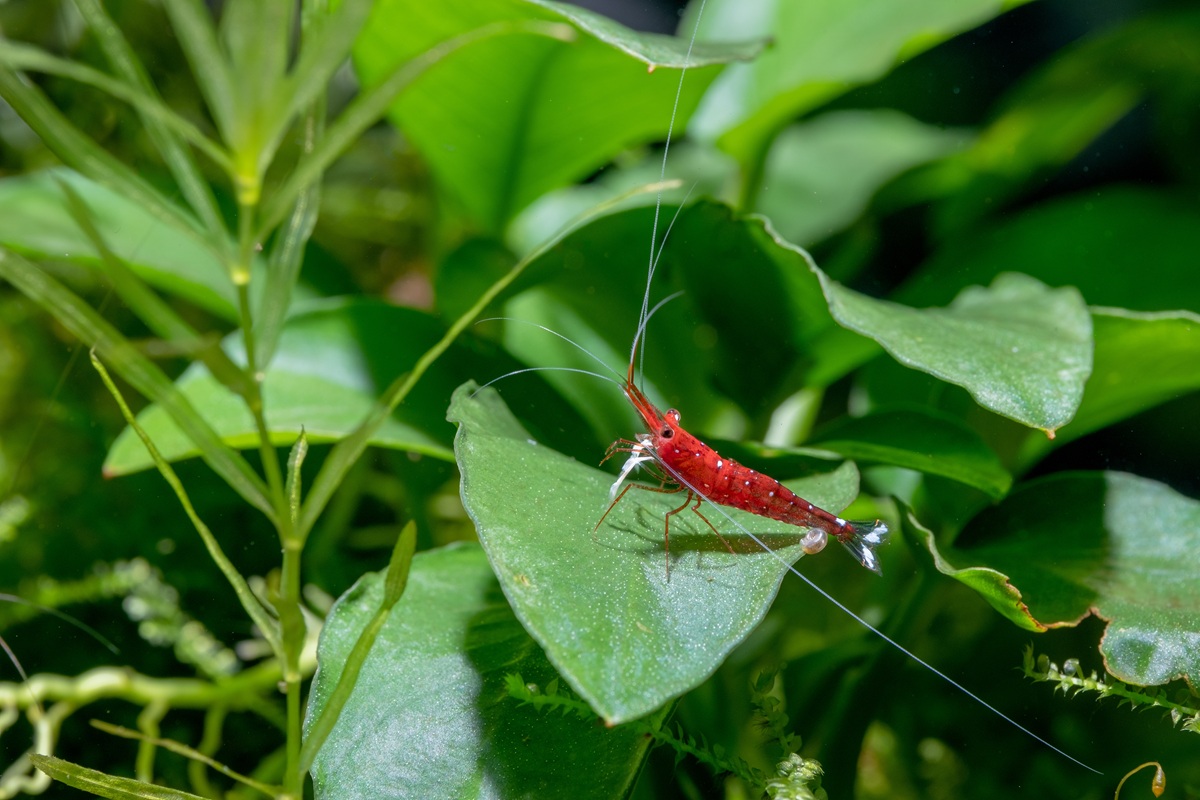
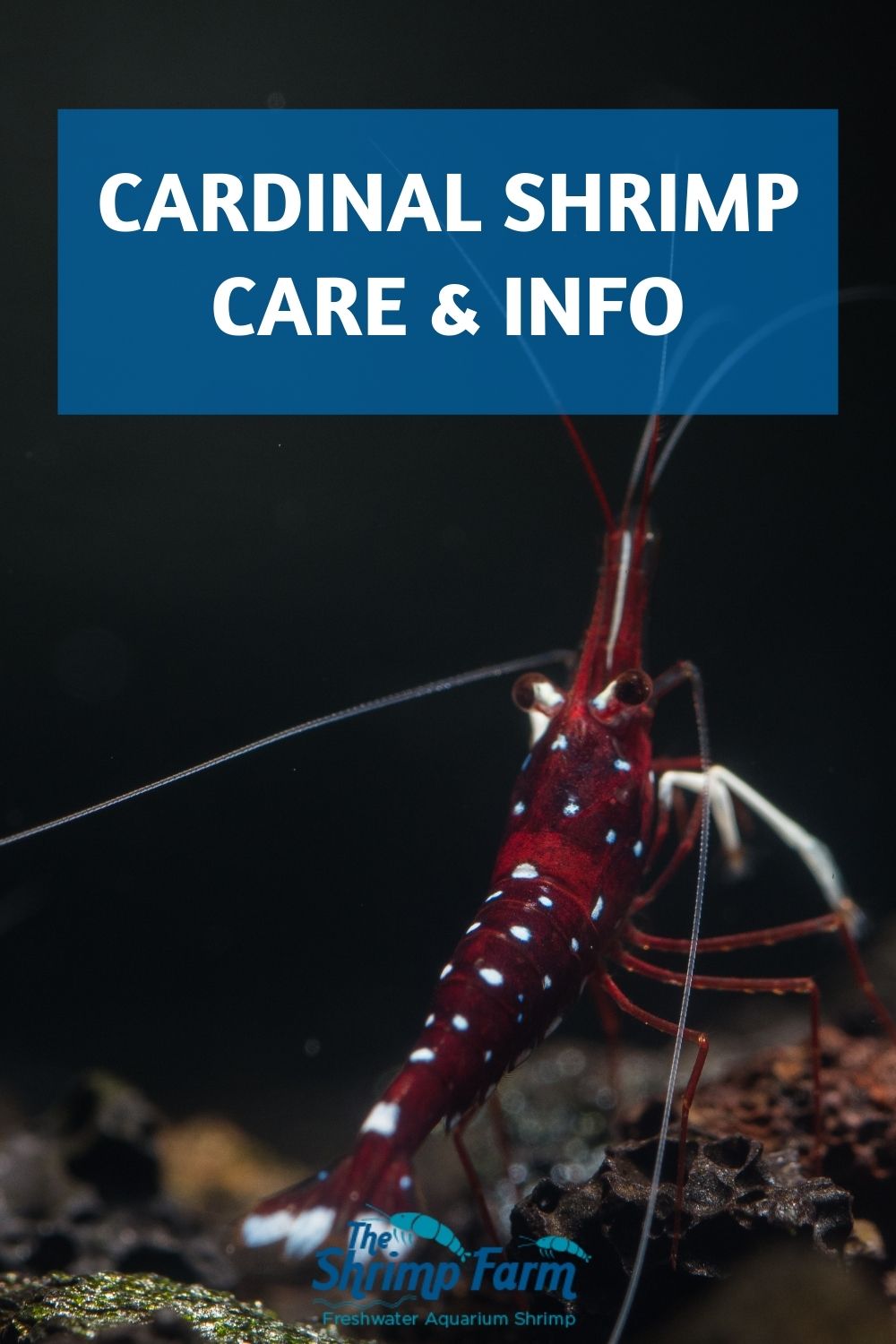
Cardinal shrimp, like most Sulawesi species, are even smaller than Neocaridina dwarf shrimp. They top out at barely an inch in length, but what they lack in size they make up for in color. Thanks to their blood-red base color, blueish-leaning white dots, and distinctive white "gloves", most aquarists can identify these shrimp at a glance. Even more so when they spot the blue variation, a selectively bred color morph (due to reduction of red pigment) appropriately known as "Blue Ghost". These blue cardinals often come with otherworldly golden eyes.
Cardinal shrimp requirements
If you're looking for an easy shrimp to start with, Sulawesi shrimp aren't for you. Although cardinal shrimp are among the easiest of the Sulawesi species, they're still only suitable for experienced shrimp enthusiasts. If you've already mastered even the advanced bee shrimp (TaiTiBees, shadow bees), you may proceed. If you haven't, think twice about the investment required and your low chances of success keeping cardinals alive in the long run.
Although they're small, your cardinal shrimp colony will need 15–20 gallons of water volume in order to avoid the water parameter swings inherent to smaller aquariums. No special equipment will be needed, although you'll always end up designing a biotope-type set-up to match the conditions in Lake Matano as closely as possible. This includes an inert substrate and plenty of hides for these shy shrimp.
Leaf litter and textured rocks are both essential, too, as they make excellent surfaces for nutritious (to shrimp, anyway) biofilm to grow on. Keep the lighting level medium to low. Sulawesi shrimp are somewhat photophobic and will respond to bright LEDs by staying in their hides.
→ Sulawesi shrimp care is too nuanced and finicky to describe in detail here. We've gathered everything (yes, everything) you need to know in our highly extensive Guide to Sulawesi Shrimp. It's essential reading before you buy expensive cardinal shrimp.
Water quality
By far the most significant bottleneck in Sulawesi shrimp care in general, and cardinal shrimp care specifically, is water consistency. You may be aware that Sulawesi critters need mineral-rich but alkaline water. But did you know the lakes are also very nutrient-poor, meaning its inhabitants aren't adapted to high levels of nitrate and phosphate in the water?
Although high-quality tap water can work for a cardinal shrimp tank, most shrimpers opt for remineralized RO/DI water instead. Temperature is also a concern, because cardinals can begin to struggle once it drops below ~75 °F (and stop breeding even sooner). Because warm water doesn't hold oxygen as well, ensure the water surface is always gently moving. You can point the filter outlet at it or add an extra air stone as a precaution.
It should go without saying that your aquarium should be fully cycled before you introduce cardinal shrimp. This is because, and let us bold this, stability is the key to Sulawesi success. Water parameter swings are probably the #1 cause of death among captive cardinal shrimp. These swings can be caused by cycle bumps, which is why waiting 3–4 months to introduce the shrimp is considered the golden standard.
There's more to keeping the water stable than just the nitrogen cycle: performing only small water changes using a drip system, always testing and matching remineralized water before adding it to the tank, removing uneaten foods immediately, and monitoring for mineral creep, among other measures cardinal shrimp keepers should stay on top of. And all that's considering this is one of the easier and more adaptable Sulawesi species!
Remember: alkaline water and high temperatures mean that in cardinal shrimp tanks, any ammonia present exists mostly in its highly toxic form, NH₃, rather than the milder NH₄⁺. We hope you enjoy water tests.
- Temperature: 82-86 °F
- pH: 7.8-8.5
- gH: 6-8°
- kH: 3-5°
- Nitrate: <1
- Phosphate: <0.5
- Conductivity: 180–220 µS/cm
Tankmates
Pricey, fragile and stress-prone? You've probably figured out by now that swimming tankmates are out of the question in a cardinal shrimp tank. It's hard enough to keep them alive without fish stressing them out or even picking off any baby shrimp you manage to coax into existence!
Luckily, your cardinal shrimp don't have to live on their own. Because many Sulawesi shrimp tanks are set up as biotopes, the most popular tankmates for cardinal shrimp are various species of Sulawesi snails from the genus Tylomelania. Try the chocolate rabbit snail or golden rabbit snail, which (unlike their shrimp counterparts) are sturdy and easy to keep. One snail is enough; more might affect the water quality.
Some shrimpers keep their cardinal shrimp with other Sulawesi shrimp species, although most worry one would eventually outcompete the other. Neos and bee shrimp are out, too, due to the very toasty water cardinals require.
Cardinal shrimp diet
If stability is the main stumbling block for aspiring Sulawesi shrimp keepers, then their specialized diet probably ranks #2. These shrimp are detritus feeders with a singular taste for biofilm, meaning they don't always respond as strongly to commercial foods as other shrimp species. The key to getting them to accept these seems to be to feed very fine or powdered foods. Recommendations vary from spirulina powder to microorganism-based foods like Shirakura Chi Ebi.
Although formulated foods can help (if your shrimp eat them), the best way to protect your colony from starvation is through the power of gunk. Out with the algae scraper, in with the biofilm—those white gloves are made for picking at microbes. We highly recommend you read more in our chapter on Sulawesi shrimp diet.
Breeding cardinal shrimp
Cardinal shrimp can and do reproduce in the aquarium, and are considered among the easiest Sulawesi shrimp to breed. "Easy" is relative here, however. They're not nearly as prolific as the dwarf shrimp we're used to, producing only 10 to 15 eggs at a time, and the babies' survival rates tend to be lower.
The key to raising cardinals from egg to full-grown shrimp is in being even more diligent than usual about both water parameters and biofilm. Any fluctuations whatsoever should be avoided, while gunk should be left to grow in abundance. There's not much else you can do; if your colony grows over time, consider that a sign you're doing a good job caring for them.
Buying cardinal shrimp
Cardinal shrimp are the most common Sulawesi shrimp in the hobby, but that doesn't mean you'll find them easily. Some specialized aquarium stores might carry these shrimp or be able to order a few for you, but in most cases, you'll have to search for them online.

4 Comments