

 Shrimp
 Fish
Fish Crab &
 Plants
 Foods
Foods Snails
Types of Sulawesi Shrimp | Cardinal, Orchid & More
Sulawesi shrimp are the fragile gems of the freshwater shrimp world. With over twenty species currently identified and new additions popping up on an almost yearly basis, there are many types of Sulawesi shrimp to choose from. Are you going Lake Malili, Poso, or Towuti?
Table of Contents
Buyer beware!
Keep your eyes open when comparing, buying, and researching Sulawesi shrimp. Scientists are still busy (re)classifying the different species, which has led to a lot of questions about who’s who. Sometimes one species turns out to be two, and sometimes two turn out to be one: it’s not surprising that confusion still reigns supreme. Websites and stores often accidentally list different shrimp names, use obsolete scientific names, or simply make up their own labels (ultra wine red blue spine galaxy jelly... you know the ones).
Some specialized aquarium stores carry one or two Sulawesi shrimp species, but in most cases you’ll have to find a specific supplier or ask them to order your shrimp in for you. We'll take a look at the most popular Sulawesi shrimp species below (at least as they're currently classified; this list and its names will undoubtedly be subject to change). Let us know your favorite in the comments!
A word on wild-caught shrimp
Many Sulawesi shrimp are still wild-caught. Although harvesting them can be a source of income for the local population, we would like to remind you that these species are only found in small numbers, often in one single locality. Overcollection, habitat destruction and the introduction of invasive species like the flowerhorn cichlid have already wreaked havoc on Sulawesi’s rare endemic species. Many are on the brink of extinction.
And if you needed any more convincing: tank bred shrimp are less prone to sudden death and much more outgoing than wild-caught specimens. Please refer to our full Sulawesi shrimp care guide before you buy them, because they're only suitable for highly experienced shrimpers.
Common types of Sulawesi shrimp
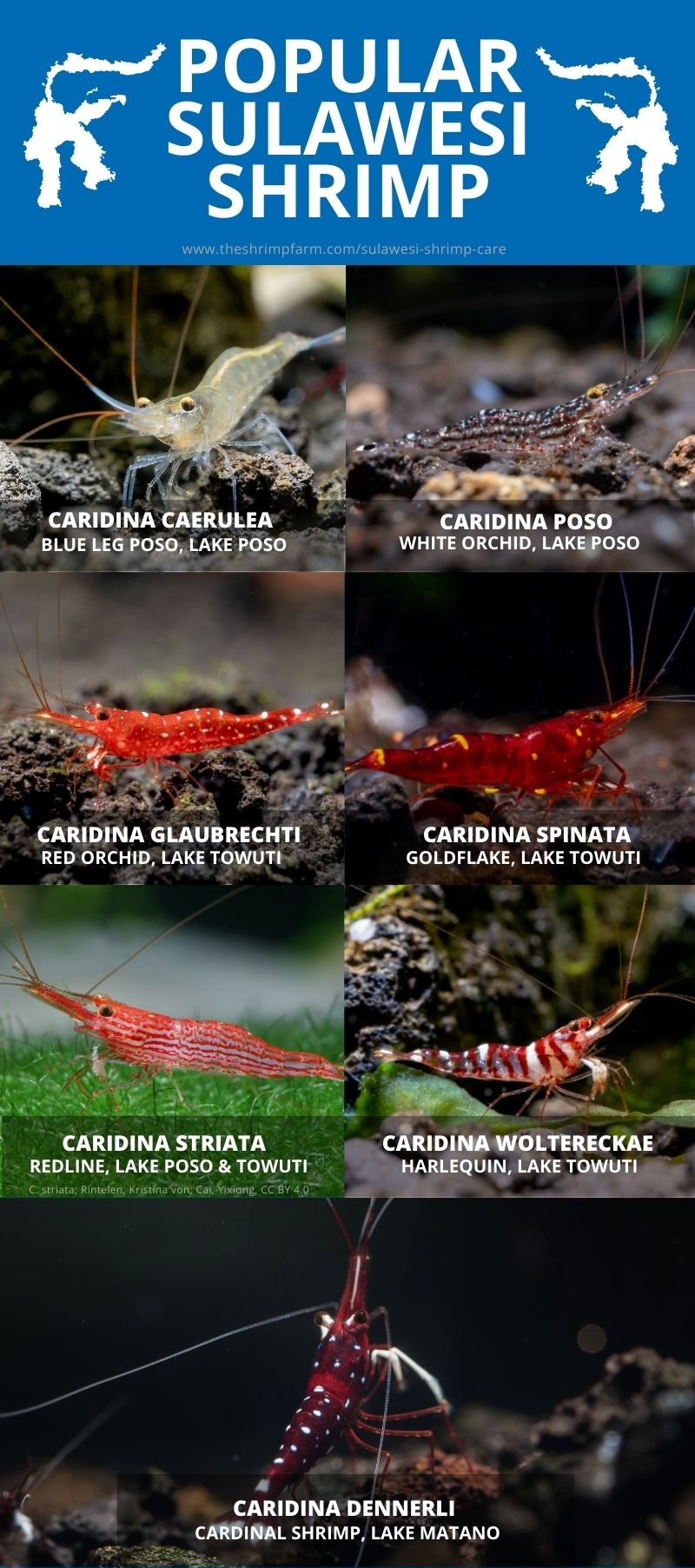
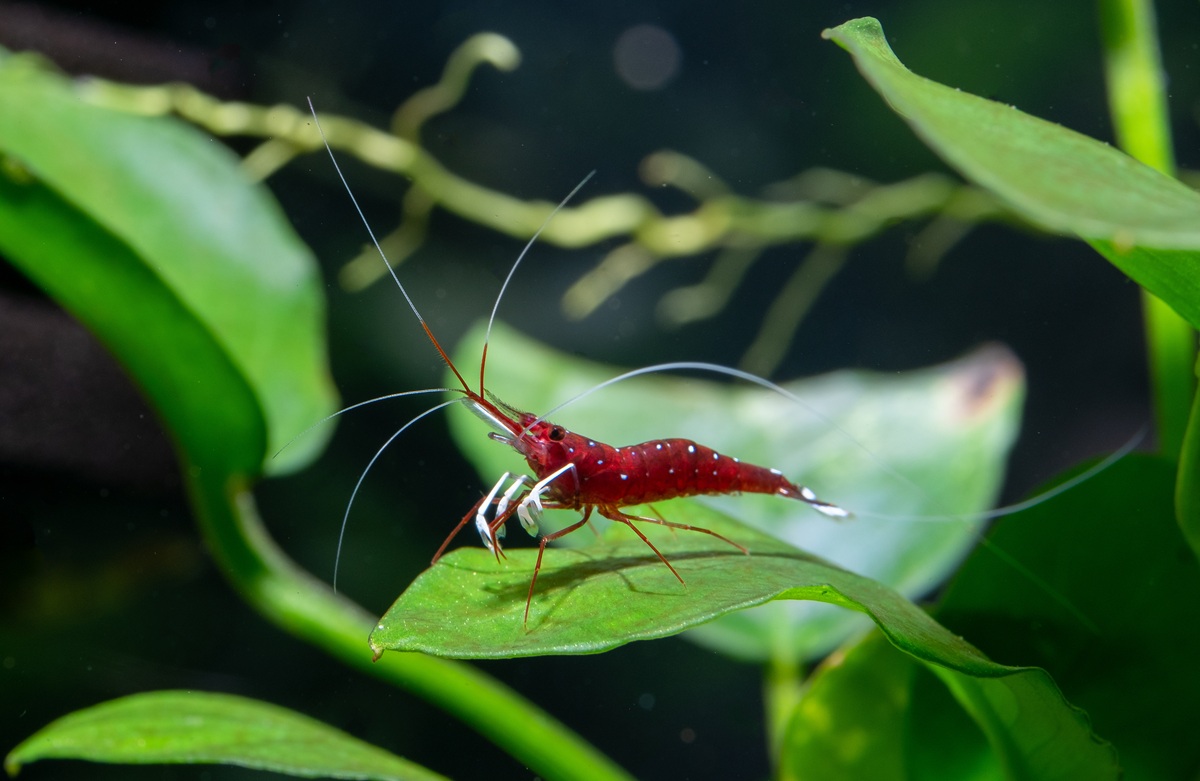
Cardinal shrimp (Caridina dennerli)
Origin: Lake Matano
Difficulty level: Hard, intermediate for a Sulawesi shrimp
Although it’s considered the quintessential Sulawesi shrimp today, Caridina dennerli was far from the first of the bunch to be scientifically described. It got its name, in 2009—the authors named it after the pioneering German aquarium supplier Dennerle GmbH, which financed the scientific expedition to Sulawesi.
Once aquarists became aware of the existence of this shrimp, the Sulawesi branch of the hobby exploded. Shrimpers love its stark white “gloves” and long, white, ever-busy antennae, but more importantly, it’s one of the easier species to keep and breed. If you’ve never kept Sulawesi shrimp before, this is a good one to start with. Or consider our next candidate…
→ Read our full guide to cardinal shrimp
Did you know? A blue color morph of the cardinal Sulawesi shrimp exists. If you’re willing to spend a little more, C. dennerli ‘Blue Ghost’ is a real looker.
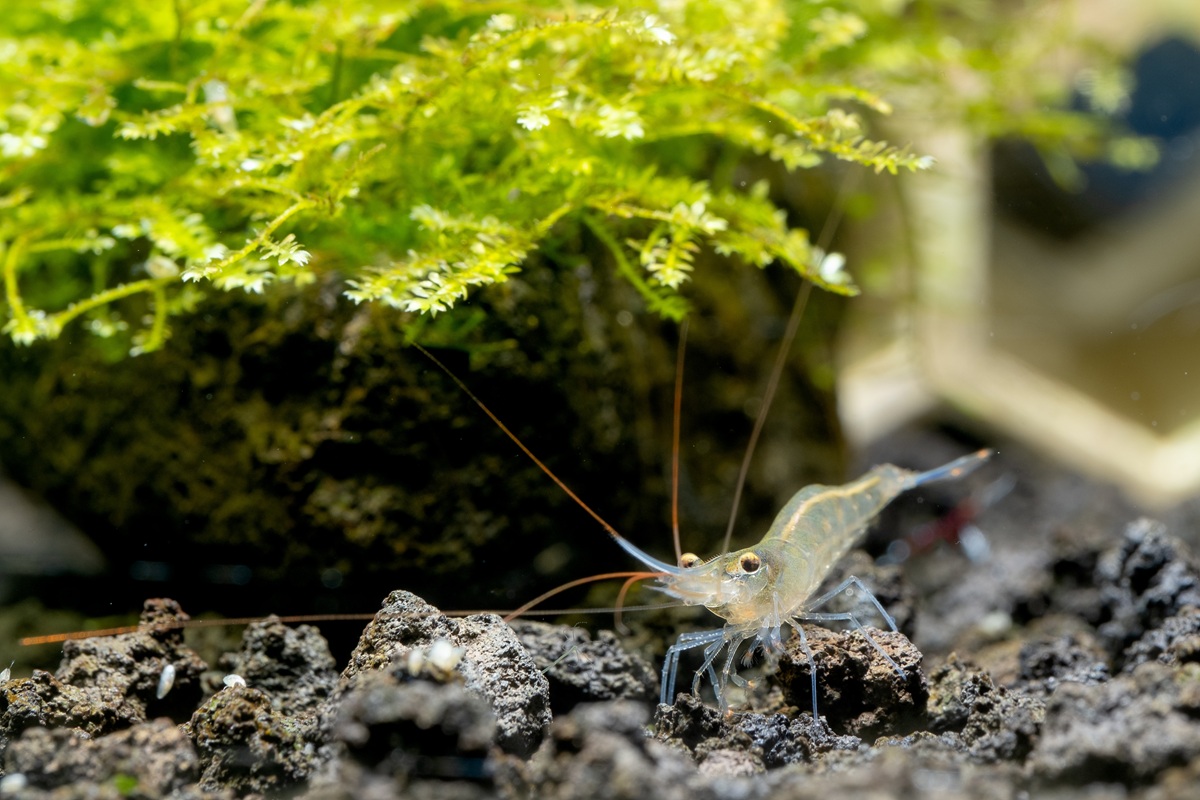
Blue leg Poso shrimp (Caridina caerulea)
Origin: Lake Poso
Difficulty level: Intermediate to hard, easy for a Sulawesi shrimp
Nervous about dipping your toes into the waters of Sulawesi after all this? We’re not going to tell you we’ve got a magical solution, but we can offer you one thing: the #1 best true Sulawesi shrimp for first-timers. Aquarists sometimes exaggerate how easy its care is, but the blue leg Poso shrimp is definitely tolerant of a wider range of water parameters than most of its cousins.
Mistakes that prove lethal to other Sulawesi shrimp are often only almost lethal to blue legs. And they’re social to boot, spending more time out in the open than other Sulawesi species. Some shrimp enthusiasts give blue legs a miss because of their transparency, but remember they often brighten up once they’re settled in. Aside from the blue legs, nose, and tail, this one also has some sweet orange antennae!
→ Read our full guide to blue leg Poso shrimp
White orchid shrimp (Caridina poso)
Origin: Lake Poso
Difficulty level: Hard, intermediate for a Sulawesi shrimp
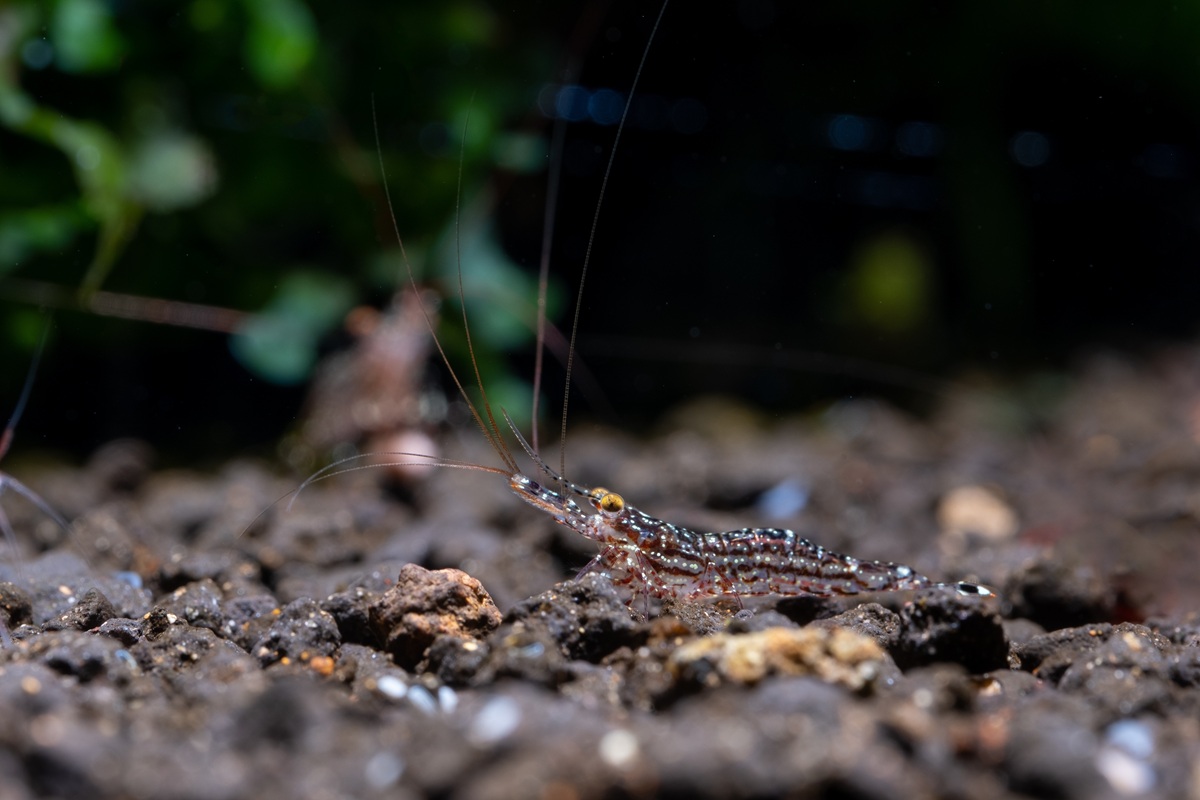
Although it wasn't officially described until 2021, the white orchid shrimp had already made it into Sulawesi shrimp enthusiasts' tanks at that point. Like other inhabitants of Lake Poso, this one is only moderately difficult to care for. It's definitely more tolerant than the Lake Towuti species, which we'll discuss next.
The Sulawesi shrimp known as "orchids" all sport a mottled pattern that must offer excellent camouflage on sandy lake floors. The white orchid can be recognized by its abundance of cream spots, black dots and dashes, and transparent patches.
Red orchid shrimp (Caridina glaubrechti)
Origin: Lake Towuti
Difficulty level: Hard, even for a Sulawesi shrimp
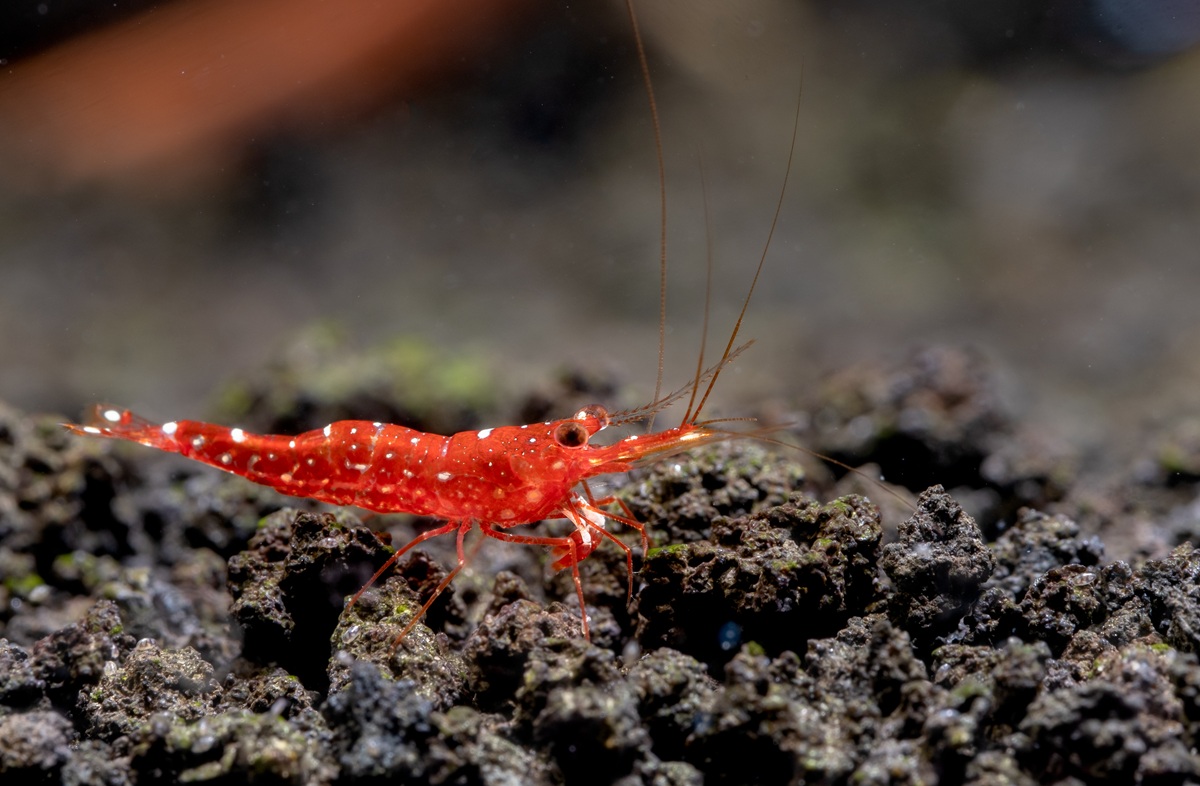
Welcome to Lake Towuti, the largest of Sulawesi's ancient lakes and home to many unique shrimp. One of our favorites is the lovely red orchid shrimp, which similar in looks to the white orchid shrimp (explaining why both get the "orchid" sticker). But the similarity is superficial: being from different lakes, they have different specializations. Unfortunately, this is reflected in red orchid care.
So far, most species from Towuti—including this one—have proven less tolerant and more difficult to care for than Sulawesi shrimp from Malili and Poso. Most keepers agree it must have something to do with the lake's ecology. Towuti's floor is strewn with rocks and it contains less organic material than the other lakes, which could mean red orchids are even more dependent on biofilm than other Sulawesi shrimp.
Goldflake shrimp (Caridina spinata)
Origin: Lake Towuti
Difficulty level: Hard, even for a Sulawesi shrimp
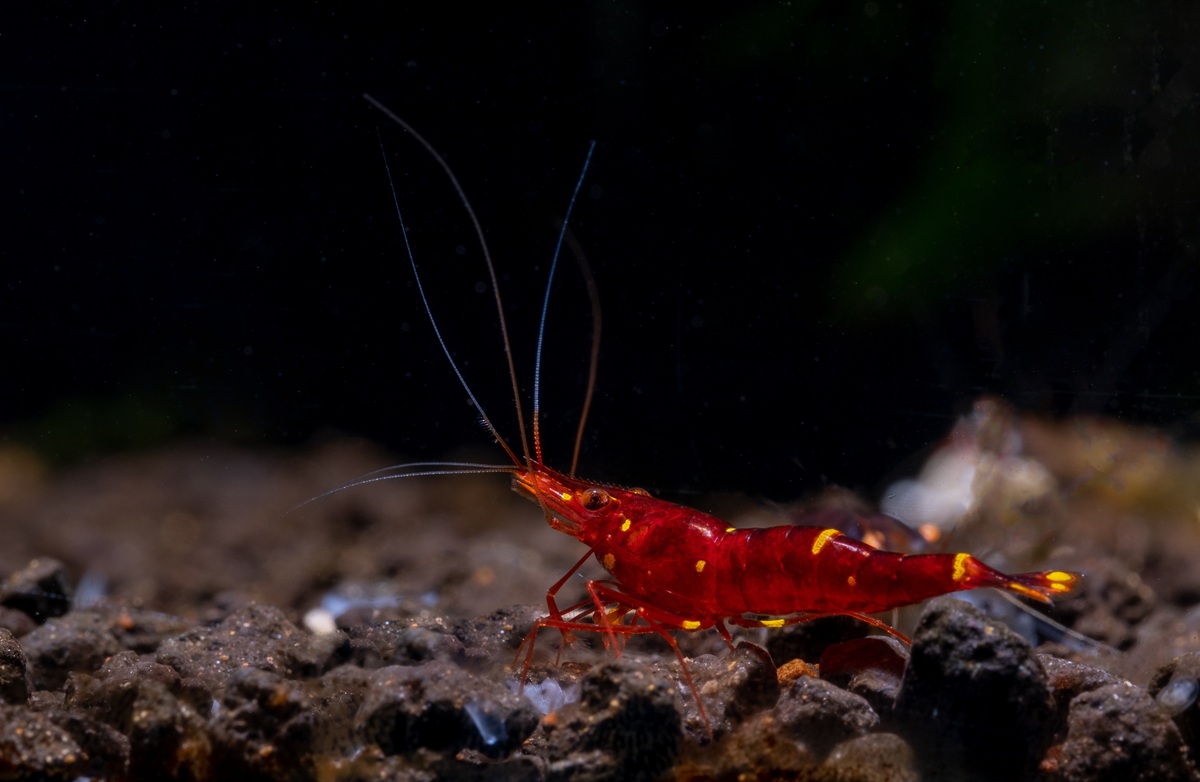
How luxurious-looking can a shrimp be? The lush reds and sumptuous golds of the goldflake shrimp are a magnet for aquarists, but few have got what it takes. This is no blue leg, nor would we recommend it if you haven’t kept Sulawesi shrimp before.
The main problems shrimpers report with goldflake shrimp are… instability and a lack of biofilm. Tell us something we don’t know! This is a highly specialized rock grazer, meaning a colony can pick an immature tank clean in weeks—and then the deaths start. We’ve been thinking of using larger tanks to grow more biofilm, but it remains to be seen whether that makes these shrimp any more suitable for captive life.
Redline shrimp (Caridina striata)
Origin: Lake Poso, Lake Towuti
Difficulty level: Hard, even for a Sulawesi shrimp
If you’re familiar with saltwater aquarium critters, you probably just blinked hard! No peppermint shrimp here, though: Caridina striata looks the part thanks to its cool pinstripes, but it’s tiny compared to its distant marine cousin.
Redline shrimp ecology is similar to that of goldflake shrimp. We've noticed that despite their rocky natural habitat, they do still show an interest in biofilm growing on leaf litter. Even if it’s not entirely biotope-correct, that’s probably a good idea to supply plenty of. "Better in than out" applies doubly to these difficult eaters.

Harlequin Sulawesi shrimp (Caridina woltereckae)
Origin: Lake Towuti
Difficulty level: Hard, even for a Sulawesi shrimp
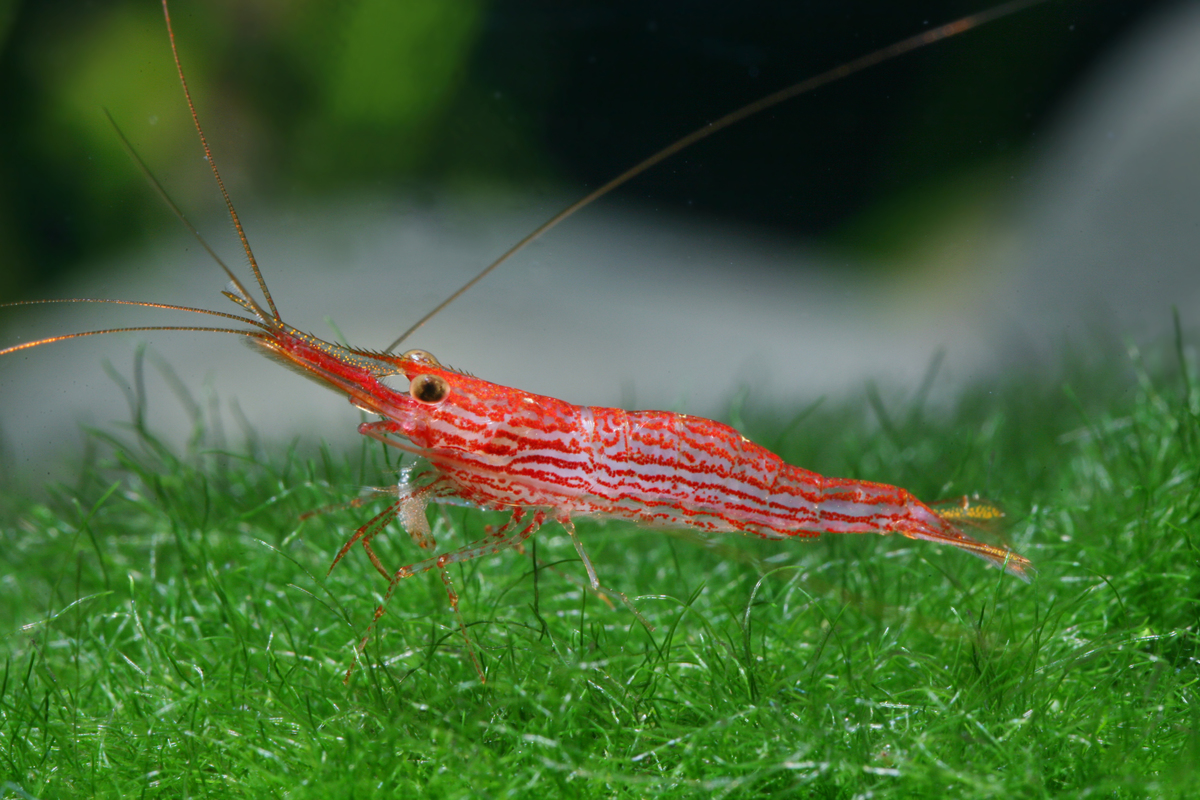
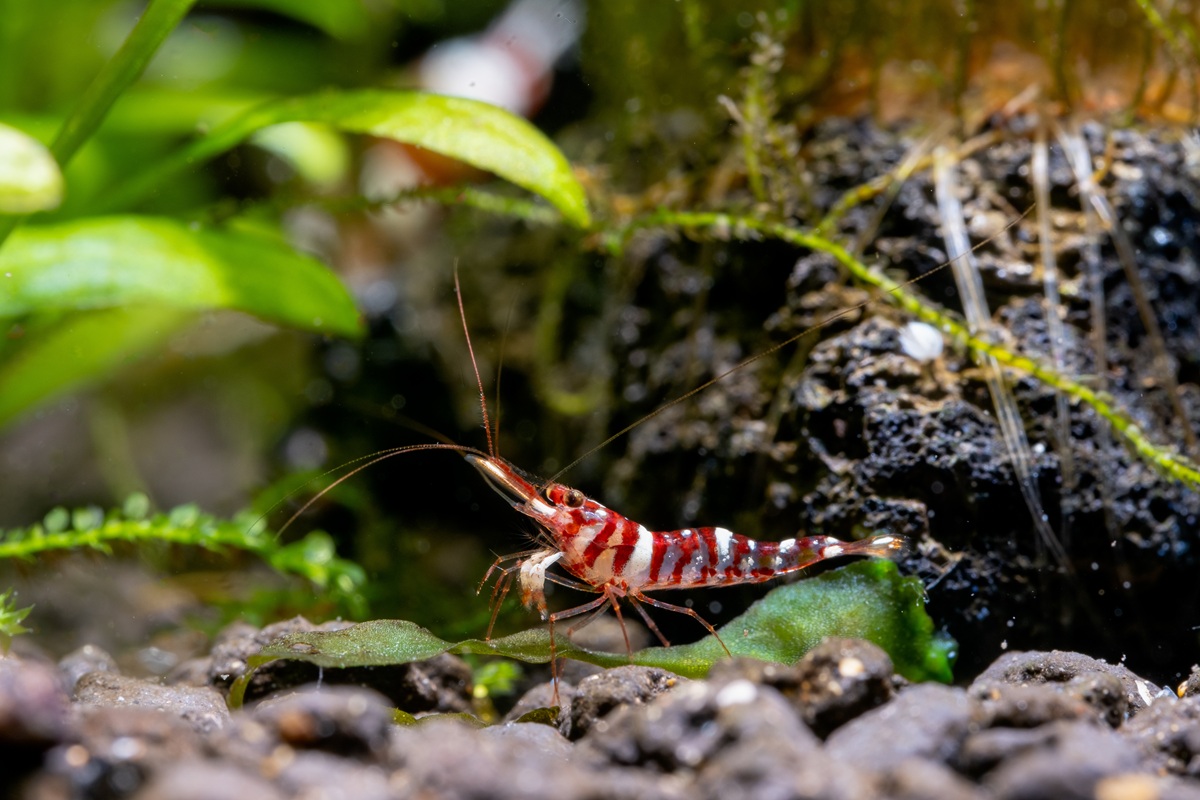
This shrimp has a doppelgänger! It looks almost identical to another striped lake dweller known as C. spongicola. Because that species depends on a symbiotic relationship with freshwater sponges to survive—it lives inside them—it’s not imported for the aquarium hobby. We say thank goodness, because Sulawesi shrimp are difficult enough as is. If it’s in a tank and it looks like a candy cane, it’s the harlequin Sulawesi shrimp, not the sponge lover.
Given it’s also a Lake Towuti native, C. woltereckae is similar to the two previously mentioned shrimp in terms of aquarium care. It’s really not easy, but could be doable if you’re obsessive about biofilm and the stability of your harlequin tank.
BONUS: Malawa shrimp (Caridina pareparensis)
Origin: Lowland Sulawesi streams
Difficulty level: Easy (in general, not just for Sulawesi)
Cheating alert! The Malawa shrimp, a mottled brownish species with sparse tiger stripes, is technically a Sulawesi shrimp. It’s found on the correct island, but aquarists usually don’t consider it when discussing Sulawesis because it’s not a lake species. It lacks the spectacular colors, but it shed something else when it moved upstream: its specialization.
Malawa shrimp are generalists. Never mind the high pH, never mind the specific water hardness, and never mind the sudden deaths. This is Sulawesi’s answer to the cherry shrimp. Just keep the warm water, inert substrate and ample biofilm, and it doesn’t care much where you put it. Even community tanks work fine, as long as they're limited to microfish that don’t eat scampi for lunch.
Uncommon types of Sulawesi shrimp
As we’ve mentioned, there more than twenty Sulawesi shrimp species are currently recognized. Some never show up in the aquarium trade, simply because they’re too fragile or too drab. A few others pop up from time to time:
- Mini blue bee shrimp (Caridina loehae) from Lake Matano and Towuti: Not easy, but how cool is a shrimp that can vary from blue to red?
- Red tiger ('Tigri') shrimp from Lake Towuti: A mystery customer whose identity has not yet been resolved. Looks like a harlequin Sulawesi shrimp, but with vertical barring.
- Galaxy Sulawesi shrimp: Another shrimp that pops up in shipments, but we can’t even figure out which lake they come from due to a lack of published information. No official description yet.