


 Shrimp
 Fish
Fish Crab &
 Plants
 Foods
Foods Snails
Bacterial Infection in Freshwater Shrimp: Signs, Causes, Treatment & Prevention
Bacterial infection in freshwater shrimp can be caused by a wide variety of bacterial strains and cause a range of mysterious and disturbing symptoms, including mass death. If your shrimp seem off and you're struggling to figure out what's going on, they may have caught an infection.
Below, let's have a look at what causes bacterial infection in freshwater shrimp, how to prevent it, whether there are any cures, and the different types of bacterial infections our aquarium shrimp can catch. We'll smash some myths along the way and hopefully find out what's going on with your crustacean pets. Let's dive in!
Table of Contents
What causes bacterial infection in freshwater shrimp?
Most of us humans have caught a bacterial infection at some point. Familiar illnesses like pneumonia, food poisoning, strep throat, staph infections, and many more are caused by bacteria, after all. What we sometimes forget is that most of the bacteria that cause our ailments are actually omnipresent. We all carry staph bacteria on our skin, for example, but they don't usually make us ill unless they enter our bodies through cuts or scrapes. People with weakened immune systems in particular are susceptible to bacteria ending up where they shouldn't.
The situation for our shrimp is very similar. So are the bacteria involved: most are not picky about their hosts. Our freshwater aquariums contain a varied microbiome that can include familiar faces like Aeromonas, Citrobacter, Pseudomonas, Mycobacterium, Streptococcus, Edwardsiella, Flavobacterium, and Shewanella (in humans, these bugs can cause anything from food poisoning to necrotizing fasciitis to UTIs). Our shrimp mostly cohabitate peacefully with this alphabet soup of microorganisms, but they can get in trouble if the bacteria manage to sneak into their tissues.
Both in aquaculture (the places that breed shrimp for sale to aquarists) and in our hobby tanks, the main risk factor for bacterial infection is stress affecting the immune system. In shrimp, that mostly translates to poor water quality and overcrowding. The smallest injury or molting blemish can turn into a magnet for bacteria if the shrimp's body can't fight off the invader!
Preventing infection
We can all get unlucky and receive a shipment of shrimp that caught a deadly bug somewhere along the supply chain. It's not uncommon for breeders and wholesalers to prioritize quantity over quality, after all. But once your crustacean pets have passed their 30-day quarantine period, it's mostly up to you to make sure they don't catch bacterial infections (although of course, bad molts and other accidents do happen).
The #1 prophylactic is simple clean water. An anti-infection regime is the same as a regular healthy shrimp regime:
- All shrimp tanks should be fully cycled and stable. Factors like introducing your shrimp too soon or overfeeding them can cause ammonia spikes. If these don't kill the shrimp outright, they'll certainly cause immense stress.
- Stability doesn't end at the nitrogen cycle. Parameters like pH and hardness should also be kept from fluctuating, as this is very stressful (not to mention potentially deadly) to shrimp.
- Weekly water changes of around 20%. The new water should match the parameters and temperature of the old, and be added in slowly (preferably with a drip system).
- Weekly (or more frequent) water tests. Water changes are great and all, but they don't give you any insight into the health of the water or the stability of your system.
Treating infection
Over-the-counter antibiotics are increasingly difficult to get a hold of for hobbyist aquarists. This is a good thing. Improper use of antibiotic medications is directly linked to the worldwide problem of drug-resistant bacteria, including in our aquariums. These "superbugs" can end up in the wild and wreak havoc on local ecosystems, and are technically able to infect humans as well. See the bottom of this post for more information — the gist is that you should wear gloves!
Of course, the lack of access to antimicrobial drugs does mean our treatment options when it comes to bacterial infections in our shrimp are very limited. That's why most shrimpers opt to cull any individuals they suspect of having an internal infection right away. If the infection is on the outside, you could try treating with hydrogen peroxide, or at least keep the shrimp around to see if it molts off the affected parts.
We have to be realistic: the infections discussed below usually constitute a death sentence for the poor victim. Turns out prevention really is the best cure.
Types, causes & symptoms of bacterial infection in freshwater shrimp
One problem we run into when trying to gain and spread knowledge on disease in pet shrimp is that research into ornamentals is limited. Most studies focus exclusively on shrimp bred for human consumption. These are generally penaeid (belonging to the family Penaeidae) shrimp, while our aquarium favorites are caridean (belonging to the family Caridea).
It's difficult to say whether the diseases found in penaeid shrimp can also affect our colonies, because diagnosis usually requires a DNA test. Some definitely don't — Vibrio, for example, is associated with tropical saltwater, while columnaris (Flavobacterium columnare) seems to be rare outside fish. Others, we're not so sure. We haven't found any reports of gill infection in ornamentals, for example, but it probably does happen!
Below are the diseases that have definitely been recorded in freshwater shrimp like cherries and bees. This is mostly just in case you're interested, because as we've seen, treatment options are very limited. Still, most of us at least want to know what proved fatal to our beloved pets.
External bacterial infection
Bacterial shell disease (rust disease/brown spot disease/black spot disease/chitinolytic shell infection)
A shrimp's exoskeleton normally offers pretty good protection against small critters that want to eat it, including bacteria. Unfortunately, their homemade armor does have weak spots, especially around the swimming legs. Poor water quality and small injuries can also offer inroads for the highly varied pathogen alphabet soup we saw earlier.
If bacteria do manage to take hold on a shrimp's exoskeleton, they will begin to break down chitin, the building block that makes crustacean shells so sturdy. Depending on the exact pathogen, this can cause brown, rusty-looking or black spots. These slowly grow and develop into lesions. If the shrimp isn't cured with hydrogen peroxide (success rates are sadly low) or manages to molt off the infection, the bacteria may eventually reach its soft tissues.
Shrimp with bacterial shell infection usually decline slowly, then very fast. They often act normal until the bacteria manage to penetrate the exoskeleton. At this point, you may notice them turning white or reddish on the inside, slowing down, acting erratically, or struggling to move before passing away.
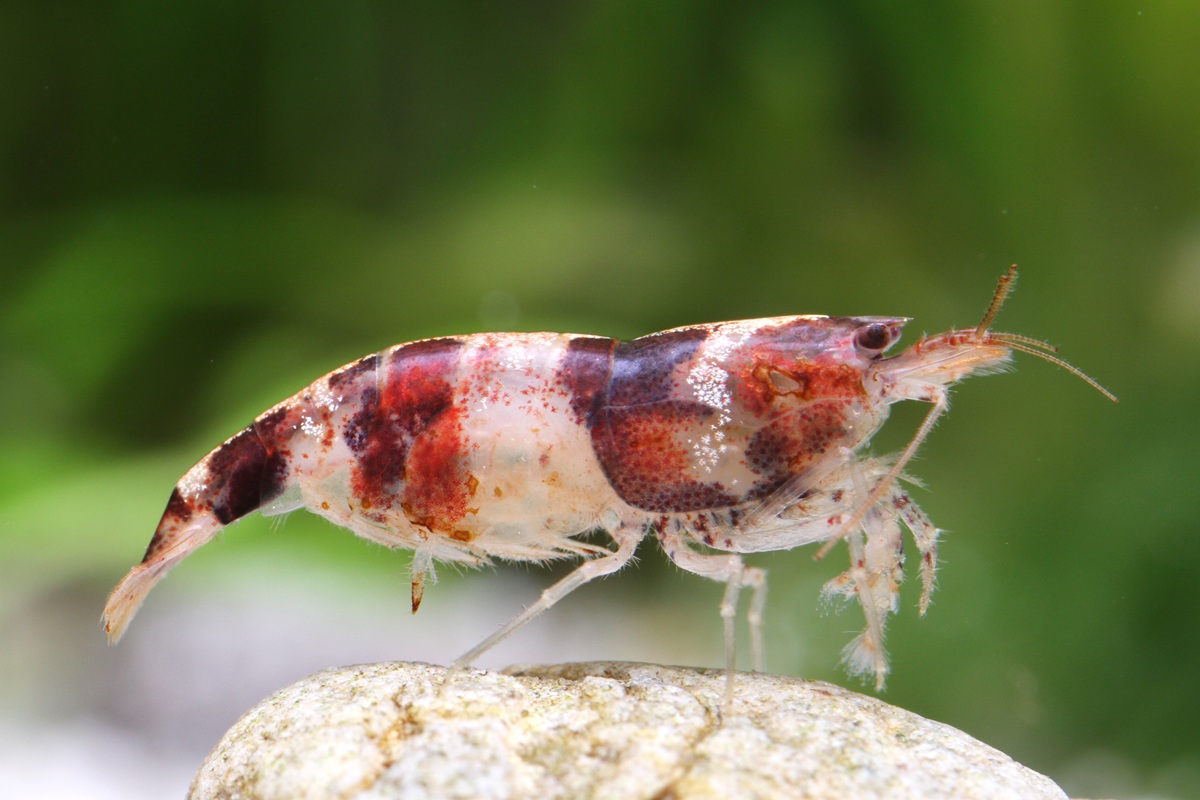
Photo by Chris Lukhaup
Internal bacterial infection
Septicemia
We've seen that a wide variety of bacteria can wreak havoc on a shrimp from the outside. But it can get worse. When bacteria manage to make it to the inside, they can cause a condition called septicemia, which is one of the most widely feared infections in any creature — including humans. Septicemia can be fatal within hours because it involves the bacteria entering the bloodstream, giving them unlimited access to almost all parts of its victim.
Wait a minute, you say. Shrimp don't even have blood. You are entirely correct, but unfortunately they do have hemolymph. This "shrimp blood" fulfills more or less the same function and shuttles the bacteria throughout their bodies in much the same fashion. In fact, because hemolymph isn't contained in blood vessels, the bacteria may spread even quicker, with no way for the hemocytes to catch up and clear the infection. Bacterial septicemia in ornamental shrimp can be devastating: one minute your colony looks fine, the next it's a "blood"bath.
Given that antibiotics are not an option in our home tanks (or shouldn't be, even if you can get a hold of them), there's no cure. Something like external hydrogen peroxide isn't going to help when the disease is on the inside, and septicemia tends to progress too quickly to consider medication anyway.
It's rarely easy to confirm bacterial septicemia as a cause of shrimp death, but there can be signs. Don't forget that stress is a big factor:
- Very sudden death, whether it's the entire colony or individual shrimp.
- In transparent shrimp, black or red lesions may be visible around the organs.
Rickettsia-like organisms
One type of bacterial infection that might be responsible for our shrimp dying but that we can't really diagnose visually is called RLO. This is the annoying thing about internal bacterial infections: it's not just that we can't really cure them, but we usually can't even identify the culprit!
RLO stands for Rickettsia-like organisms, named for their similarity to the gram-negative pathogen that causes Rocky Mountain Spotted Fever (which is spread by ticks). A 2024 conference report from the Joint Pathology Center identified RLOs in a cherry shrimp that also had Cladogonium.
❓ Mycobacteriosis
Although there is very little out there on Mycobacterium infections in ornamental shrimp, there are some indications it does affect the Caridea. One is a video discussing Caridina propinqua (orange bee shrimp) with a bacterial infection that caused lesions similar to those associated with mycobacteriosis. The other is a confirmed case in a Macrobrachium shrimp, also known as the giant river prawn.
Ugh! As we'll see at the bottom of this article, some Mycobacterium can infect humans, causing a disease called fish tank granuloma. The last thing you want is an outbreak in your shrimp tank. Unfortunately, as with the RLOs we mentioned above, conclusively identifying which exact pathogen has infected your colony is almost impossible. Visual diagnosis is not feasible, so you'd have to submit a sample to a laboratory for PCR testing or try to identify the typical lesions under a microscope.
A word on muscular necrosis
A lot of guides to shrimp disease discuss muscular necrosis, which turns shrimp milky white or pinkish on the inside, as if it's a disease of its own. In reality, it's a symptom. A range of ailments can cause a shrimp's muscles to die off. This includes bacterial infection, but also viruses, a lack of dissolved oxygen in the water, and poor water quality. Given that cottony white coloration means the shrimp is quickly nearing its end, though, the exact cause doesn't matter all that much in the moment.
We suggest you put any shrimp that have gone white out of their misery. They won't recover, and at least this way you minimize their suffering and help protect the rest of the colony. And don't forget to do a water test — dirty water can cause shrimp to die from muscular necrosis in more ways than one.
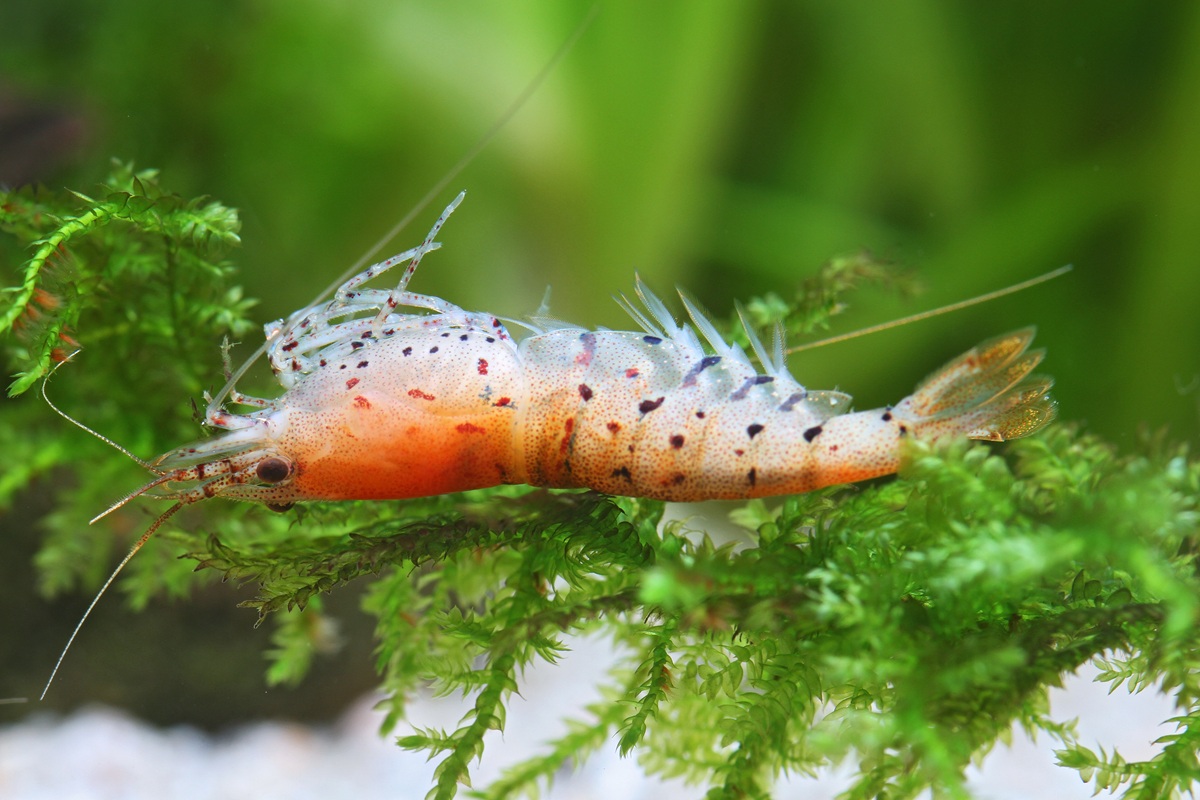
Photo by Chris Lukhaup
Be safe, wear gloves!
As we briefly mentioned in the section on treatment, access to antibiotic medications is becoming increasingly limited for hobbyist aquarists. Although it's sad to see our shrimp suffer and not be able to do much to cure them, it's important to remember that (improper) antibiotic use is directly associated with the rise of drug-resistant "superbugs". Because antimicrobial drugs are commonly abused in aquaculture, bacteria resistant to multiple types of medication are already present in the hobby.
You may be wondering why you should give a hoot. The reality is that the bacteria present in your aquarium aren't just able to infect your shrimp and fish — they can also potentially infect you. Catching a bacterial infection from your aquarium is still very, very rare, but when it does happen, it can cause months-long ordeals. Fish tank granuloma, for example, can lead to the amputation of affected body parts. The bacteria responsible, Mycobacterium marinum (silly name, because it also occurs in freshwater), is one of the strains in which antibiotic resistance has been recorded. This can make treatment significantly more complicated.
Scientists have confirmed there's no reason to throw out your shrimp tanks. But you should wear gloves and practice proper hygiene, like washing your hands immediately after touching the aquarium water. We asked Guz Leszek of University of Life Sciences in Lublin, one of the authors of a 2026 study that found drug-resistant bacteria in cherry shrimp(!!!), who confirmed: "Multidrug-resistant strains can be transmitted to humans in very rare cases, so caution is advisable, especially for individuals with weakened immune systems". This is especially important if you think your shrimp might be suffering from bacterial infections.
We know wearing gloves to work on your tank feels silly and inconvenient — but we're pretty sure that catching flesh-eating bacteria would feel sillier and more inconvenient still.
Sources & further reading
Au-Yeung, C., Tsui, Y. L., Choi, M. H., Chan, K. W., Wong, S. N., Ling, Y. K., ... & Mo, W. Y. (2025). Antibiotic abuse in ornamental fish: An overlooked reservoir for antibiotic resistance. Microorganisms, 13(4), 937.
Brock, J. A., Nakagawa, L. K., & Shimojo, R. J. (1986). Infection of a cultured freshwater prawn, Macrobrachium rosenbergii de Man (Crustacea: Decapoda), by Mycobacterium spp., Runyon Group II. Journal of Fish Diseases, 9(4).
Burnett, L. E., & Kendrick, M. R. (2024). The Effects of Black Gill Disease on the Respiration of Penaeus setiferus, the Atlantic White Shrimp, during Activity and Hypoxia: Treadmill Studies. The Biological Bulletin, 246(1), 52-57.
Cheng, A. C., Shiu, Y. L., Chenn, B. J., Huynh, T. J., & Liu, C. H. (2016). Isolation and identification of pathogenic bacterium Aeromonas veronii from ornamental shrimp Caridina cf. babaulti. J Fish Soc Taiwan, 43, 273-83.
Guz, L., Pękala‐Safińska, A., Pietras‐Ożga, D., & Wójcicka, G. (2026). Pathogenic Aeromonas hydrophila in Ornamental Neocaridina Shrimps: Biochemical Traits and Antibiotic Resistance. Journal of Fish Diseases, e70127.