


 Shrimp
 Fish
Fish Crab &
 Plants
 Foods
Foods Snails
Blue Dream Shrimp Care | Bold, Blue & Beginner-Friendly
Are those little sapphires roaming around your aquarium? Nope, just blue dream shrimp. Their spectacular looks have made blue dreams favorites among fishkeepers around the world. And they're easy to care for, too!
| Scientific name | Neocaridina davidi 'Blue Dream' |
| Common names | Blue dream shrimp |
| Difficulty level | Easy |
| Natural range | Eastern China, Taiwan, Korea, Vietnam |
Table of Contents
Blue dream shrimp origins & appearance
Origins
Blue dream shrimp are a selectively bred variety of Neocaridina davidi, a freshwater dwarf shrimp naturally found in eastern Asia. Aquarist in this region have found Neos to be the perfect hardy aquarium shrimp and have been breeding them for different colors since the 1990s, eventually introducing them worldwide.
It's not clear who first bred blue dream shrimp or what other varieties (like carbon rili or blue diamond) were involved in creating it. Neocaridina "family trees", which are never very accurate, tend to disagree about which branch to put it on. In any case, the blue dream shrimp has been a fixture in the shrimp hobby in the USA since its introduction in the late 2000s to early 2010s.
Appearance
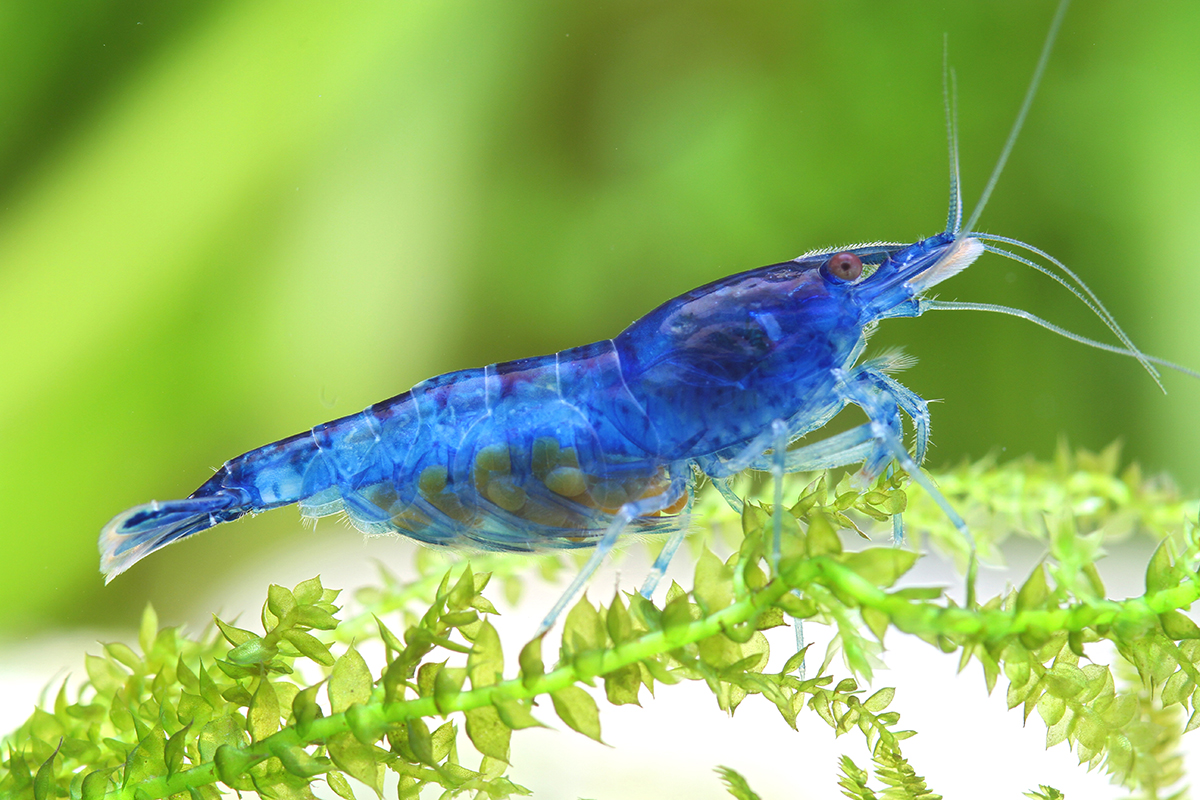
Depending on their exact color grade, blue dream shrimp can range from transparent with a blue hue to opaque sapphire. The exact shade varies from inky to purple-leaning to an even lapis, while the eyes can be dark to light brown. The most desirable blue dreams are high-grade individuals with even, opaque coloration that extends to the legs (of which, being decapods, they have 10).
Being dwarf shrimp, blue dreams rarely surpass 1" in length. Males can be told apart from females by their smaller size and straight bellies, as well as the lack of a yellowish ovary spot behind their heads.
Did you know? Though mostly associated with tiger shrimp, orange eyes have now been bred into Neocaridina shrimp, too—including blue dreams. These "OE Blue Dreams" are still rare and pricey, but availability is increasing.
Blue dream shrimp aquarium
Requirements
Neocaridina shrimp like the blue dream became popular in the aquarium hobby not just thanks to their looks, but also their hardiness. Your colony will do well in an aquarium of five gallons or up and won't require RO (Reverse Osmosis) water; tap is fine in most areas. The tank should be fully cycled and include decor like shrimp hides, driftwood, live plants, and other objects that the shrimp can use for cover and as their foraging grounds.
Dwarf shrimp don't technically need substrate in their tank. This being said, there's nothing that makes those blues pop like jet black fine gravel or coarse sand!
→ Read our full dwarf shrimp aquarium set-up guide
Water parameters
Given that their Neo ancestors can be found in a range of habitat types, blue dream shrimp are not fussy about water parameters. Stability is much more important than getting the "ideal" test results. Tank maturity and a solid nitrogen cycle are key to healthy blue dreams; weekly small water changes will keep the water quality high.
- pH: 6.2-8.0
- Temperature: 65-85
- GH: 4-8
- KH: 3-15
- TDS: 150-250
Tankmates
Because blue dream shrimp are very small and most aquarium fish have a taste for scampi, your tankmate options are limited. The most productive dwarf shrimp tanks are those that the shrimp have to themselves or share with invertebrates only. Mixing multiple Neocaridina varieties is possible, but be aware that they will interbreed. The resulting colors can be interesting, but may just as well be boring; if you're looking to ever sell your shrimp, it's usually not recommended to muddle their genetics in this manner.
You can consider inoffensive tankmates like:
Feeding blue dream shrimp
Blue dream shrimp, like all Neocaridina, are omnivores. The tiny, claw-like appendages on their first two pairs of legs are perfectly designed to pick through very small foods like biofilm (the layer of microorganisms that eventually grows on all underwater objects), algae, and detritus. As such, they're not exactly known to be picky!
You can feed your blue dreams a standard, high-quality shrimp food like Shrimp Dinner. They will supplement their own diets by foraging on biofilm, while you can add further variety by regularly offering chunks of blanched vegetable. Any uneaten foods should be removed after a few hours. If your shrimp don't manage to finish their meals, you should probably reduce the amount you feed.
Breeding blue dream shrimp
Breeding blue shrimp is, well, a dream. Neocaridina davidi is a highly prolific species, so all you have to do to ensure your colony grows is to keep the water quality high and the food flowing. Females become fertile after molting, moving eggs from their ovaries to their pleopods and keeping them there until they hatch around a month later.
Although you should keep the water quality high, religiously cleaning a shrimp tank can affect survival rates. Because baby shrimp almost exclusively feed on biofilm, mostly ignoring formulated foods for the first few weeks, your colony will expand the quickest if you leave them plenty of gunk.
Frequently asked questions
What is the difference between blue dream shrimp vs blue diamond shrimp?
It depends a little on who you ask, but not a lot. Both are Neocaridina davidi varieties that can range from a bright sapphire to blackish blue in color. Blue diamonds are usually thought of as being the darker of the two. There's also a Neo variety known as blue velvet, although this one really does lean more pastel and can be easily told apart from the other two.
Can blue dream shrimp live with ghost shrimp?
There is some controversy about whether ghost shrimp might attack and eat Neo shrimp like blue dreams. We think it's mostly because there are different species labeled as "ghost" shrimp in the trade, with varying aggression levels. To avoid any risk, we recommend simply going for Amanos instead!