

 Shrimp
 Fish
Fish Crab &
 Plants
 Foods
Foods Snails
Pygmy Corydoras and Shrimp: Are They Actually Compatible?
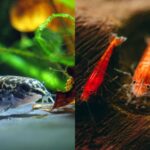
Pygmy Corydoras and ornamental shrimp are two of the smallest critters we can keep in our freshwater aquariums. Both make easy prey for larger fish, but do this catfish and these crustaceans play nice together? Let's find out whether pygmy Corydoras and shrimp make good tankmates.
Table of Contents
What’s a pygmy Corydoras, anyway?
Pygmy Corydoras (often nicknamed "Cories") are tiny catfish belonging to the family Callichthyidae, the armored catfishes. They're considered part of a South American subfamily known as the Corydoradinae, many of which can be found at your local aquarium store. Their sturdiness and friendly nature make them great additions to peaceful community tanks, and they make a great first-time breeding project. Plus, they're very cute!
Up until recently, the pygmy Cories were — as their common name suggests — members of the genus Corydoras. That's not the case anymore. A 2024 publication massively overhauled the entire subfamily, expanding it from three genera to seven and moving various species into different baskets. Most of the tiniest Corydoras were moved to Gastrodermus. Although the authors noted that further small taxonomic changes may be made in the future, most ichthyologists agree with the move.
That means the pygmy Cories, or microcorydoras, now constitute:
- Gastrodermus pygmaeus (true pygmy Cory)
- Gastrodermus hastatus (tailspot pygmy Cory)
A third tiny catfish, formerly Corydoras habrosus, is now called Hoplisoma habrosum (salt and pepper Cory). That means it's not, technically speaking, a microcorydoras. Given that it only grows to 1.4" in length, however, the information in this post definitely still applies to it!
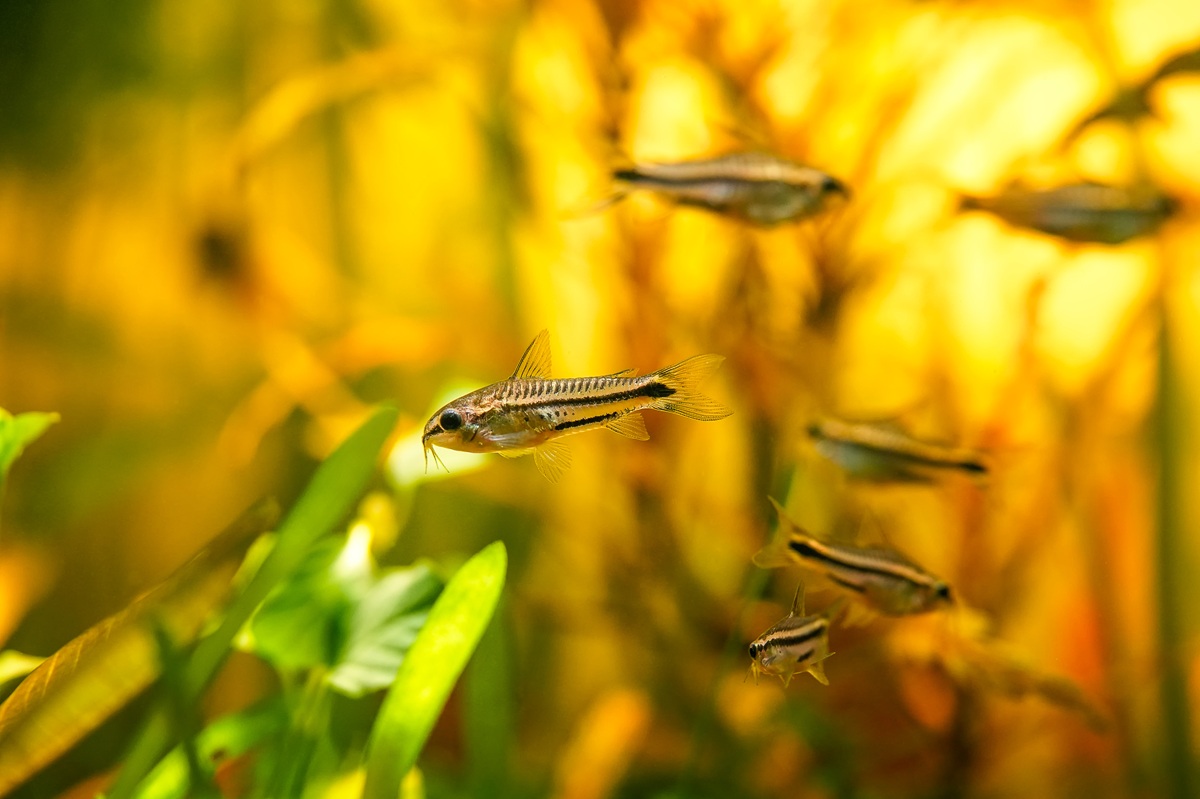
Can pygmy Corydoras and shrimp live together?
Unless you keep very valuable shrimp, yes.
It's important to note that all fish will eat shrimp if they get the chance. Even consummate algae eaters aren't opposed to a little opportunistic omnivory when an easy snack presents itself! The only way to prevent your invertebrate friends from becoming fish food, therefore, is to choose tankmates that simply aren't able to eat them. You're looking for fish that are too small to fit a shrimp into their mouths (or have the wrong mouth shape, like Otocinclus catfish).
As their name makes abundantly clear, pygmy Corydoras, a type of catfish, are very small. The bittiest of the pygmies tops out at 1.25" or so — many Amano shrimp grow bigger than that. Admittedly, they can and might still eat newly hatched shrimp if they come across one. But given that they're not active hunters and baby shrimp instinctively spend the first few weeks of their lives in hiding, the chances of this meaningfully affecting colony numbers are slim.
Would we keep pygmy Cories with rare and expensive bee shrimp varieties? No, because we want to keep survival rates as high as possible (no baby eating, please), plus these Caridina shrimp tend to stress easily. They're simply best kept alone. But as company for our Neocaridina (cherry), crystal red, Amano, ghost, or bamboo shrimp? Bring on the tiny catfish and their adorable wiggles!
Tip: If you decide to keep your pygmy Cories with ghost shrimp, do make sure you've actually got the real deal (genus Palaemonetes). Juveniles of the large and carnivorous Macrobrachium shrimp are sometimes sold as ghosts, and will happily eat small fish. Our Ghost vs. Whisker shrimp guide will help you confirm your shrimp's identity.
Setting up a pygmy Cory and shrimp tank
When setting up a community aquarium with multiple fish and/or invertebrate species, it's important to consider the needs of each species and make sure they're met. In this case, that would mostly mean adapting the tank to the Cories, as they need a little more space than dwarf shrimp.
Water parameters can be a cohabitation dealbreaker, but you won't run into any issues in this department. Both pygmy Corydoras and bee shrimp like their water slightly soft and acidic, while sturdy cherry shrimp will thrive in almost anything.
Tank size
Hardy shrimp will do well in ultra-nano tanks of five gallons and up, with experienced shrimpers occasionally going as small as 2.5 gal. Some sources recommend a similar minimum for pygmy Cories, but we don't agree. These catfish may be minuscule, but they're not sedentary like shrimp. In fact, they spend more time swimming than most of the true Corydoras! Combine this with the minimum group size of 6–8 (more is better, just as with shrimp), and you're looking at 10–15 gallons as a more realistic starting point.
As with almost all aquarium fish, long (rather than tall) tanks are preferable. In fact, because all Cories get some of their oxygen by breathing with their guts — we're not kidding, it's called GAB — it's even more important for them to be able to quickly dart to the surface.
Water parameters
Pygmy Cories are naturally found in the Amazon and Orinoco river basins, which, thanks to being rich in organic material but poor in minerals, are characterized by their soft and acidic water. As mentioned, bee shrimp like similar water parameters (as do bamboo shrimp). Cherries, as well as ghosts and Amanos, will adapt. The only potential point of friction is temperature: aside from bamboos, most shrimp like their water a bit cooler than tropical Cories. Still, the ranges do overlap.
Although consistency is more important than perfect parameters, you can aim for:
- pH: 6.5–7.0
- Temperature: 71.5–73.5°F
- GH: 4–6 dGH
- KH: 0–1
- TDS: 100–150
Decorations
A bare tank won't cut it here: both shrimp and tiny Cories feel safer when surrounded by plenty of (leaf) litter and vegetation. They'll spend more time out in the open when they know they can dart to safety whenever they feel threatened, so don't skimp on plants, driftwood, leaves, and other forms of cover. A few tufts of moss in particular will help baby shrimp avoid hungry Corydoras mouths and help to keep the survival rate high. You can also try shrimp flats — they'll be appreciated by both the fish and the crustaceans.
Aside from abundant cover, your Shrimp-'n-Cory (Shrory? Corimp?) tank should ideally contain a soft, sandy substrate in order to protect the Cories' sensitive barbels. These little face tentacles are used to scour the substrate for food, but can erode and even rot when repeatedly damaged by sharp gravel. Luckily, shrimp love foraging on sand as well.
Conclusion
Are pygmy Corydoras and shrimp compatible? As long as you adjust your aquarium to suit both — and don't mind possibly losing the occasional baby shrimp — the answer is a resounding yes. These tiny armored catfish mind their own business, bringing (adorable) life to your tank while leaving your shrimp alone.
Sources & further reading
Dias, A. C., Tencatt, L. F., Roxo, F. F., Silva, G. D. S. D. C., Santos, S. A., Britto, M. R., ... & Oliveira, C. (2025). Phylogenomic analyses in the complex Neotropical subfamily Corydoradinae (Siluriformes: Callichthyidae) with a new classification based on morphological and molecular data. Zoological Journal of the Linnean Society, 203(3), zlae053.
Nelson, J. A. (2014). Breaking wind to survive: fishes that breathe air with their gut. Journal of Fish Biology, 84(3), 554-576.