


 Shrimp
 Fish
Fish Crab &
 Plants
 Foods
Foods Snails
How To Salt Dip Shrimp | Cure Scutariella, Vorticella, Holtodrilus & More
When you're excitedly placing your order for the shrimp of your dreams, disease or parasites are usually the last thing on your mind. Sadly our shrimp do get ill, and the highest-risk time is right after bringing them home. Nothing brings you back down to earth faster than spotting worms or fuzz on the new colony you were so ecstatic to receive. What to do?!
The first line of treatment is simple salt. Below, we'll explain how to salt dip a shrimp to get rid of a range of parasites and diseases.
Table of Contents
What shrimp diseases do salt dips cure?
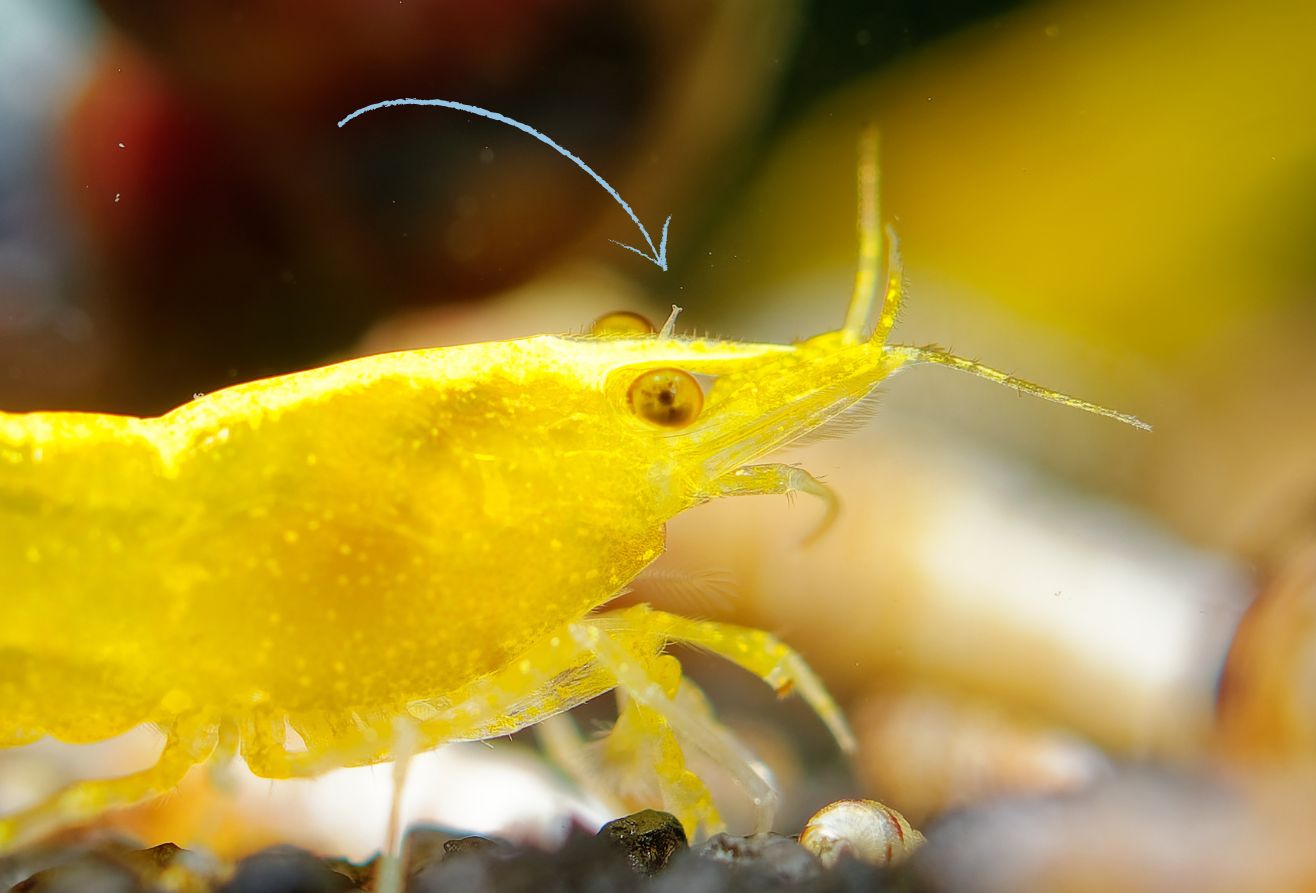
A variety of small critters, including microorganisms, call our ornamental shrimp home. Most go about their business innocently, without negatively affecting their host. These are called epibionts. Problems can still occur when the epibionts overgrow, however, and there are a few organisms that lean more strongly parasitic. In large numbers, all these can end up restricting the shrimp's movement and, eventually, even its breathing. This is often fatal. Overgrowth can happen if you slack off on maintenance, but it's most common in imported shrimp. These are often bred in crowded, stressful outdoor ponds in toasty Asia (particularly Taiwan), ideal conditions for the shrimp to get sick.
If you buy from a seller who imports but doesn't properly quarantine their stock, you're left holding the sick shrimp. This is why you should always quarantine new additions! You never know what "hitchhikers" they might carry, especially because it often takes a while for infestations to show themselves. If unwanted visitors do show up, salt dips are the first line of treatment thanks to a handy little thing called osmotic dysregulation.
Shrimp can't live in saltwater, but they can survive in it for very short periods of time. The same doesn't go for tiny organisms like worms: they're so small their bodies can't handle being "salted" for any period of time. Higher salt concentrations deregulate their osmotic systems, drawing water out of their cells quicker than their bodies can compensate for, until the point of death. This means we can use saltwater to kill shrimp parasites and get rid of epibiont overgrowth. We just need to make sure we dip long enough and use a high enough concentration to kill the bugs, but not the shrimp!
Salt dips work against any organisms that are on the outside of the shrimp (and, to a degree, tucked under the exoskeleton), from worms to bacteria and even fungi, plus their eggs and spores. Try salt against:
- Vorticella
- Scutariella
- Monodiscus
- Holtodrilus truncatus
- Saprolegnia
- Rust disease (bacterial shell infection)
- Cladogonium (lower success rate)
Even if you're not entirely sure what has infested your shrimp, if it looks fuzzy or there's "stuff" on it, salt dips will likely help. We do strongly recommend combining these dips with tank-wide hydrogen peroxide treatment to kill any eggs, spores, or other means of reinfection that may be hidden in the water or substrate. If your shrimp became infested due to bad water quality in your aquarium, e.g. if you bought them more than two months ago, this will have to be fixed before you do anything else.
How to salt dip a shrimp
What kind of salt?
Treating shrimp illness with salt is easy and you don't need much, but you do need the right kind of salt. Regular table salt won't do it, because it almost always contains iodine and anti-clumping agents that would be fatal to your shrimp. You can pick up pickling or dishwasher salt (which are additive-free) from some supermarkets, but we prefer to simply go with aquarium salt. Marine/reef salt can work, but it contains different mineral concentrations and therefore can't be dosed quite as precisely.
Your full shopping list:
- Pure salt (NaCl)
- Measuring cups/spoons or scale*
- Small food-safe container x2
- Shrimp net
- Stopwatch
*The scale is much more accurate, because not all salts are of the same grain size.
The procedure
The great thing about salt dips is how easy they are compared to having to medicate the entire tank, dosing and redosing, and then figuring out how to remove the medication when you're done. The ideal would be for your shrimp to go from quarantine tank to salt dip and back, which is another reason you should always quarantine. Catching them all from a display tank is a nightmare!
This is how you give a shrimp a salt dip/salt bath:
- Fill the dip container with exactly 240g (1 cup) water from the shrimp aquarium. Fill the other container with as much tank water as you like; it'll hold the shrimp post-bath so you don't dip the same one twice.
- For Neocaridina (cherry) shrimp: 15g (~1 tbsp) salt
- For sensitive Caridina (bee or tiger) shrimp: 8g (~1.5 tsp) salt
- Add the salt to the dip container and stir until completely dissolved.
- Catch the first shrimp and place it in the saltwater.
- Leave the shrimp for a minute before moving it to the post-bath container. If it looks like it's struggling, take it out immediately and try again tomorrow with a lower salt concentration.
- Repeat for all shrimp.
- Repeat for 5–7 days or until the symptoms disappear.