


 Shrimp
 Fish
Fish Crab &
 Plants
 Foods
Foods Snails
Sterba's Cory Catfish Origins, Care, Tankmates & More | Corydoras sterbai
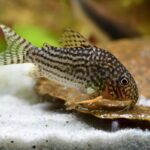
Bottom water layer of your aquarium looking a little empty? We can fix that! Sterba's cory catfish, also known as Corydoras sterbai, is a friendly, sturdy, polka-dotted "always-on" fish that livens up any community tank.
Beginner-proof and able to get along with nearly anyone, this is an aquarium classic that more than deserves a little extra attention. Let's find out more below!
| Scientific name | Hoplisoma sterbai |
| Common names | Sterba's cory catfish, Corydoras sterbai |
| Difficulty level | Easy |
| Origin | Brazilian-Bolivian border |
Table of Contents
What’s a Sterba’s cory?
Natural habitat
Sterba's cory catfish are naturally found in Western Brazil and Eastern Bolivia. They literally straddle the division between these South American countries: the river Guaporé (in Brazil) or Itenez (in Bolivia) forms a natural border that the geographic border is based on.
Of course, the main river system is too intense for little fish like Sterba's cories. Instead, like most of our favorite aquarium species, they inhabit the maze of surrounding tributaries, headwaters, creeks, (oxbow) lakes, and seasonally flooded forests known as igarapés.
These waters feature slow to swift flow levels, few plants but usually plenty of leaf litter, and sandy substrates interspersed with small rounded pebbles. The water is soft and lightly acidic; it can be clear with tea-like staining in the dry season, and more turbid when the region floods. The cories live in small groups.
Description
If you've been an aquarist for a while, you'll probably know this fish as Corydoras (not Hoplisoma) sterbai. The genus Corydoras was almost completely "cancelled" in 2024, however, when taxonomists confirmed something they long suspected: it was actually a whole bunch of separate genera rolled into one. We'll always know these catfish as cories, though. They're still the exact same fish!
Sterba's cory catfish are small bottom dwellers with snout-like, downturned mouths (equipped with sensitive barbels for easy digging). They grow to around 2.5" inches in length — not very big, but like all cories they sport sturdy, armor-like bony plates that help protect them from predators.
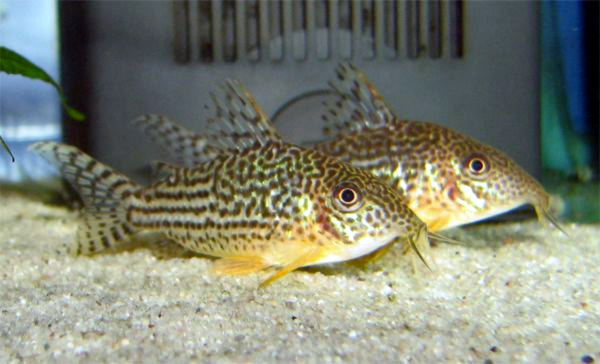
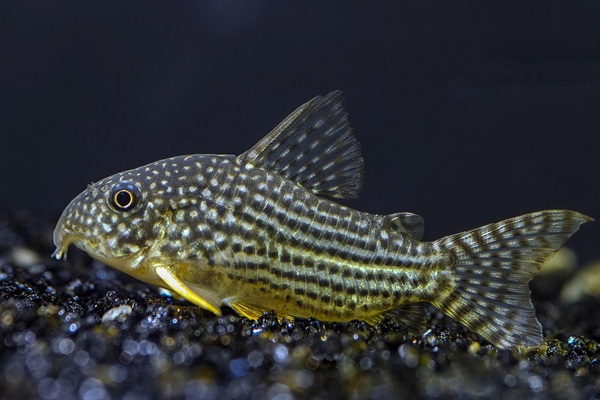
You can tell this one apart from other corydoras by its dark greyish-brown base adorned with lighter polka dots on the head, which connect to form horizontal stripes across the belly. The pectoral (chest) fins are splashed with ochre.
Tip: Like all cory catfish, Sterba's corydoras comes equipped with venomous spines on its dorsal and pectoral fins. If you ever need to catch yours, wear gloves or keep your hands well away from the fish! Getting stung isn't dangerous, but it's apparently pretty painful. We haven't had the honor ourselves, and will be keeping it that way.
Sterbai vs. haraldschultzi: polka dot madness
Why, why, why does every aquarium fish have to have a doppelgänger?! It's hard enough to remember all the different cory catfish species without some of them looking almost identical. But fear not: even the most visually similar species have their own little tells.
The Sterba's cory's double is called the mosaic cory (Brochis haraldschultzi). It's less common in the hobby and really got us at first glance. But look closely at both species' faces: mosaic cories have longer snouts and sport black dots on a light base. Sterba's cories, on the other hand, have light dots on a black base! Once you see it, you'll never confuse the two again.
Your Sterba’s cory catfish aquarium
Requirements
These little catfish don't need much to thrive. Space to swim, a soft, sandy substrate to root around in, and some decor to provide cover are all they ask for! You can keep a group in an aquarium of at least 20 gallons. Make it a long tank, not a tall one, as Sterba's cories mostly stick to the bottom and don't make much use of vertical space.
The point about substrate is something to pay attention to. We all like the look of black gravel, but most brands have sharp edges that can cause your cories' barbels to wear down or even become infected. They rely on these sensory organs to find food and will feel much more comfortable rooting around in sand or rounded, small-grain caviar gravel. You'll regularly see yours plunging themselves into the substrate, right up to their eyes, to extract a (real or imaginary) tasty morsel.
The streams and small lakes that Sterba's cories inhabit in the wild are often too dark to sustain much in the way of aquatic plants. That doesn't mean they're bare, though. The bottom is usually littered with tree debris and small rocks, the margins are almost always heavily vegetated, and large patches in the calmer zones can be shaded out by floating water hyacinths and their long roots.
An empty tank will scare your cories into hiding to stay safe, so be sure to add plenty of cover along the margins. Live plants are fine (if not very natural) for these fish, as are rocks and driftwood. Don't forget to throw in some leaf litter while you're at it! You can leave some open swimming space in the center or towards the front of your tank so you can actually see your cories.
If you want to go the biotope route and try to imitate your cories' natural habitat as closely as possible, you're in luck. Because so many of our favorite aquarium fish are found in the Itenez/Guaporé drainage, it's a very popular habitat for aquarists to recreate. You can find a wealth of examples and inspiration on YouTube.
Tip: Like all corydoras, Sterba's cories need to be able to reach the water surface at all times. They breathe air — not with their lungs, because they don't have those, but with their guts. You'll spot your cories regularly dashing to the surface to take a gulp of air, which they swallow to extract the oxygen. And yes, that does mean they fart, so no worries if you catch one breaking wind.
Water parameters
The waters Corydoras sterbai naturally inhabits are usually very soft (barely any dissolved minerals) and lightly acidic from decomposing sticks and leaves. Wild-caught fish can be sensitive, but you're unlikely to come across those nowadays: the vast majority of these fish are captive-bred and more flexible.
You can keep Sterba's cories in a wide range of parameters
pH: 6.0–7.5
Temperature: 75–82 °F
TDS: 50–200
Tankmates
Finding the right tankmates for a group of Sterba's cories is a breeze. They're both friendly and armored, meaning just about all fish that thrive in similar water values are on the table. Angelfish and discus fish enthusiasts in particular appreciate cory catfish for getting along with their cichlids without being on the menu, but you can also try:
- Tetras, which they live alongside in the wild
- Dwarf cichlids
- Other catfish, like bristlenose plecos or Otocinclus
- Small loaches like kuhlis
- Small rainbowfish
- Rasboras
- Barbs, like the cherry barb
- Gouramis
Decided to go for that biotope? Still got loads of options:
- Black phantom tetra (Megalamphodus megalopterus)
- Bolivian ram (Mikrogeophagus altispinosus)
- Three-striped dwarf cichlid (Apistogramma trifasciata)
- Redbreast acara (Laetacara dorsigera)
- Mosaic cory (Brochis haraldschultzi — yep, the doppelgängers are from the same region)
Tip: You won't regret getting at least 6–8 Sterba's cories. They're much more active when kept together, and who knows, they might even make you a catfish grandparent.
What about shrimp?
Cories and shrimp make an excellent combination! True, cory catfish will vacuum everything they can find on the substrate into their mouths, including baby shrimp. But the effect on the colony size will be negligible, especially in well-planted tanks. Newly hatched shrimp know they're vulnerable, after all. They won't show their faces until they're large enough not to instantly be eaten.
We wouldn't keep Sterba's cories with high-grade bee shrimp, but cherry shrimp, Amanos, and ghost shrimp will all work just fine. Just make sure the other tankmates are compatible as well.
The Sterba's cory starter pack
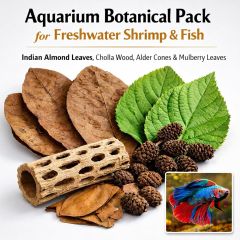
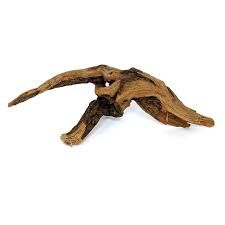
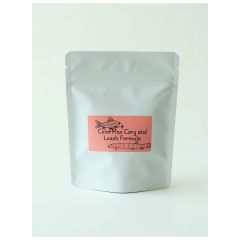
Sterba’s cory diet
Back in the day, cory catfish were seen as little more than swimming trash cans. "Bottom feeder" means they live off scraps and poop, right? Maybe some algae, too? Well... not quite. Gut content analyses have actually revealed these little catfish to be voracious micropredators of insects, especially fly larvae and aquatic worms. One study specifically calls them larvivores, although they also eat other underwater bugs and the occasional bite of algae or plant debris.
All this is to say: your Sterba's cories won't thrive on leftovers. They need a high-quality diet just like all your other fish, preferably a sinking formulation for insectivores or corydoras specifically. They'll also highly appreciate regular portions of (thawed) frozen foods like bloodworms. If you can get live, even better — it's pretty fun seeing them go crazy scouring the substrate with their barbels in search of their favorite food.
Breeding Sterba’s cory catfish
Cory catfish are considered one of the easiest types of aquarium fish to breed at home, even if you've never bred a fish before. They spawn during the wet season in the wild, which you can imitate in your tank by doing a water change with cooler water and increasing the oxygenation. We're working on a full corydoras breeding guide, so please check back very soon!
Buying Corydoras sterbai
Its pretty polka dots, easy care and inoffensive nature have made Sterba's cory one of the most popular species in one of the most popular groups of aquarium fish. That's to say, you shouldn't have trouble finding this one at your LFS! Look for plump, active cories; a caved-in look behind the head means they're not healthy and you should come back another time.
Don't feel like leaving the house? Yeah, we prefer staying in to stare at our tanks too! That's why we're proud to offer you our healthy and active Sterba's cory catfish, shipped right to your doorstep with live arrival guarantee.
Brochis haraldschultzi photo: Mummymonkey at English Wikipedia, CC BY-SA 3.0, via Wikimedia Commons

Sources & further reading
Dias, A. C., Tencatt, L. F., Roxo, F. F., Silva, G. D. S. D. C., Santos, S. A., Britto, M. R., ... & Oliveira, C. (2025). Phylogenomic analyses in the complex Neotropical subfamily Corydoradinae (Siluriformes: Callichthyidae) with a new classification based on morphological and molecular data. Zoological Journal of the Linnean Society, 203(3), zlae053.
Wictor, E. P. (2020). A proteomic analysis of Corydoras sterbai secretions and tissues. University of the Pacific.