


 Shrimp
 Fish
Fish Crab &
 Plants
 Foods
Foods Snails
Failed Molting in Shrimp: Why It Happens, Warning Signs & How to Prevent It
One minute, your shrimp is happily picking at biofilm. The next, it's on its side, twitching—and then it's dead. What in the world? If this sounds familiar, you've witnessed a molt gone wrong. But what causes failed molting in shrimp? And more importantly, how do you prevent it from happening again? Here's how we make sure our shrimp always molt smoothly.
Table of Contents
What is molting, anyway?
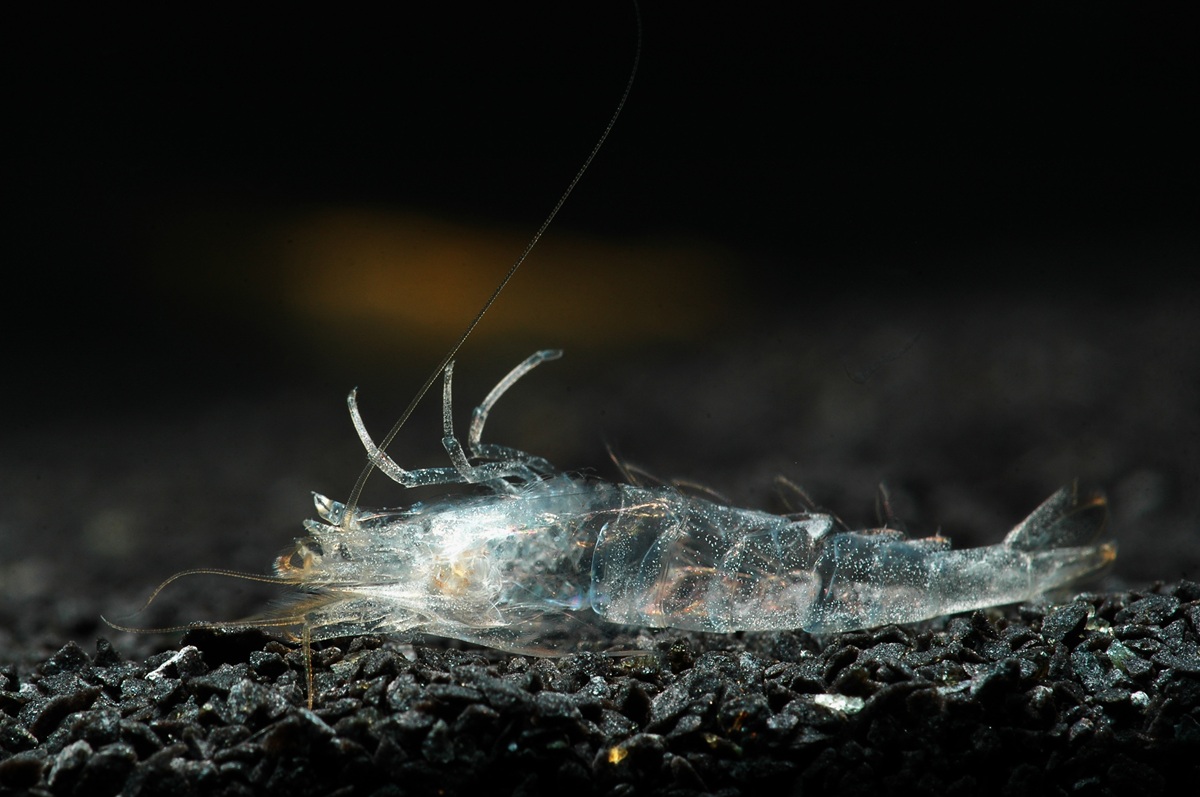
It freaks every new shrimp owner out the first time they see it: a ghostly, translucent shrimp sprawled motionlessly on the substrate. What happened?! No worries. This is not an actual shrimp, but just its exoskeleton. The shrimp itself grew so much it didn't fit inside anymore, so it grew a whole new armor and dumped the old one. It will probably return later to eat it, in order to recycle the nutrients inside.
Experienced shrimpers will know this process is called molting, or ecdysis if you want to use the scientific term. Every single species of crustacean in existence (shrimp, crabs, lobsters, insects, arachnids, even barnacles) does it. This is because their protective shells—which are made of a mixture of calcium, proteins, and a tough biopolymer known as chitin—are rigid and inflexible. There is certainly no room inside to grow much. But everyone's gotta grow, so once the critter becomes too big for its shell, it swaps it for a new one. This also, amazingly, allows it to regrow any limbs it may have lost.
A growth cycle looks a little like this:
- A shrimp has been enjoying plenty of nutritious biofilm. Its armor is feeling distinctly tight.
- Its body begins redirecting nutrients in order to build a new exoskeleton, using some of the calcium from the old one to do it. The rest comes from meals and the water column.
- As the finishing touches are added to the new exoskeleton, the shrimp’s color begins looking "off", it becomes less interested in food, and it may look like it's trying to "scratch" its back.
- The shrimp will find a safe spot and begin pumping water into its body, right up until the old exoskeleton rips where the head meets the abdomen. Once an opening has been created, the shrimp will begin to slowly pull its head out. Eventually, it breaks free in a jump so quick you need a slow-motion camera to see it.
- Over the next 1–2 days, the shrimp will remain in its hide. At first, as its new shell hardens, it will barely move and may stay curled up in a corner. Once it regains some movement, it’ll usually consume part or all of its old shell to extract the nutrients.
As you probably guessed, baby shrimp molt a lot more often than their adult counterparts: every 2–3 days compared to every 3–4 weeks. Unfortunately we rarely get to see the process, as they generally stay well-hidden until their new exoskeleton fully hardens, but aquarists occasionally manage to catch it on camera. It's a crucial process for shrimp survival, but it looks—we have no other words for it—incredibly silly:
Failed molting in shrimp
A shrimp is never more vulnerable than when it sheds its exoskeleton. Things can, and do, go wrong. Every shrimper has had the misfortune of finding a failed molt in their tank at some point. In fact, considering the effort it takes from their little bodies, plus the fact that they’re completely soft and vulnerable during the time it takes for their new exoskeleton to harden, we think it’s pretty impressive our shrimp are able to molt at all.
There are many theories on what causes failed molting in shrimp, including excess protein in the diet. Lately, though, more and more shrimp enthusiasts that it’s a water change thing, with some nutrition factors thrown in. We've done a good bit of research and we've come to agree. Scientific literature about culturing shrimp for human consumption (a great source of information for our hobby endeavors simply because more research has been done on food shrimp) indicates that small disruptions in water parameters can have a surprisingly big negative impact on our shrimps’ ability to molt.
To understand why molts fail, we first have to understand how a shrimp's brain tells its body it's time to molt in the first place. If that communication process goes haywire, a failed molt is not far off!
How does a shrimp know when to molt?
Normally, a shrimp will molt when its body’s endocrine system tells it to. It works like this: decapod crustaceans like our aquarium shrimp possess special molting glands. These glands have the capacity to secrete ecdysteroids, which are basically molting hormones (the word ecdysis refers to molting and was derived from the Ancient Greek word for taking something off).
The molting glands are normally dormant, but can be activated when various cues, like temperature and the shrimp’s metabolic status, cause the release of hormones from the brain and eyestalk. Yes, that's hormones triggering hormones—crustacean bodies are more complicated than they look.
Anyway, when the molting glands receive these brain hormones, they begin to produce their ecdysteroids. This sets the molting process in motion. The rise and falls of the steroids triggers different steps of the molting process. If this delicate process is disrupted—like by sudden changes in water parameters—mayhem can ensue. In lucky cases, the shrimp just molts a little early or late. In unlucky ones, it gets handed a death sentence.
The White Ring of Death & other symptoms
The most common way a molt fails in ornamental dwarf shrimp like Caridina and Neocaridina is with a "White Ring of Death". Basically, the WRoD entails a circumferential separation at the thoraco-abdominal junction rather than the usual opening of the exuvia along the controlled ecdysial sutures. This causes a loss of mechanical leverage, leading to an incomplete and usually fatal molt. Umm, what?
Now in English: instead of hinging open behind the head as it’s supposed to when a shrimp molts, the exoskeleton breaks apart completely. One part encases the head. The other traps the abdomen and tail; a ring of exposed flesh sits in the middle. Because there’s no hinge, the usual vigorous jump (that 'POP!' they normally do to exit their old exoskeleton) isn’t enough to get the shrimp out. It becomes stuck and usually dies of infection.
Aside from the white ring of death, signs your shrimp has failed to molt properly can include:
- Shrimp stuck in curled-up state post-molt
- Gravid female shrimp suddenly molts and drops eggs
- Limbs amputated due to getting stuck in the molt
- Trying to perform the “molt jump” and failing, possibly stuck on side
- Molt stuck to the shrimp and dragging behind it
- Dead shrimp half-emerged from molt
Tip: it's not abnormal for a shrimp to show a bit of a ring right before molting. A regular pre-molt ring is thinner and doesn't encircle the shrimp all the way like the WRoD does—it's still connected at the bottom. A shrimp that's actually in a failed molt will almost always be either flailing and running around or inactive, struggling, or on its side. A specimen with a regular pre-molt ring displays normal behavior.
Causes of failed molting in shrimp
We've seen that molting in shrimp is regulated by hormones. So what could disrupt the shrimp’s molting glands, causing the process to fail? As we touched upon earlier, more and more shrimpers nowadays agree that erratic water changes are likely the most common cause. Still, let's not forget about diet and overall water quality either!
Diet
As we like to emphasize in our shrimp care guides, a varied, greenery-heavy diet with plenty of minerals is the key to shrimp success. A starved or "McDonald’s" (fed mostly low-quality fish food) shrimp will be unable to produce a new exoskeleton when molting time comes around. The high nutritional requirements for a molt can cause it to die in the attempt.
Water quality & parameters
If you set up your shrimp tank relatively recently or it just underwent a big chance, the nitrogen cycle may not be as solid as it should be. This can lead to ammonia and/or nitrite in the water column, both of which can lead to molting failures even at very low concentrations. Molts also become more dangerous if the shrimp is continuously exposed to high nitrate and phosphate levels, which can build up if you don't perform tank maintenance regularly.
Aside from water quality, the general water parameters also matter. Shrimp kept in excessively soft or hard water are at an increased risk of molting failures. The TDS, GH, and KH values can’t be too close to zero, or the shrimp go all soft. But they can’t be too high, either, or the old exoskeleton may become so hard its owner essentially becomes trapped in it. Low pH can also cause a softer exoskeleton, which may mean the shrimp’s body has to work harder to maintain it—eventually exhausting its energy and nutrient stores.
Water changes
You may have heard an old piece of aquarium wisdom: stability is more important than perfect water parameters. This couldn't apply more to freshwater shrimp. Water changes are great, but if the new water is quite different from the old, you change a lot of water at once, or you dump the new water in too quickly, the ecdysteroid-based “molting timer” inside your shrimp can get upset.
These issues seem to pop up especially if the shrimp in question was already in the “mid-premolt” stage. At this time, the molting process can’t be reversed anymore, but disturbances can still mess it up. Water parameters that influence the osmotic/ionic system (TDS/GH/KH/pH) have the potential to be particularly problematic.
Helping your shrimp to molt
Our shrimp may be tiny, but seeing one stuck on its side, halfway out of its exoskeleton and waiting to die, is upsetting. Luckily, the section above on causes of failed molting in shrimp gives us a big bunch of shrimp care guidelines that will help your colony molt successfully—and keep them healthy in general.
The most important points relate to water changes: Large water changes should be avoided. The new water should match the old stuff as much as possible, and the water should be added in slowly. We actually think shrimpers could go a very long way in preventing failed molts if they imitated the way saltwater aquarists handle water quality: with a drip system or even a continuous overflow system. If you're regularly seeing rings of death or other molting issues in your colony, these may be useful to look into.
- Drip system alone: take out a small amount of water (10%). The fresh, new water should be added in using a drip kit set to 1-2 drops per second.
- Overflow system: New water is added in through a drip kit 24/7, but at a lower rate of about 1-2% of the total volume a day. The excess is handled by a simple overflow system.
These very slow, gradual ways of approaching water changes help prevent osmotic stress from sudden increases or decreases in parameters like TDS and GH. Perfect to keep finicky marine fish alive—and also to help ensure successful shrimp molts.
Tip: Perform a water test before and after changing water to ensure no big swings are occurring. You can even keep an ammonia alert on the tank if you think a bumpy nitrogen cycle may be causing your shrimp to experience molting problems.
Practical guidelines
Shrimp molt successfully when their internal hormonal timing, osmotic balance, and mineral availability remain stable. They don't want you to create perfect water for them, but predictable water.
Your shrimp care regime should include:
- Small water changes (around 10% weekly), with new water matched to the tank parameters and added in very slowly.
- Gently weekly maintenance to prevent waste build-up.
- A varied diet with plenty of protein and minerals, plus regular blanched vegetables like kale.
- Regular water tests for all important parameters, including water hardness.
- Top-offs to replace evaporated water done with RO water only, to prevent mineral creep.
- Observation! Get to know your shrimp so you can tell when something is off.
Your shrimp care regime should NOT include:
- Large water changes (>20%), unless some kind of incident warrants it.
- Pouring new water directly into the tank.
- Overcleaning, vigorously stirring the substrate, replacing all filter media at once (all cause cycle bumps).
- "Water parameter surgery" and panic fixes, like adding baking soda to increase the pH. Stability over perfection!
- Overuse or unbalanced use of Co2 for plant growth.
Frequently asked questions
Can I save my shrimp?
If you spot a shrimp in the throes of a failed molt, it can be tempting to grab a pair of tweezers and attempt to free it from its old exoskeleton. We won't tell you not to, and it's true that this technique has worked for some shrimpers. But we do want to tell you the chances of success are very low; you're more likely to speed up the shrimp's death. Given that there's no cure for a failed molt, that may actually not be a bad thing.
How often do shrimp molt?
Whether it's a cherry, bee shrimp or Amano, molting frequency depends on a shrimp's age. When they're still quite small, they may molt every few days. Adult shrimp will molt every 3-4 weeks.
Is a shrimp molting a good sign?
If it's going off without a hitch, yes. Your shrimp successfully changing outfits means you're doing something right in terms of water parameters, stability and nutrition.
Conclusion
Molting is easily the most important, demanding, and disrupting moment in a shrimp's life—and yet it goes without a hitch most of the time thanks to carefully tuned hormonal timing and nutrients. When something (osmotic stress due to harsh water changes, malnutrition, waste accumulation) interferes with this delicate process, however, the danger of a white ring of death lurks.
Fortunately, most molting problems are preventable with the help of stable water conditions and proper nutrition. Even just reading up on the basics of shrimp care and water parameters, adjusting wherever needed, can go a very long way in making sure your colony can switch outfits smoothly.