


 Shrimp
 Fish
Fish Crab &
 Plants
 Foods
Foods Snails
The Shrimp Disease Encyclopedia | Diagnose Your Freshwater Shrimp
When there's something wrong with your shrimp, all you want to do is find out what's going on and whether you can cure it. But for the untrained eye, diagnosing diseases in our pet crustaceans is far from an easy task. Many shrimp illnesses pose as something they're not: "eggs" are actually a pathogenic alga, "rust" is a bacterial infection, and that fuzzy "mold" is in fact a mostly innocent ciliate — except when it's a deadly fungus after all.
How are you supposed to make sense of it all?! We've created this handy guide to turn your untrained eye into a trained one, and to bookmark in case you need to diagnose a shrimp in the future. Find all that ails them below.
Table of Contents
How do shrimp get diseases?
Before we start, it's a good idea to pay a little attention to what causes a shrimp to fall ill in the first place. It goes a long way in preventing disease and the heartbreak of losing (part of) your colony. Two factors are very strongly associated with illness in our Neos, bee shrimp, Amanos, and other aquarium favorites.
Causes
→ The first and foremost risk factor for shrimp disease is stress. A colony kept in an overcrowded or dirty aquarium has a much higher probability of falling ill than one kept in a responsibly stocked tank with consistently high water quality.
Remember that "dirty" in our fish tanks isn't always visible. An aquarium that looks completely normal can be overflowing with unhealthy nitrates from a lack of maintenance, or in the throes of endless toxic ammonia spikes due to overfeeding. Even if the shrimp survive these, their immune system will suffer, making them vulnerable to all sorts of infections and infestations. The pathogens that cause illness are often already present, but don't become dangerous until stress "softens up" their victims.
→ The second risk factor (strongly related to stress) is recent arrival. We discuss this in most of our disease guides, but in short, USA-based breeders can't keep up with the ever-increasing demand for ornamental shrimp (particularly Neos). This means most of our critters are imported from Asia, especially Taiwan. Here, they are usually bred in large, crowded, open breeding ponds in a toasty climate.
Water quality can fall by the wayside when breeding shrimp on such a massive scale, causing stress and potentially allowing infestations and infections to take hold. Few shrimp are closely inspected before shipping. This means that if the importer sells them on to you without quarantine or preventive treatment, you can be left holding the sick animals.
Prevention
The dual risk factors for sick shrimp lead us to two very important measures you can take in order to avoid disease, or at least avoid introducing pathogens into your display aquarium. The first is quarantine, our favorite thing in the world! Whether you trust the person who sold you your shrimp or not, it's always an excellent idea (we'd even go so far as to call it an absolute must) to quarantine new additions for at least thirty days.
The thought behind this quarantine period is that unwelcome hitchhikers and other ailments should become visible during these four weeks. If anything untoward pops up, it's much easier to treat in a quarantine tank. Try catching twenty shrimp from a densely planted and decorated display tank in order to salt dip them, and you'll see what we mean!
Once your shrimp get the all-clear and go into the display aquarium you prepared for them, regular tank maintenance (weekly water change and substrate vacuum), water tests (at least weekly), and equipment checks (daily) will go a very, very long way in keeping them healthy.
Tip: Sick shrimp should be separated, as all the diseases listed can spread between individuals. If you diagnose one shrimp, you should assume they are all infected. Separation still helps keep the pathogen load down, however, and the rest of the colony might just escape.
Vorticella/Epistylis/Zoothamnium
→ Severity level: ★★☆☆☆
→ Shrimp head covered in short fuzz that looks like mold
→ First line of treatment is salt dips
Vorticella is a type of microorganism, known as a ciliate, that looks a little like a tulip under a microscope. Along with fellow ciliates Epistylis and Zoothamnium — they're difficult to tell apart even under a microscope — it can live on shrimp, but also on other aquarium surfaces like plants. It isn't usually classified as a parasite, however, because it feeds on bacteria rather than its host. It may even help keep the shrimp clean, but can cause trouble if it overgrows. The shrimp may become unable to swim properly, and if the infestation becomes very severe, it the ciliates can cover the gills and suffocate the victim.
Ciliate overgrowth is easy to spot, but also easy to misdiagnose: it looks like fuzz on the shrimp's head. Most shrimpers assume it's a mold or fungus, or maybe even Scutariella worms (see below). After you manage to ID the culprit, however, things become a little easier — Vorticella is treatable with salt dips. It also responds to West Indian bay oil and, if other treatments don't seem to work, to hydrogen peroxide.
→ Read the full guide to Vorticella identification, prevention, and treatment if you think your shrimp have ciliate overgrowth
Ellobiopsidae/Cladogonium (green fungus)
→ Severity level: ★★★★☆
→ Shrimp carries what looks like an elongated, greenish egg mass between its swimming legs
→ Treatment is challenging
Remember when we mentioned that shrimp diseases often look like something they're not? Well, to make things nice and confusing for you, sometimes they're also named something they're not. The infestation still commonly known as Ellobiopsidae looks like a greenish fungus or misshapen egg clutch, but is actually a parasitic alga called Cladogonium (real Ellobiopsidae are on a completely different branch of the tree of life).
Of the popular ornamentals, Cladogonium has only been found in Neocaridina (cherry) shrimp so far. If you keep bees (like crystal reds), Amanos, ghosts, fan, or other shrimp, you're in the clear. The algae show up between the swimming legs and look a little like eggs — just much smaller and more elongated. They appear to feed on the shrimp's tissues, and although the victim can take a long time to die, most cases are fatal. Some shrimpers opt to try to treat with salt dips and hydrogen peroxide, while others cull affected individuals.
→ Read the full guide to Cladogonium identification, prevention, and treatment if you think your shrimp have parasitic algae
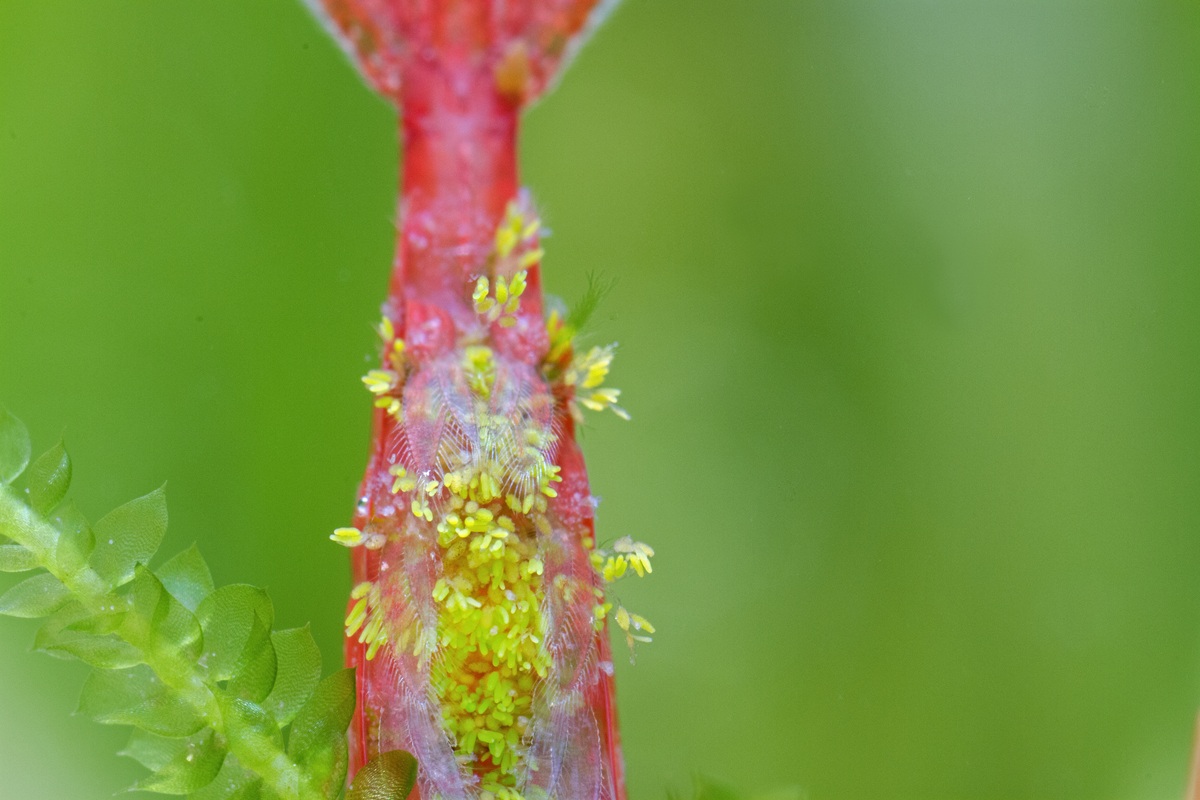
Photo by Chris Lukhaup
Scutariella/Monodiscus/Caridinicola
→ Severity level: ★★☆☆☆
→ Shrimp has crown-like formation sticking out of its head
→ Responds well to salt treatment
Scutariella worms (along with Monodiscus and Caridinicola, which are visually identical) are doubtlessly the silliest-looking infestation that can overgrow on your shrimp. These flatworms attach themselves to their host's head; if there are many worms, it looks like the shrimp is wearing a crown or mohawk. It's fashion, mom!
As with Vorticella, these worms aren't necessarily considered parasites. They feed on detritus, not the shrimp themselves. The problem is that in dirty water (like in those breeding ponds in East Asia, where Scutariella is a native species), there can be so much detritus present that the worm population explodes. An excess of Scutariella may end up blocking the shrimp's gills and restrict its movement. The good news is that clean water and salt dips go a very long way in controlling the worm population and keeping your shrimp in good health.
→ Read the full guide to Scutariella identification, prevention, and treatment if you have spotted these worms on your shrimp
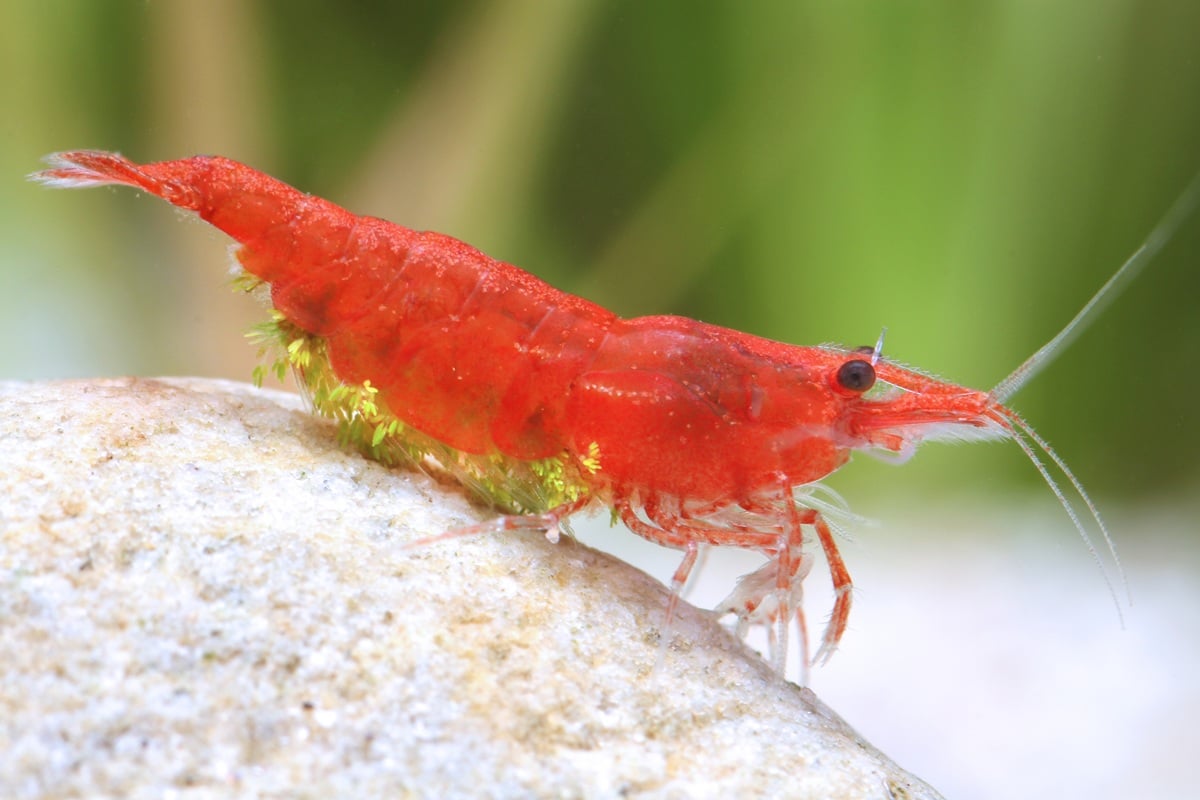
Photo by Chris Lukhaup
Holtodrilus truncatus
→ Severity level: ★★☆☆☆
→ Shrimp has long worm(s) sticking out of its head or swimming legs
→ Responds well to salt treatment
Holtodrilus truncatus is another type of worm that can live on our shrimp, but whose status as a parasite is debatable. It attaches to the host's head or swimming legs. The species has been determined to get some of its nutrients from shrimp hemolymph (blood, basically), but mostly seems to rely on the shrimp's movement to get easy access to tasty microorganisms.
H. truncatus looks quite similar to Scutariella worms, although it grows longer and has a segmented body that its flatworm cousin lacks. If you want to identify the exact worm on your shrimp, a magnifying glass can help. No biggie if you don't manage to pin the ID, though: your shrimp is unlikely to die from either, as long as they're not allowed to overgrow. Treatment for both is based on simple clean water and salt.
→ Read the full guide to Holtodrilus truncatus identification, prevention, and treatment if you have spotted these worms on your shrimp
Oomycetes (cotton wool disease & shrimp plague)
→ Severity level: ★★★★★
→ Shrimp carries a mass of long, fuzzy "fungus" between its swimming legs
→ Usually too late for treatment once symptoms appear
Here's another fungus that's not technically a fungus — although admittedly, it does act a lot like one. Oomycete infections are highly deadly to shrimp, but (luckily) also rare and commonly misdiagnosed. It's only truly cotton wool disease if your shrimp has a very hairy, fuzzy mass (grey, blackish, yellowish) between its swimming legs. The fuzz can also spread to the head. In almost all cases, the shrimp was already weakened by stress, injury, or other diseases (secondary infection); oomycetes are present in most aquatic environments.
The main problem with these microorganisms is that, like true fungi, they send out tendrils that essentially "root" into the shrimp's tissues. Just like you have to throw away the whole bread if it shows even one spot of mold — the spores are already present throughout — any visible fuzz on your shrimp means it's likely at death's door. Treatment mostly involves preventing the oomycetes from spreading to the rest of the colony.
→ Read the full guide to oomycete identification, prevention, and treatment options if you think your shrimp have cotton wool disease
External bacterial infection (bacterial shell disease, rust disease, black spot disease, chitinolytic shell disease)
→ Severity level: ★★★★☆
→ Shrimp develops brownish lesions on its carapace
→ Sometimes resolved with salt, hydrogen peroxide, or when the shrimp molts
The bacteria that cause infections are all around us (and our shrimp). They usually only become problematic when they access places they shouldn't, or the immune system is unable to keep them in check. In shrimp, the dreaded rust or bacterial shell disease is — surprise, surprise — associated with low water quality, stress, and prior damage. A bad molt, a dead fish fouling up the tank, pH fluctuation... any large disturbance can allow bugs like Aeromonas, Pseudomonas, and many more to take hold.
Shell infections can be difficult to spot in the early stages, but you may notice small, brownish spots on the shrimp's carapace. These are caused by the bacteria breaking down the chitin "armor". As the disease progresses, the spots can become larger and black, while the shrimp will seem listless or act erratically. Once the bacteria reach the inner organs, the victim usually dies within a few hours.
Shrimp sometimes molt off these infections if they're still in the early stage. Some aquarists have had success treating mild cases with hydrogen peroxide, while others opt to cull sick individuals.
→ Please stay tuned for our full guide to identification, prevention, and treatment of bacterial infections in shrimp. Coming soon!
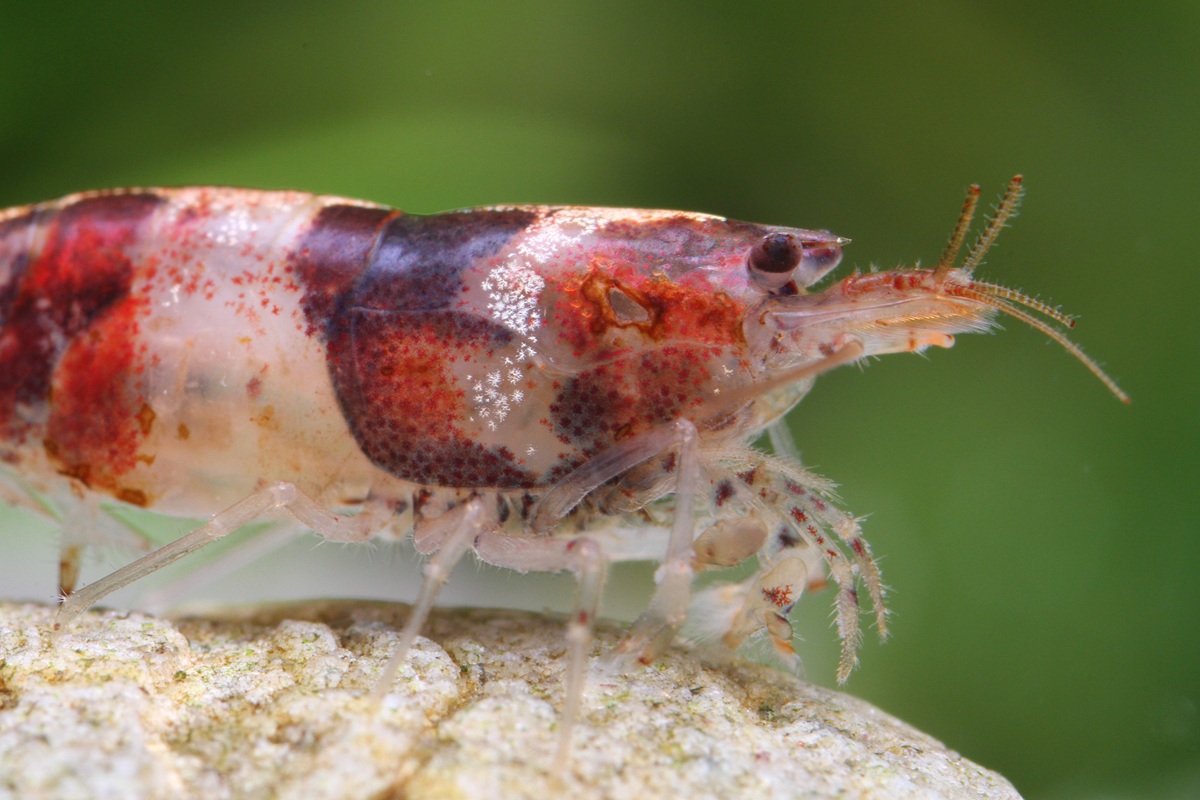
Photo by Chris Lukhaup
Internal bacterial infection
→ Severity level: ★★★★★
→ Shrimp shows vague symptoms like lethargy ("mystery death", may become discolored in final stage)
→ Treatment is not a realistic option
As discussed above, an external bacterial infection in shrimp can progress to an internal one. Bacteria may also reach a shrimp's inside in other ways — almost always with devastating effects. The limited antibiotics we shrimpers have access to don't help much, and honestly, we should avoid them in the first place so we don't create more antibiotic-resistant superbugs. This means that aside from culling the shrimp, there really isn't much we can do about these infections.
As with shell infections, a range of common bacteria can affect the inside of a shrimp and cause a range of afflictions and symptoms. Depending on the bacteria responsible, your shrimp might turn pink (septicemia) or milky white (muscular necrosis or protein denaturation, i.e. systemic damage) on the inside, develop lesions and ulcers (white, grey, brown, black), show gill damage, excrete stringy white feces, and more. The victim can become lethargic, stop eating, swim erratically, or simply die without any external signs of illness.
It won't change the outcome for your shrimp, but in case you're interested, confirmed culprits include:
- Aeromonas
- Pseudomonas
- Rickettsia-like organisms
- Flavobacterium
- Shewanella
- Edwardsiella (probably)
- Citrobacter (probably)
Please note: some bacteria that cause infection in shrimp can infect YOU, too. Some of them are multidrug-resistant. Wearing gloves while working on your aquarium is always a good idea, and it's a MUST if you suspect your colony suffers from bacterial infection.
→ Please stay tuned for our full guide to identification, prevention, and treatment of bacterial infections in shrimp. Coming soon!
Mystery disease: Microsporidiosis
→ Severity level: ★★★★★
→ Almost impossible to diagnose in ornamental shrimp, but worth a mention
→ Treatment requires nuking the tank
The Microsporidia are a type of parasitic, unicellular fungi (or closely related to the fungi — scientists are still battling that one out). Based on which species of microsporidian fungus a shrimp catches, they can cause a variety of diseases.
Microsporidiosis is most common in shrimp aquaculture, where shrimp meant for human consumption can fall ill with the dreaded "milky shrimp disease" or "stringy poop disease", among others. We haven't found reports of confirmed milky shrimp disease in ornamentals like Neos and bee shrimp, though that doesn't mean it doesn't happen. It's just hard to tell what exactly turned a shrimp white before it died, and they're usually not tested in the lab.
Researchers have found at least two other types of Microsporidia in feral cherry shrimp, though, so they can definitely get some kinds of microsporidiosis. The problem is that this is often one of those "mystery death" diseases, with vague symptoms like stunted/uneven growth, reduced food intake, white feces, and lethargy. The shrimp usually don't die as a direct result of the fungus, but secondary infections will get them all the same.
Only a lab study can truly confirm non-milky microsporidiosis. Still, if your colony is languishing and the symptoms seem to match up, this could be it. The prognosis is unfortunately grim. Spores are practically indestructible, so the only real solution is to cull the shrimp, drain the tank, let it dry and then thoroughly disinfect everything that has come into contact with it. Ouch!
Question mark: Diseases that need more research
There are many other diseases that affect freshwater shrimp. Unfortunately, almost all research focuses on the species bred for food, which belong to a different family than our cherries and bees. Ornamental shrimp are rarely tested in the lab to check what killed them. This means we can't confirm if they might affect our pets or not, although we think some do.
Crustacean pathology scientists, we beg you to provide clarity on:
- Additional microsporidians, such as milky/cotton shrimp disease (Agmasoma penaei, Pleistophora, Perezia, Ameson) and porcelain disease (Thelohania contejeani)
- Colonial rotifers
- Spiroplasma
- White spot syndrome virus (WSSV)
- IHHN virus (Infectious hypodermal hematopoietic necrosis)
- Gregarines (Nematopsis)
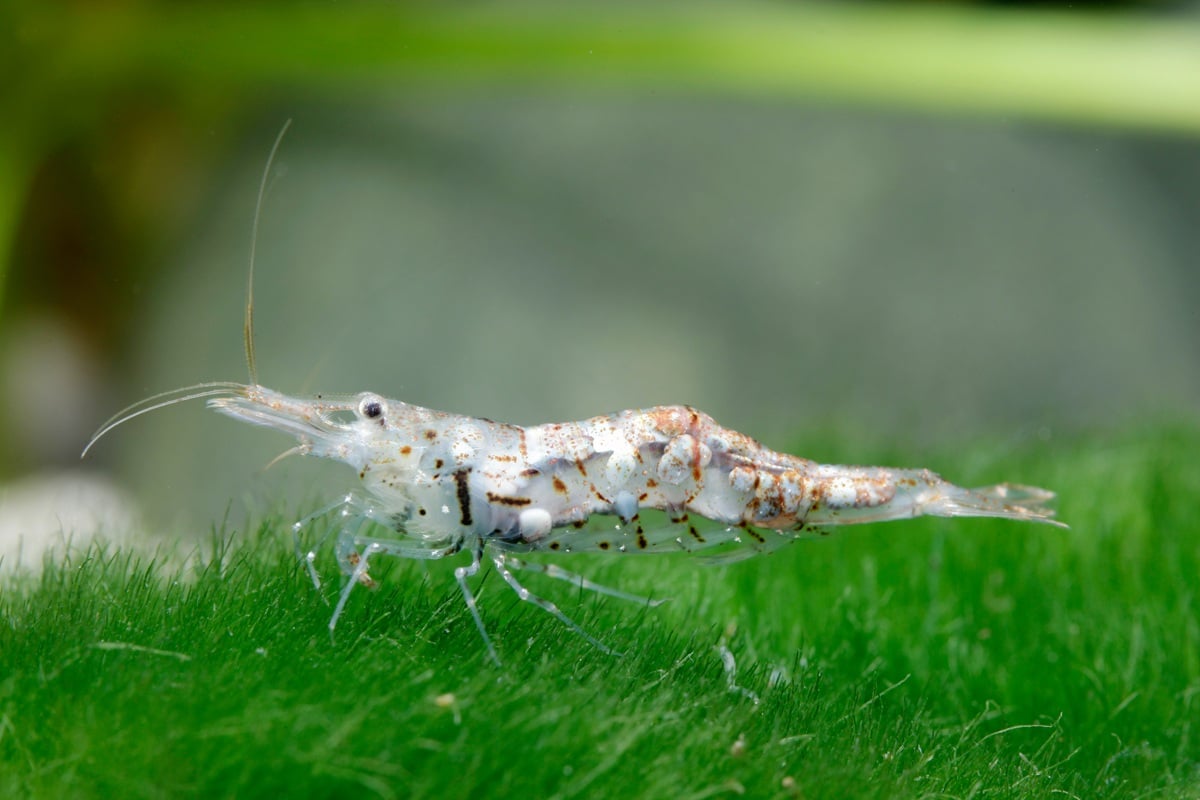
Photo by Chris Lukhaup
Help your fellow shrimper: Call for photos!
As you probably noticed, this guide is in need of more photo material to help shrimpers identify what's affecting their colony. Have a good, close-up shot or video of any of the ailments discussed here and would like to share it for educational purposes? You can send it to us through the chat function on our Facebook page. Just include "shrimp disease photos for the diagnosis guide".
Sources & further reading (more sources in individual disease guides)
Carella, F. (2022). Crustaceans as Pathogens and Most Common Pathogens of Crustaceans. In Crustaceans (pp. 185-203). CRC Press.
Govindasamy, T., Bhassu, S., & Raju, C. S. (2023). Enterocytozoon hepatopenaei infection in shrimp: diagnosis, interventions, and food safety guidelines. Microorganisms, 12(1), 21.
Guz, L., Pękala‐Safińska, A., Pietras‐Ożga, D., & Wójcicka, G. (2026). Pathogenic Aeromonas hydrophila in Ornamental Neocaridina Shrimps: Biochemical Traits and Antibiotic Resistance. Journal of Fish Diseases, e70127.
Schneider, R., Prati, S., Grabner, D., & Sures, B. (2022). First report of microsporidians in the non-native shrimp Neocaridina davidi from a temperate European stream. Diseases of Aquatic Organisms, 150, 125-130.
Cover photo: Chris Lukhaup